Taxpayers lost Sh3.2 billion in replacing a contractor to build the transmission power line linking a 310-megawatt wind power plant in Marsabit to the national grid after the initial Madrid-based builder went bankrupt.
The State used Sh22.09 billion to complete the project under a new Chinese contractor, upping the bill from the initial Sh18.92 billion, a new report from Auditor General shows.
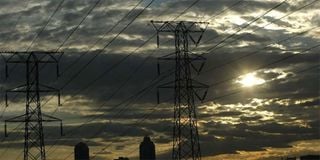
Taxpayers forked out Sh11 billion to complete works left by Isolux Ingenieria SA, a Spanish firm that had been contracted to build the 428-kilometre power line.
The Spanish contractor went bankrupt over Sh153.6 billion debt, slowing down monitoring of the local subcontractors and suppliers of materials.
“As at the time of termination of the contract, the Kenya Electricity Transmission Company (Ketraco) confirmed that a total of Sh10.83 billion had been paid to M/ Isolux Ingenieria SA,” said Auditor-General Nancy Gathungu.
In a special audit, Ms Gathungu said the termination of the contract between the Ketraco and Isolux resulted in an additional cost of Sh3,1739,062,348 to finalise the construction of the transmission line.
This represented a 17 percent variation over the original cost of Sh18.92 billion.
Ketraco terminated the Isolux contract in 2017 after the Spanish contractor was declared bankrupt and placed under receivership over debt and liquidity challenges.
The Ketraco then hired a consortium of Chinese companies to complete the transmission line linking Lake Turkana Wind Power to the national grid.
The firms, NARI Group Corporation and Power China Guizhou Engineering Company took up the stalled works and completed the same in 2018 at a total cost of Sh11 billion.
The State agency has since paid NARI Group Corporation and Power China Guizhou Engineering Company Sh9.5 billion leaving a balance of Sh1.79 billion.
“The management of Ketraco should identify any pending obligations plus accrued penalties thereof from either party with the consortium group so that the same can be settled in a timely manner. This will mitigate against future litigation risks and loss of public funds,” said Ms Gathungu.
The 428-kilometre power line is now being used to evacuate the wind electricity from the northern town of Marsabit to the Suswa substation in Narok, the country’s main interchange for power from different sources.
Failure to connect the wind farm to the national grid had left the developers stranded with power, amid pressing cash needs such as loans repayment.
The Lake Turkana Wind Power developers fined Kenya Sh18.5 billion for the delays in completing the high-voltage line (400 kilovolts).
The government has since cleared payment of Sh10 billion to Lake Turkana leaving a balance of Sh9 billion that the owners will recover by May 2024 through increased power tariffs.
Construction of the power line started in November 2015, but landowners’ compensation demands and the 2016 termination of the Isolux contract delayed it.
The wind farm, the largest in Africa, with a capacity of 310 megawatts — enough to power up to one million homes — was supposed to inject the first 50 megawatts into the grid in October 2016 and the whole capacity by July 2017.
In the special audit, Ms Gathungu has called for further investigations to determine any acts of an anomaly on individuals involved in the entire process of the project and action taken on those found culpable.
Unlock a world of exclusive content today!Unlock a world of exclusive content today!