Four Bomet KTDA factories set for split in efficiency drive 

The shareholders of Kapkoros Plc, a factory that has four factories under its wings in Bomet and Nakuru counties, on Monday voted for the split.

Photo credit: File I Nation Media Group

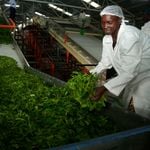
Four Kenya Tea Development Agency (KTDA) managed factories in the South Rift Region will be split into autonomous entities within the next six months, in a strategy aimed at improving efficiency.

The shareholders of Kapkoros Plc, a factory that has four factories under its wings – Kapkoros, Motigo, Olenguruone and Tirgaga – in Bomet and Nakuru counties, on Monday voted for the split.
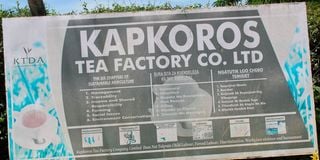
This means that each of the factories will independently process and market its tea.

The shareholders also adopted a recently concluded boundary delineation exercise, which realigns the catchment areas of the factories. 

Mr Robert Kipngeno Rono, the Kapkoros Plc chairman, said that the factories had already been given their independent codes by KTDA, and the resolutions passed by the shareholders will be forwarded to the Tea Board of Kenya (TBK) and other government agencies as required by law.

Mr Rono said the agitation by the farmers, which had lasted over three years, had been acceded to following the unanimous resolution, while the issues relating to inter-factory borrowing of loans were being dealt with.

KTDA has banned the inter-factory borrowing of money for construction, payment of bonus, repairs, and other key issues, with the factories pushed to take commercial loans from banks.

“Issues relating to the separation of the factories, assets, and liabilities have been dealt with by a spe-cial committee that is in place. The issues have been dealt with,” Mr Dickson Kirui, the Kapkoros Plc Secretary said.

Mr Kirui said: “Following the resolutions made by the shareholders, a Special General Meeting will be held by each of the factories in June 2026 to kick off the operationalisation and independence of the unit.”

“After separation, the areas that will not have factory zonal directors will have elections declared to enable the shareholders to elect representatives,” Mr Kirui said.

Bomet East Member of Parliament Richard Yegon said the separation would enable individual factories to operate without carrying the burden of the loss-making ones.

“Motigo factory, for example, is known for high production of quality tea that is popular in the market. The management would easily pay farmers Sh 43 in bonus as opposed to the Sh 13 that was received recently,” Mr Yegon said, triggering a protest among the directors.

Mr Yegon said: “The separation will enhance transparency and accountability in operations, marketing, and payment to the farmers by the individual factory units.”

The meeting attended by factory directors - Robert Kipngeno Rono, David Korir, Simon Mutai, Benard Koech, Kipkorir Chepkwony, Dickson Kipyegon Kirui, and Benard Rono – was a culmination of two years of a see-saw between the shareholders from the four factories centred on separation.

In an earlier resolution made on January 9, 2024, by the board of directors on behalf of the sharehold-ers, it was decided that “the four factories shall be completely separated and each factory will be granted full independence as a stand-alone entity.”

“Assets and liabilities shall be allocated and settled to ensure that each factory is in a position to oper-ate as a fully-fledged independent entity, and so it can operate efficiently and sustainably,” the resolu-tion, which was adopted on Monday, states.

Enhancing quality

Cabinet Secretary for Agriculture Mutahi Kagwe and Principal Secretary Paul Ronoh held a meeting with the zonal directors from the four factories on April 8, 2025, at Kilimo House in Nairobi, following a standoff on the push for the separation of the factories.

The CS said the government would assist the factories to modernise their equipment with a view to enhancing the quality production of tea before offloading it to the local markets and the Mombasa Tea Auction.

Mr Kagwe confirmed at the meeting that the government backed the shareholders' resolution to have the factories operate independently from each other so as to enhance transparency.
  
The government is keen on having the players in the tea industry embrace value addition and branding before the tea is offloaded to the market, in what is expected to raise prices and create employment opportunities for Kenyans.

Separation of the factories comes in the backdrop of low prices per kilogram of green leaf supplied to the factories by the farmers and declining annual bonus paid by the agency.

PAYE Tax Calculator

Note: The results are not exact but very close to the actual.