The Treasury has kicked off preparations for the transition of the country's healthcare to a sustainable, domestically financed system, amid shocks of the waning donor funding.
The Treasury said that it targets a new framework to guide the country’s shift from donor-dependent financing to a sustainable, domestically financed health system.
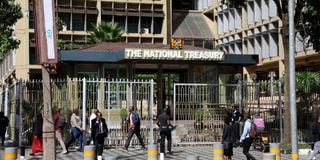
“Kenya is undergoing a health financing transition characterised by declining external financing, increasing domestic resource mobilisation needs and growing demand for sustainable and equitable health financing mechanisms,” it said amid ongoing recruitment of an expert to draw up the transition plan.
“The framework will support strategic planning, fiscal sustainability, and alignment with national development priorities, including Universal Health Coverage, the Bottom-Up Economic Transformation Agenda, and relevant sector policies,” the Treasury said.
Kenya's health sector presently relies on three major funding sources, including the government (53 percent), the private sector (23 percent), and external funders (18 percent).
The Treasury in its 2025/26 budget allocated Sh138.1 billion for the health sector, marking an 8.74percent increase from the amount allocated the previous year.
Historically, the US government had accounted for more than 60 percent of all external health funding to Kenya's health sector.
However, its exit dealt a blow to Kenya's healthcare system, with the freeze and the subsequent stop-work orders affecting a number of health programs.
Some of the affected programmes include HIV treatment, malaria prevention, tuberculosis care, maternal and child health services and essential commodity supply chains.
A policy brief released by the Ministry of Health earlier last year estimated that health programmes worth Sh78 billion had been directly affected.
Meanwhile, a recent analysis by the University of Nairobi's Centre for Epidemiology Modelling Analysis (CEMA) showed that the external health funding dropped from Sh126 billion to Sh54 billion in the 2025/26 financial year, driven largely by the withdrawal of US government support.
The report further revealed a critical shortage of essential medicines worth Sh34.7 billion, a gap that threatens to leave hospitals without these commodities.
"For commodities, the funding gap across HIV, TB, malaria, vaccines, and nutrition is estimated at Sh 34.7 billion in the financial year 2025/26, excluding the overfunded Reproductive, Maternal, Newborn & Child Health (RMNCH) programme," read the CEMA analysis report.
At the same time, the Global Fund support for tuberculosis dropped from Sh4 billion to Sh1.74 billion, while malaria funding fell from Sh4.25 billion to Sh1.53 billion. Kenya entered the Accelerated Transition Phase of Gavi financing in 2022 and is expected to be fully self-financing by 2030.
In the current financial year, the health sector received Sh138.1 billion in the 2025/26 budget, an 8.7 percent increase from the previous year, but still under the Abuja declaration that requires countries to allocate at least 15 percent of their total budget to the health sector.