Time flies with great content! Renew in to keep enjoying all our premium content.
Prime
Treasury mulls infrastructure fund without supporting law
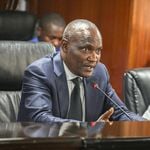
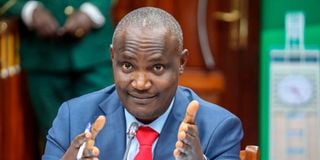
Treasury Cabinet Secretary John Mbadi. He has proposed the dissolution of the Prison Farms Revolving Fund, formed in 1993, and the Prisons Industries Revolving Fund, formed in 1988.
The government is considering setting up the National Infrastructure Fund without a law to back it, raising concerns about safety of hundreds of billions of shillings that the fund will manage.
The National Treasury says it is toying with the idea of either establishing the fund through a budgetary process or a Parliamentary legislation, and expects to have it in place by early 2026.
The National Infrastructure Fund, which is still just a plan, is expected to manage about 90 percent of the funds the government raises from privatising state corporations, including the targeted Sh100 billion from Kenya Pipeline Company (KPC) and the Sh244.5 billion from the expected sale of a 15 percent stake and future dividends in Safaricom.
“National Infrastructure Investment Fund programme doesn't really have to be a Bill. We are still looking at modalities of setting up the fund without the Bill. It can be through parliamentary legislation or a budgetary process,” said Treasury Cabinet Secretary (CS) John Mbadi.
The government plans to privatise a number of state corporations and use proceeds from the sales to support budget implementation.
During the current fiscal year, ending June 2026, Treasury projects to get Sh149 billion from privatisation of the entities, including KPC.
“What we are thinking at the moment is having about 10 percent (of proceeds) going to the sovereign wealth fund and the rest going to the National Infrastructure Investment Fund. The details will be communicated once we form it up because even the Cabinet has to approve that,” CS Mbadi said, adding that the government wants to have the fund in place by early 2026.
The National Infrastructure Fund first came into the limelight last month, when President William Ruto, during his state of the nation address in Parliament, indicated that it will be at the core of implementing a Sh5 trillion development dream over 10 years.
President Ruto laid down a plan to implement projects in health, education, energy and infrastructure, noting that the fund, together with the Sovereign Wealth Fund would provide seed funding.
The Treasury last week indicated that proceeds from the sale of the government’s 15 percent stake at Safaricom would be deposited at the National Infrastructure Fund. The Sh244.5 billion windfall is likely to be the first investment into the kitty.
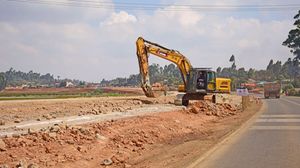
“The National Infrastructure Fund will be helping us in converting the privatised assets into commercially viable public infrastructure projects such as roads that would be dualled and tolled,” CS Mbadi said.
He said the government projects to invest about 20 percent of a project’s value and leave the private sector to fund the remaining 80 percent.
The Treasury expects the government funding to de-risk projects will give confidence to the private sector to put its money into dams, airports, roads and electricity transmission projects deemed commercially viable.
Proceeds from the State’s portion of investment into the public private partnership projects would then be used to fund other projects that may not be commercially viable such as countryside roads, Treasury says.