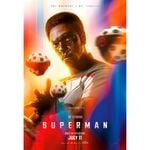
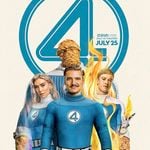
Is superhero movie fatigue a thing? I mean in the 2025 box office, Fantastic Four (2025), budgeted at $200 million, made $475.2 million.
Superman (2025), with a $225 million budget, pulled in $604.5 million. For context, other big-budget movies performed way better.
Jurassic World: Rebirth (2025), with a budget of $225 million, reached $844.1 million. The Minecraft Movie (2025), with a budget of $150 million, grossed $955 million, and How to Train Your Dragon (2025), with a budget of $150 million, made $626.7 million.
The twist in all this is that both Superman and Fantastic Four were received positively, but their numbers are nowhere near what superhero films could do back in the 2010s when superhero movies were at their peak.
So what’s happening? Is it a storytelling issue, or are moviegoers just tired of the Marvel and DC formula?
Has the comic book movie fan become jaded? Because while the conventional side of comic book cinema is cooling off, the R-rated corner of the genre is booming.
Deadpool & Wolverine (2024) made $1.338 billion off a $200 million budget. On the streaming side, R-rated superhero shows like Invincible and The Boys keep thriving.
The Boys, which leans heavily into parody and satire, will be wrapping up with its fifth season but already has a spinoff, Gen V, with a second season coming.
Invincible will be back for season four in 2026. That tells you the allure of superhero storytelling isn’t gone. It’s evolving. Which brings us to the second season of one of DC’s most unlikely breakout hits, Peacemaker.
Peacemaker Season 2
Peacemaker season two continues the American superhero series created by James Gunn for HBO Max. It follows Christopher Smith, better known as Peacemaker, played by John Cena.
Season one (bear with me, this might be a bit confusing for ordinary people) spun out of Gunn’s 2021 film The Suicide Squad and existed inside the DCEU (DC Extended Universe). Season two shifts into the new DC Universe (DCU), which Gunn is now steering as a soft reboot of the whole franchise.
Like the first season, it blends action, black comedy, and character-driven storytelling.
The story picks up after season one, when Peacemaker and his team stopped an alien invasion and exposed government corruption.
Season two continues Smith’s uneasy evolution into something resembling a hero, caught between violent instincts and a growing desire for redemption and connection.
The returning cast includes Danielle Brooks, Freddie Stroma, Jennifer Holland, Steve Agee, and Robert Patrick. James Gunn writes and directs select episodes again, ensuring continuity in tone.
Heads up
If you’re in Kenya and missed season one, all eight episodes are available on Showmax. Watching The Suicide Squad and the new Superman movie will also help. Season two has several story beats that are far more effective if you understand the wider context.
The show keeps its signature opening with a dance-driven title sequence, but it is a different song and dance. Do I like it? Honestly, not as much as the first one.
That first theme was ridiculously catchy; I am subconsciously humming it while writing this. The new one feels fine, but doesn’t burn itself into memory the same way.
And just to be clear, this is still R-rated. Not just for violence. Early on, there’s a scene after an orgy where bodies are scattered everywhere. In the background, two fully naked people casually sip beers while a conversation happens. Basically, don’t let children anywhere near this show.
Grounded
If the ending of season one was chaotic, season two could have been called Fallout. It’s sober, even subdued, especially in the first five episodes. Don’t get me wrong, the comic book themed action is still there.
The story deals with the consequences of season one, and I won’t spoil specifics, but the team is in a strange place both financially and psychologically.
Emilia Harcourt, played by Jennifer Holland, gets a lot more to do. And no, that’s not just because she’s married to Gunn. It fits the story.
The opening of episode three really caught me off guard, it reframes events from The Suicide Squad in a heavier way and complicates relationships. The entire team, including Smith, is in a space that grounds the show and that is as far as I will go.
The writing is far more introspective, still funny and absurd but focusing on the person inside the persona. Performances help sell it: John Cena as Smith, Brooks as Leota Adebayo, Stroma as Vigilante, Holland as Harcourt, Agee as John Economos, and even Eagly the eagle, who gets a proper arc this time.
Their arcs and motivations are heartbreakingly clear, to the point that even questionable choices feel justified.
Casting surprises add another layer. Some Gunn regulars show up in roles that seem like jokes at first, but as stakes rise, they become genuine threats. Tim Meadows as Langston Fleury is an interesting addition, introduced as a serious player, only to reveal one of the funniest weaknesses in any show that you will ever see.
Contrasting worlds
This season also makes clear what Gunn is building for DC. What’s striking is how simplified it feels compared to Marvel’s increasingly convoluted multiverse. Questions left open from season one, especially around Auggie Smith (Robert Patrick), get addressed.
The contrast isn’t just between worlds or dimensions but within the characters themselves.
And the season weaves together threads from The Suicide Squad, Superman, Creature Commandos, and season one of Peacemaker without feeling forced.
Crossover appearances, from Rick Flag Sr. to characters we saw in Superman, are handled fluidly, stitching the larger DC universe together in a way that makes sense.
I just hope that they will not lose that as they head into the last three episodes.
Action
Action fans still get their fix, but much of the first half is dedicated to character drama. The pacing is slower by design, giving room to sit with the fallout before the wild comic book mayhem kicks in.
The hand-to-hand fights feel brutal, and the show doesn’t cheat. Wounds and scars carry over between episodes.
The visual effects remain strong, and the costumes do more than just look cool. They underline the show’s contrasting tones, highlighting the clash between grounded drama and heightened comic book absurdity.
Conclusion
Season two of Peacemaker still embraces comic book tropes; revenge, violence, heroism, but it’s a far more grounded experience. Beyond continuing Smith’s story, it pulls together pieces of Gunn’s larger DC vision. There’s a real coherence in how the world is presented, and more importantly, it makes sense.
What stood out most to me was how Gunn simplifies complex ideas like multiverses and dimensions. Instead of burying viewers in jargon, he uses characters like Harcourt as audience guides. The result is a show that stays entertaining while laying serious groundwork for DC’s future.
For me, that balance between irreverent comedy, human drama, and universe building is why Peacemaker season two works.
It’s proof that while superhero fatigue might be real for some, the genre still has life when creators take risks and remember that under the costume, the story has to connect with us first.