On the surface, indoor gardening looks like an easy, almost effortless hobby. You bring a plant home, place it by the window, water it now and then, and watch it flourish. At least, that’s what the glossy Instagram and TikTok feeds suggest.
But for Kariuki Chege, the reality has been anything but easy. The first months of caring for his plants were filled with disappointment, dead leaves, pests, and confusion. He had to learn—sometimes painfully—that plants are living beings with their own stubborn personalities.
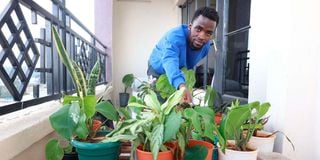
“You water too much, they die. You underwater, they die. Finding a balance was the hardest part,” he recalls.
Orchids, in particular, tested him. “Even experts struggle with them. Just when you think you’ve done everything right, one small change kills them.”
Roses, he adds, really tested his patience. “I try propagating them, but they just dry up,” he recalls.
Over time, he established a routine: watering once a week, misting for humidity twice a week, and dedicating weekends to dusting and care.
But it wasn’t always smooth. The biggest heartbreak came when he unknowingly brought home pests that messed his plants a lot.
“Last year, I unknowingly introduced mealybugs into my collection. Within weeks, they spread everywhere. I had to cut everything down and start afresh,” he recalls.
Since then, he stopped buying full plants. “I mostly propagate from cuttings—it’s safer and easier to monitor.”
Today, when the 31-year-old talks about his indoor garden, his eyes light up. What began as a way to kill time during Covid-19 quarantine five years ago has since grown into a full-blown passion, with nearly 50 plants thriving on his balcony.
“Weekends felt endless, so I thought, why not take care of two plants?” His first companions were two ferns, three zebra haworthias, and two snake plants. That small beginning turned into something bigger.
“I can’t say it was inspiration. I just needed something to do. But maybe I’d always loved plants without realising it. Corona became the medium that connected me to this hobby.”
His pride lies in his variegated monsteras—24 of them at different stages—alongside money plants, philodendrons, ZZs, orchids, and even rare air plants he ordered from Dubai.
“I’m drawn to unique, statement plants,” he says. “When I come home tired, sit among them, and play soft music, it changes everything.”
For him, plants are more than décor. “They bring joy. I searched for orchids for a year before getting them, and they’re expensive—some cost up to Sh10,000. Air plants too; I paid around Sh3,000 each after shipping. But the joy they bring is worth it.”
Plants also give him a calming environment. “Most landlords give us plain white walls. Plants add life, texture, and colour.”
He finds joy in the hunt for rare species and dreams of building a tropical collection. Kariuki believes plant choices reflect personality.
“Just like pet lovers choose breeds that suit them, plant lovers should pick species that feel right. If you love succulents, you might struggle with flowering plants. If big leaves excite you, tiny succulents may bore you. Go with what brings you joy.”
His biggest advice? Start small. “Don’t go for complicated plants like peace lilies right away. Begin with beginner-friendly ones like succulents, pothos, or spider plants. And don’t be too hard on yourself when a plant dies. Snip yellow leaves, cut back when needed—plants often bounce back.”
Turning home into picnic site
Martha Simiyu remembers clearly about six years ago when she bought her Sh500 echeverians from a road side vendor. She was enthusiastic, visualised her experience turning out, just like the ones she sees online.
However, that hope quickly turned into frustration. Her early days were marked by yellowing leaves, root rot, and confusion. She, too, had to discover, through trial and error, that plants each come with unique needs and temperaments.
Martha Simiyu tendinding to her plants at her house in Utawala, Nairobi on October 9, 2025
Photo credit: Evans Habil | Nation Media Group
Despite growing surrounded by plants. There is one aspect about plants that she missed out.
“I didn’t know some plants actually survive on neglect! As a beginner, I gave them too much attention—overwatering, treating them all the same. I lost some to root rot and yellowing, but the survivors taught me lessons that even Google couldn’t.”
However, instead of throwing the plant away, she snipped a healthy cutting and propagated it into something new. That turned out to be a turning point that taught her resilience and resourcefulness.
Her biggest headache? The spider plant. “It’s so dramatic. I’ve struggled to keep one alive for months, even when conditions were perfect. Umbrella plants also gave me trouble—I gave up after several attempts, but I’m determined to try again.”
To guide her journey, Martha once relied on a plant identifier app that helped her place species in the right spots—bright corners for light-loving ones, cozy corners for hardy snake plants. She also experiments with creative plant hacks.
“Different plants like different beverages,” she says. “Some love coffee, others tea, and some even beer! I tried coffee on my Chinese evergreen, and it worked like magic. I also make an eggshell-vinegar mix to spray on leaves and soil.”
Now, the 42-year-old tends to 13 potted indoor plants and two varieties of succulents on her balcony. Her collection includes snake plants, spider plants, pothos, Chinese evergreen, aloe, arrowheads, corn plants, and succulents. She laughs when she recalls her early struggles.
“It’s like feeding and keeping humans happy. Sometimes I even want to believe in the myth that plants bring good luck. That’s why I’m looking to get a lucky bamboo. Who knows? Maybe it’ll work.”
Her plants have reshaped her space and lifestyle. “Indoor gardening has displaced so many things in my house. I’d rather create space for plants than gadgets like TVs or home theatres. My home now feels like a picnic site.”
Besides the aesthetic part, the plants have also reshaped her social life. “I’ve found a community of plant lovers—we even had a WhatsApp group to share stories and cuttings. Some of my friends are getting into plants too, so the community keeps growing. As a cyclist, I even find myself cycling with purpose, always on the lookout for cuttings to bring home.”
The joy, she says, is in the little things. “I love staring at my plants and watching new leaves unfurl. It reduces stress and excites my hormones. They keep me busy, but they also give me company.”
Plants have always carried a quiet presence in Martha’s life. Growing up, she admired the pothos her mother cared for so diligently. Years later, while cycling past a garden, she stopped and bought her first Chinese evergreen.
“I placed it on my balcony, watered it as required, and it didn’t disappoint. Watching it sprout new lush leaves was so fascinating that I had to get another one. That was the beginning,” she says.
“It felt like such a small thing at the time. But that little succulent opened up a whole new world for me.”
Martha’s love for nature only deepened with time. “Being surrounded by plants gives me a sense of connection. The smell of soil after watering reminds me of the first rains after a dry spell.” During the pandemic, when life slowed down, caring for her plants became both a hobby and a source of comfort. “It boosted my mood and gave me something meaningful to do.”
Her guidance is simple and practical. “Don’t love your plants to death. Too much attention—especially overwatering—will kill them,” she says.
According to plant consultant Josphat Nguro, indoor gardening is a popular hobby that adds life and calm to homes and offices. However, keeping plants alive can be challenging, with many beginners struggling with issues such as wilting leaves, pests, and stunted growth.
“Often, people either overwater their plants or neglect their light and humidity needs. Too much water and poor drainage can quickly lead to plant death,” he explains.
For newcomers, he recommends low-maintenance plants such as spider plants, snake plants, and pothos. “These varieties are resilient and forgiving, whereas more demanding species like orchids require special care.”
Orchids, for example, thrive in bright, indirect light and should be watered weekly in summer and every 10 to 14 days in cooler months.
Higher humidity levels, ideally between 40 percent and 70 percent, can be maintained using a tray of water and pebbles.
Umbrella plants are hardy and prefer bright sunlight, drying out slightly between waterings. Spider plants enjoy bright, indirect light and evenly moist soil, and they are easy to propagate.
Common issues include overwatering, which can lead to root rot, and underwatering, which can cause the leaves to turn yellow. Josphat advises regularly checking plants, wiping leaves, and ensuring good air circulation. “Small adjustments, like moving a plant closer to a window or using a humidifier, can make a big difference,” he says.
Leaves can indicate a plant's health: wilting or yellowing may signal stress. “Observe before reacting; yellowing doesn’t always mean that the plant needs more water,” he adds.
With new tools such as moisture meters and smart watering systems, plant care is becoming easier. “Success begins with choosing the right plant for your environment. Adapt your care practices based on how your plants respond, and remember that healthy plants are the most beautiful,” concludes Josphat.