Plant parenting: Lessons from indoor gardening blunders

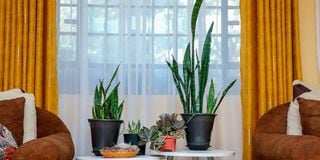
Variety of plants on display at Beatrice Asiago home in Utawala on December 3, 2025. 

Photo credit: Lucy Wanjiru | Nation Media Group

In her living room, Miriam Mukami tends to more than 30 houseplants. Pothos vines trail from shelves, snake plants anchor corners, and spider plants dangle their babies toward the floor. African violets bloom on the windowsill, asparagus fern softens the space near the couch, and a glossy ZZ plant guards the entryway.

Visitors often remark on how green and calm the house feels, even with dust drifting in from an unfinished road outside. Miriam smiles and calls her plants her “beautiful girls,” each with a personality of its own.
25 years of learning

Twenty-five years ago, Miriam bought her first plants—a snake plant, a fern, a syngonium and a calathea yellow fusion, simply because they looked good.

“The sellers told me they were indoor plants, and I believed them,” she says, laughing now.

She had just moved into a spacious three-bedroom house in Nairobi with wooden floors and very little furniture. Apart from a couch set, the rooms felt hollow. Adding plants transformed the space instantly. “The house felt alive,” she recalls.

But Miriam had no idea how to care for them. She planted everything in red soil, watered generously and often, and assumed enthusiasm would compensate for knowledge. At first, the plants seemed fine. Encouraged, she added more, a fittonia, a lucky bamboo and additional snake plants.

Then they began to die.

The fittonia’s leaves browned and curled. The lucky bamboo yellowed from the base. Even the supposedly indestructible snake plants softened at the roots. “I didn’t know what root rot looked like,” Miriam says. “The soil compacted and choked the roots. By the time I noticed, it was too late.”

Over the years, she lost many plants, including delicate ferns that crisped and collapsed. “Most of them died from ignorance rather than neglect,” she admits.

Fifteen years ago, now living in Membley, Miriam felt confident enough to try improving her care. Wanting bushier, magazine-worthy plants, she added CAN fertiliser, meant for open-field crops, directly into her pots.

Miriam Mukami tends to some of her flowers at her home in Membley on December 13, 2025. 

Photo credit: Francis Nderitu | Nation Media Group

Her healthiest plants died again.

“I wanted them to level up,” she says quietly. “Instead, I killed them.”

Stinging loss

Other mistakes followed. Helpers watered daily. Some plants were placed in harsh sun, others in dim corners. But the loss that still stings happened about three years ago, when Miriam believed she finally understood drainage, soil mixes and watering schedules.

She bought two bromeliads, planted them in clay pots with single drainage holes and placed them outside. Heavy rains pooled unnoticed, hidden by a creeper covering the soil. When she reached to move one pot, the plant collapsed in her hands. The roots were completely rotted. Both plants were gone.“I still haven’t replaced them,” she says.

Plant care

Over time, Miriam learned that plants want different things. Some thrive on neglect; others demand precision.

Her African violets, which cost more than Sh600, require exact light and careful watering that never touches their leaves. Terracotta pots dry soil faster than plastic, meaning more frequent watering. Busy schedules and delegation, she learned, can be as deadly as forgetting.

When a pink syngonium died from compacted soil and overwatering, it hurt, but it did not stop her. She studied. Today, nearly everything she reads or watches online is plant-related. She observes how greenery shapes rooms and responds quickly when a plant looks unhappy, moving it to a better spot before it declines.

Years later, Miriam calls herself a master plant mum. Her living room thrives, and she now shares care tips with friends. “Plant care mirrors self-care,” she says. “If you believe you can’t, you won’t. If you believe you can, you will. If you can care for a child or a pet, you can care for a plant—once you’re willing to touch soil.”

Plants for a difficult season

In Utawala, Beatrice Asiago sits among about 10 plants, mostly snake plants and succulents. Sometimes she talks to them. On her birthday this year, a three o’clock plant bloomed early and stayed open for hours. “That’s when I believed it knew me,” she says.

Just over a year ago, Beatrice owned no houseplants. She was going through a difficult season and needed something grounding. She started with a kitchen garden, growing kale, tomatoes and spinach, but realised she was after beauty more than harvest.

 Beatrice Asiago holding a Graptopetalum paraguayense during the interview at her home in Utawala on December 3, 2025. 

Photo credit: Lucy Wanjiru | Nation Media Group

“I love nature,” she explains. “So I thought, why not flowers?”

Her first indoor plant was a rescued snake plant a neighbour planned to discard. Beatrice placed it by a window with morning light and, like Miriam once did, skipped the research. “I didn’t think I would kill it,” she says. “I had positive energy.”

ZZ dreams

The plant survived, then thrived, sending up new shoots. Encouraged, she added more—mostly snake plants and succulents bought for as little as Sh50 from friends and roadside sellers along Ruai Bypass. Her home grew calmer and more alive.

Then some plants began to die.

She moved succulents outside, assuming they loved sun. They rotted instead. Salty water slowed growth. The survivors taught restraint. Today, snake plants and succulents are watered once a month, two cups at most. “Too much water kills them,” she says.

Her succulents, her favourites, ask for little and give her peace in return. Like Miriam, Beatrice says plants have transformed her home.
“My next holiday will be here,” she says, smiling. “I’ll just sit and look.”

She dreams of adding ZZ plants and pothos to climb her walls, inspired by Pinterest boards she saves. Giving up has never crossed her mind. “I love flowers,” she says. “I keep learning.”.

PAYE Tax Calculator

Note: The results are not exact but very close to the actual.