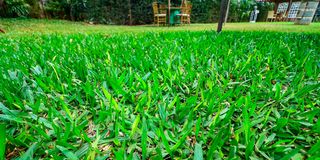
Most Kenyan lawns still depend on the rains. Kikuyu grass browns within days if watering lapses, while Arabica collapses almost instantly under saline or recycled supplies. Seashore Paspalum is proving different. It can hold its green, carpet‑like cover for a week or more without irrigation, a resilience that explains why homeowners, landscapers, sports clubs and golf courses are rapidly adopting it.
"A lot more people are embracing Paspalum since it is favoured for residential lawns, commercial landscaping, recreational spaces and sports pitches," says Derrick Onyango, a landscaping and turf solutions specialist at Tuffgrass Kenya. Compared to other common types of grass, he says, Paspalum is not only hardier, but it's also easier and cheaper to maintain.