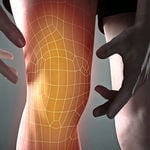
Paraesthesia, or “pins and needles” as it is more colloquially known, refers to a feeling of discomfort associated with itching, tingling or “skin crawling”. Generally, pins and needles is a benign and transient experience. However, there are situations where the experience of pins and needles may be indicative of a more sinister pathology and will require further medical investigation.
Pins and needles can be caused by a variety of different factors, and they occur as a result of decreased conduction of signals back to the central nervous system (i.e. spinal cord and brain).
Most commonly, pins and needles occur after an individual sits or lies in a certain position for too long, which is putting pressure on nerves or vascular structures. For example, if you sit on your foot or sleep on your hand, it is completely normal to experience a feeling of pins and needles. Once you relieve the pressure on the nerves or vascular structures, the pins and needles tend to quickly resolve.
Typically, the experience of pins and needles is painless and transient. However, it is important to have awareness of whether or not you may require further medical investigation.
If you are experiencing pins and needles more regularly in your day-to-day life which are not associated with staying in one position for too long, then it is possible something else may be going on.
When should I seek urgent medical attention?
Seek urgent medical attention if you experience pins and needles, burning and/or weakness in one or both arms and have any of the following red flag symptoms:
• Difficulty speaking
• Difficulty breathing
• Dizziness
• Drop attacks
• Double vision
• Nausea/eye flickering/numbness
• Tremors
Or if you experience pins and needles, burning and/or weakness in one or both legs and have any of the following red flag symptoms:
• Bowel/bladder dysfunction: e.g. inability to go, incontinence, inability to stop and start when urinating
• Saddle numbness
• Alterations in gait (walking)
• Unexplained weight-loss
• Night sweats or night pain
• Previous infection or generally unwell
If you experience pins and needles or numbness in your neck and/or jaw, you should also seek medical attention.
Common conditions requiring further assessment, but may not be medical emergencies:
Examples of some relatively common medical conditions which may result in pins and needles, as well as other symptoms, include the following:
1. Carpal tunnel syndrome – This refers to pain due to compression of the median nerve as it passes through your wrist to supply the skin and some muscles in your hand. This condition is typically associated with pain. It is very common in office jobs, hairdressers/barbers and carpenters (to name but a few).
2. Spinal nerve root compression – This can occur for a variety of reasons. The most common is probably a disc bulge/protrusion. This may result in referred pain into a leg (if the disc issue is in your lower back) or an arm (if the disc issue is in your neck). This may be associated with a ‘burning’ or ‘stabbing’ pain into a limb and/or associated weakness.
3. Peripheral neuropathy – symptoms of this include a gradual onset of pins and needles and/or numbness, sensitivity to touch and a sharp burning/throbbing pain in your hands and/or feet.
Pins and needles are usually just a benign and transient experience. If it is something you experience occasionally and have no other symptoms, it is unlikely to be a cause for concern. They are sysmptoms that are linked to many medical conditions.
Unlock a world of exclusive content today!Unlock a world of exclusive content today!