Pius Muchiri: ‘How my father’s job loss shaped my relationship with money’

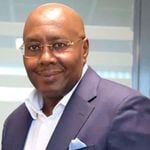
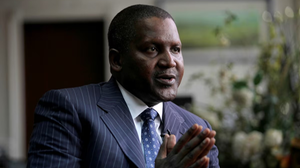
Nabo Capital MD Pius Muchiri during the interview at his office in Nairobi on January 29, 2026. 

Photo credit: Lucy Wanjiru | Nation Media Group

There are two ways the rich stay rich: one is by making a lot of money. The second is by not spending any. Pius Muchiri once spent Sh500 on pizza back in 2001, but he couldn’t wash the taste of guilt out of his mouth. “That 500 bob was my weekly allowance, and I spent it all on one meal,” he says.

So he decided to make a lot of money, first for others, then for himself. “Because when you solve someone’s problem, you make money,” says the CEO of Nabo Capital.

Pius, which, by the way, is pronounced PIE-us and not pew-s, recently had a baby, which makes him feel young again. He is a father of six with unmistakable youth-pastor swag. His first marriage was heaven on earth.

His second? Well, something better than heaven on earth. “She’s made me a better human being,” he says, because in your second marriage, you know where all the bodies are buried — and sometimes, lightning does indeed strike twice.

Do people often tell you that you look like a pastor?

I go to places and people who’ve never even seen me say, pastor. [chuckles] There’s a guard here who calls me, Mtumishi! Initially, it used to disturb me. Not in a bad way, but I was like, what is it that people see? I have no clue.

But then I came to understand that everybody has a gospel, and your story is your gospel. So, I may not be a pastor on the podium, but I have a gospel. My gospel is simple: helping people achieve financial redemption. Helping them retire early so they can live their purpose. Work is not just to pay bills. When work is connected to purpose, it affects people positively.

What was your relationship with money growing up?

Mysterious. My dad was a banker at KCB. We were living the good life and the envy of society, and then one day the job ended. Everything stopped. Bills went unpaid, auctioneers showed up, and I stayed home for lack of school fees.

I started buying my own clothes in Standard Six and never stopped. I kept asking: Why was our entire life dependent on a job? Why did everything collapse when it ended? That curiosity pushed me to study accounting at university. I was searching for answers.

Did you find them?

Not in accounting. I was busy doing reconciliations when the salespeople were having fun and making more money than me. Accounting looks backward; money is about the future. That’s why I moved into investment.

We do not go to work to pay bills but to mobilise capital. When capital is invested, it generates passive income, and over time, you stop depending on a salary. All of that was preparation for my purpose: helping people avoid what I experienced.

You come off as quite composed. Where does that come from?

Partly personality, partly circumstance. I was always calm, even as a child. As the firstborn, my mum leaned on me a lot. So, before I was 10 years old, my mother used to share many of the pressures and stresses she was going through, and I had to listen and be there for her.

In leadership, I learned that once you lose your calm, you lose your ability to make hard decisions. Yet there is no unsolvable problem. What’s the worst that can happen? Death, and you will not be here to experience it [chuckles]. Wealth comes with a lot of challenges; embrace them.

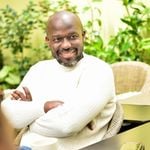
Nabo Capital MD Pius Muchiri at his office in Nairobi. 

Photo credit: Lucy Wanjiru | Nation Media Group

Did you get the firstborn tax, where you feel you had to sacrifice something in your childhood so your siblings could have it better?

[long pause] I probably just matured faster. But I wouldn’t rewrite my story any differently. My younger siblings can get away with things I can’t [chuckles], but I don’t feel like I missed out. I enjoyed life, but I was forced to grow fast; I paid the price of adulthood sooner than my peers.

Which of your father’s financial anxieties did you inherit after he lost his job?

That experience made me conservative about debt. I use debt only when I believe I’ve used my own money very well. A loan must generate more returns than what I’m paying. Even when I’ve taken a loan, I always have a plan B.

Second, it also took time to shed the poverty mindset. Fear of poverty affected how I enjoyed life. To me, financial freedom means knowing that even if everything collapsed, I could start again and succeed.

Third, having come from that environment and then succeeded, I’ve had to carry a lot of dependence with me. There was this guilt of spending a thousand shillings on pizza when that money could change someone’s life back home.

Do you still feel guilty?

Not anymore, but I used to. The first time I ate pizza, it was Sh500 at Pizza Inn back in 2001, when I had just left university. I felt like I had done something really terrible. Sh500 used to be my weekly allowance. And how did I just spend it in one sitting on one meal? Haha! Those are things I’ve had to shed because wealth and poverty both start in the mind.

It seems you are the kind of man whose stability affects the stability of many other people. But what part of your life don’t you have a handle on?

Nothing is out of control, but everything is under constant refinement. I defined success at 26, and it’s guided me ever since.

Success, for me, has several dimensions. I must be spiritually healthy so that my relationship with God is right. Physically healthy. This body should be without illness and should be fit. Mental health—I read like five books at the same time. Then career. It was important that whatever path I take in my career, I’m successful and reach the apex of that career.

Family and relationships—I would never consider myself successful if I were wealthy but had a broken family. That’s not success to me. And finally, legacy. Who will remember me when all is said and done, beyond my wife and children? What impact did I have? Maybe people perceive me as a pastor because I see those pillars through the lens of God.

What struggles do you go through that not many people get to see?

Because of the values that I subscribe to, it’s not easy to do business in this city. If I become a multi-billionaire through corrupt means, I will consider myself a failure.

Second, losing my first wife in 2022 and being left with five children nearly broke me. I called myself a special dad, but being present in all pillars of my life with such things going on was very challenging. Another very difficult time was when I had to remarry, which I did pretty fast, contrary to public opinion. I had to do what was right, not what was popular, because as a CEO, you’re an easy target.

In your new marriage, where does your late wife live?

My late wife and I had dreams together—how we would see our children grow, get married, have their children, and how we wanted to celebrate. When she left us, that responsibility fell on me. Now I have to carry that legacy forward.

When I entered the new marriage, one of the things we agreed on with my God-sent wife, Joyce, was that we would now carry this burden to represent her. Interestingly, she was a ‘surrogate’ mother to my new wife because she wanted seven children.

When I married Joyce, she was 38 years old. She wondered, God, I wanted seven children. At 38, it’s not possible. But it dawned on her how God had answered that prayer very differently. She was starting with five and only needed two more. She took that responsibility, God gave her five, and now he’s given her one more. So there’s one more to go [chuckles]. My late wife is still part of our family. Her photos remain, and her social media is now a legacy page for our children.

How do you hold the two marriages together emotionally?

I don’t see my second marriage as parallel to the first but as a continuation. And I’m very blessed that Joyce has such a pure heart.

Is this marriage proof of your idea of wealth, wealth being the ability to start again from zero?

It is not proof of wealth. It is proof of the power of God. Because I could remarry, start a new family and get a wife. We agreed with Joyce that we would not tell our children what to call her. Our revelation was that the name mother or father is a revelation. The love that the children have for her is also not something any human being could manipulate. It is God who teaches me how to do everything in my life because I’m his blueprint.

Nabo Capital MD Pius Muchiri.

Photo credit: Lucy Wanjiru | Nation Media Group

Are you the father you always thought you’d be?

I think I’m a very good dad. But I still feel there is more. We had a Bible study with our children recently, and God was offended with Eli because he was unable to restrain his sons. So the anointing passed to Samuel instead of Eli’s sons because he failed as a father. What scares me as a parent is that God can actually punish me if I fail to restrain my own children. But from what my children say, I think I’m a great dad, though I can be better.

What is the one weakness you show your children that permits them to be themselves?

I apologise to them when I make mistakes.

Did your father ever apologise to you?

Haha! No. But I show my children the real me. I struggle with prayer sometimes. I break promises sometimes. The other day I took them to school late because my preparation took too long, and I had to apologise. The more real I become to them, the more I prepare them for the future. My idea of parenthood is not to pull children toward you, but to wean them off you.

What do you miss about your younger self?

The many responsibilities I carry, haha! They have only grown. The stakes are higher, and many lives are affected because of how God has placed me in the community. But I have a mindset where I embrace every season I’m in.

When I became a single father, I realised my children had never seen me date. So I promised them, and myself, that I would model dating for them. The first time Joyce ever slept in our home was after the wedding, when we returned from our honeymoon, because that is what I wish for them. They warmed up to each other, trusted each other, and eventually everyone just started calling her mum.

At the risk of making this a marriage conversation, why was remarrying quickly important to you?

I live a Spirit-led life. Where God says go, I go. Second, I had a very good first marriage; we never fought. That’s hard to believe. I had a heaven-on-earth marriage. When I was single, I wondered if it was even possible to replicate that. The risk was high, but trusting God led me to Joyce.

I understand my first marriage now that I am married to Joyce. She has totally made me a much better human being, and that translates into every other sphere of my life. Even my social media exploded, haha! What every man needs when they go home is a peaceful haven where they are not judged by their performance. I experienced that with my first wife, and I’m experiencing it again. I’m realising that when you are married to the right person, you can overcome anything.

Has marriage been the platform for your stability?

Absolutely. A CEO’s life is lonely. You need a place to recover. You need a voice that tells you, ‘By the way, it’s going to be okay.’ And now, with a newborn, I feel young again [chuckles].

Is there any sibling envy now that you have become too soft?

No. I’m a very present father. I love them the same, but I don’t treat my children exactly the same. You have to tailor yourself to every child. Some children are soft, others are hard. My firstborn is like a father to the last one, so he has no reason to compare himself [chuckles].

When you tested success, however you define it, what did not feel as good as you thought it would?

I used to think that when I had money, I would have all the good things in life. I’d walk into a restaurant and have whatever I wanted [chuckles]. Eat all the junk food. But now I’m eating nduma, ngwaci and boiled eggs, haha! When you don’t have, you wish for the things you would have. When you have, you eat the things you ate when you didn’t have. Resolve to enjoy every season you are in, be very present, and squeeze everything out of it.

What’s your insecurity now, as a man, a father and a husband?

Two things: can I be sustainably present for my family, and can I provide for them? No man can say that it is 100 percent secure because things happen in life. My top priority is to distinguish myself as a gift to them.

What part of your identity do you protect the most?

The person. I want people to see the authentic me all the time, not the best version of me. I don’t want to present a perfect picture to anyone.

Ten years from now, what do you hope to regret the least?

I hope I will have raised my children well and that they will be citizens of good standards. Everything else can be corrected, but your children? That’s on you.

What’s your superpower?

God.

Which part of your faith is weak?

Obedience. Walking with God is like being a soldier, where sometimes you’re recalled from places you think you’re thriving. The real test is in the surrender.

How do you measure a life well lived?

Your relationship with God and your relationship with people. If those are in good standing, then you have lived a good life. The rest are details.

What are you looking forward to doing this weekend?

Shoot pool with my wife. She was a better player than I was, but I have since earned my stripes. We also swim with the children and exercise.

Which is the family sport?

Swimming, but we all shoot pool.

PAYE Tax Calculator

Note: The results are not exact but very close to the actual.