Time flies with great content! Renew in to keep enjoying all our premium content.
Prime
Traffic management: Coping while hoping
As Kenya’s roads grow busier, motorists and policymakers seem to want the same thing — safer, smoother travel — yet remain locked in conflict over how to get there.
Motorists who have to grapple with the current administration and conduct of our traffic will take some solace from the fact that more Kenyans are now more “mobile” than ever before. A very big tick in that box. But does that have to mean congestion, delay, exasperation, and danger? Mart
Any answer to that must start in the context of a prodigious increase in the population of people and vehicles. Both have increased nearly tenfold (!!!) in a few decades.
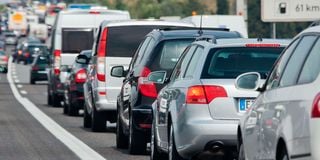
That would test the infrastructure and policy fibre of any country, and your “big tick” would be well deserved even if we were just surviving. Yet we are doing that well enough to think about thriving!
On that basis, ask any politician or policeman what motoring laws and policies are trying to achieve, and the answer will be simple and consistent: Not just more vehicles, but roadworthy vehicles, well driven, on decent highways and streets, safely, smoothly, efficiently and economically.
Well here’s the news. That is exactly what the motoring public wants, too.
So why do the two sides seem to be constantly fighting each other? Surely people fight when they differ - not when they absolutely agree.
Let’s start with the motoring public. How many motorists actually prefer a car that is unroadworthy? How many actively wish to drive badly, or on an awful road, or dangerously, or over bumps, in clogged traffic? Does any motorist want to make vehicle ownership and use as expensive as possible? And how many motorists want roads to be unmarked or often incorrectly marked?
And so to the law makers and law enforcers. Accepting their declared wish-list begs some questions:
If they don’t want defective vehicles, then why are they giving such loopholes (even incentives) for importation of sub-standard used vehicles and parts; why do they pre-inspect new vehicles and genuine parts but not used vehicles and scrap components?
Why do they allow damaging bumps to be constructed, and potholes to remain unfixed? Why do they impose taxes that make quality replacement parts less affordable? Why do they keep proposing expansion of massively expensive inspection systems when the existing ones clearly don’t (and won’t) work?
Why don’t they inspect and license workshops so motorists who want to keep their vehicles in good shape can get competent service? And why don’t they make routine roadworthiness inspection a compulsory part of every service?
If they want good driving, why do they not set higher standards for licensing driving schools, and conduct a much more stringent driving test? Why do they not bombard us with public education campaigns?
If they want smooth and efficient travel, why do they allow desperately slow vehicles to obstruct arterial highways? Why don’t they mark and enforce clearways?
And so on, and so on.
Meanwhile the over-riding question remains: if both sides want the same things, why doesn’t their relationships look less like conflict and more like teamwork?
After all, if the motoring public wants all the things law makers and enforcers say they want we don’t need draconian crackdowns; we need enabling conditions and a partnership of mutual respect.
Policy’s priority should be to help motorists have roadworthy cars and good skills and decent roads. Not by punishing their failures, but by encouraging their success – incentivising the purchase of newer vehicles, improving the quality and reducing the cost of maintenance and repair; ensuring well-qualified tuition and backing it with popular and practical public education…
…in sum, guiding by incentives instead of penalties wherever possible. That way, the authorities (and law-abiding motorists) get a million supportive allies instead of a million resentful foes. Surely that would work better.
Until that starts to happen, there is reason to doubt, after all, that the patrons and the public do want the same thing. We think we know what the motoring public wants. But the question is out there: what do the laws and policies want?
And don’t say “obedience” because it will be good for you. Those who already comply - in every possible way - know for sure that strategy does not deliver respect or justice or smooth, safe, efficient, economical and relaxed travel by road.
What we all need to recognise is that the “policy pie” is an extraordinarily complex matrix. Taken in isolation, traffic management has some glaringly obvious shortfalls and logical remedies.
The cost-benefit equation of the remedies is clear, but the skills and diligence and shillings required are limited and are in competition with dozens (nay, hundreds) of other real needs, conflicting priorities and vested interests.
For the time being, we must both hope and cope in the knowledge that things could be better…or worse.