Why traffic in Kenya is suffering a tsunami of ‘kinetic waves’

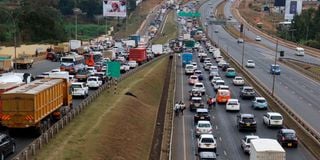
Traffic snarl up on Nairobi’s Thika road on July 14, 2022.

Photo credit: File | Nation Media Group

I believe there are plans to dual more of our major highways, but in the meantime, there must be ways to ease the jams before those projects are completed. What do you think are the main causes and possible solutions? AS.

High-speed arterial roads are essential to Kenya’s performance – economically and socially; both in their own right and as the bloodstream that enables truly “nationwide” development.
If they are effective, they optimise and encourage movement, generating opportunities and productive activity far and wide.  If they are clogged, they limit spread and growth, and they handicap…everything! 

Right now, despite strenuous efforts to increase the traffic capacity of our roads, the way they are administered and used is in danger of doing more to deter than encourage their core purpose:  to let people and goods move smoothly and swiftly around the country.

The absolute essence of “smooth and swift” - on any road, anywhere – is that the traffic on it should “flow”, with as little obstruction of any kind as is physically possible. And the objective should be to let it flow swiftly, within reasonable safety limits that help create a conveyor-belt effect.

To understand why Kenya’s arterial highways have less than optimal flow, the conveyor belt is a useful analogy.    Imagine a conveyor belt carrying large rocks, in single file, evenly spaced about a metre apart.     All will move smoothly and safely from one end of the conveyor to the other, at whatever speed you choose, and at the same speed as each other. Perfect flow.

But what happens if just one of the rocks is restrained to a lower speed, or stopped?  All of the rocks behind it come piling into the back of it and into the back of each other in a monumental pile-up. 

The same thing happens in a stream of cars on an arterial highway. If just one vehicle in the stream does not maintain the ambient speed by even a little, everything behind it must either overtake it or slow down and queue up behind it in what we call a tail-back. 

This disrupts the flow no matter what. If traffic is light and overtaking opportunities are numerous and driving is skillful, the disruption is minor. 

But if traffic is heavy, overtaking opportunities are few and many are wasted by drivers who dither, the consequences are chaos. High risk overtaking in the tailback and/or dramatic increase in journey time, and all the consequences of a “kinetic wave” (the action of one, even if it only lasts an instant, does not affect just those in the immediate vicinity). 

It is well studied and documented that on high-speed expressways, a crash in one spot can cause further collisions several minutes later, several kilometres away! 

Now Kenya’s main highways do not just occasionally have one vehicle travelling slightly too slowly. All of them have dozens of vehicles which travel at less than half the ambient speed for which the road is designed and intended, and which the majority of users require as “smooth and swift”.

There are numerous potentially avoidable obstructions on our highways, but surely none are more numerous and negative than very slow vehicles and speed bumps.  

As Kenya continues to add thousands of additional vehicles to all its roads every month (!), removing these two obstructions must be the priority.  

Road development is progressing, but at nowhere near the same rate.

It follows that every stream of traffic, everywhere, is getting busier – on every rural and transit highway and at every urban junction. The bad news is that this trend has led to, and continuously worsens, a now chronic condition of queues and bumper-to-bumper tailbacks…not just sometimes, but almost all the time.

Even a minor interruption to the ambient flow (a speed bump, a very slow or stopped vehicle, a pothole deep enough to force contraflow-braking and yielding,  a roadside check, a vehicle taking too long to turn off, or a driver dithering when overtaking opportunities do arrive…) obstructs immediate traffic and echoes through the traffic streams, progressively reducing all flow on a considerable length of road to the lowest common denominator at any point on that road.

That is why the journey from, say, Nairobi to Naivasha, which 20 years ago routinely took less than an hour, 10 years ago took an hour-and-a-half, today often takes more than two hours…and is on the brink of getting a lot worse than that.

The road itself has improved.  But our use of it, in congested conditions, has got worse; in driving skills and conduct, and perhaps most of all in the number of very slow vehicles that are still permitted to use it.

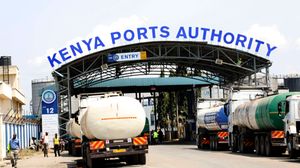
Rightly, heavy trucks are forbidden to use parts of our busiest national highway, but that solution is undone because smaller trucks that are allowed to use it are either over-loaded or underpowered and are notoriously slow. 

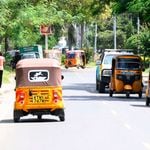
Tuk-Tuks and boda-bodas are also numerous, and even donkey carts which are as wide as a truck and travel at walking speed!

No one imagines that a solution is cheap, quick and easy – a dual carriage ‘expressway’ costs billions and takes years, and for optimum effect must come with education campaigns to teach motorists how to use it properly - but while that inevitable solution is arranged, there are some less costly and immediate measures to bridge that time and budget gap.

Surely a TransAfrica Highway (like all motorways around the world) should prohibit donkey carts, small motorcycles and bicycles, and permit cargo delivery vehicles only if they can “cruise” at 80 kph on the flat and manage at least 60 kph on a slight incline. A balance of weight capacity and engine size requirements could achieve that.

Those ‘essential’ vehicles that cannot achieve that standard should simply use an alternative route. Transgressors would not be difficult to spot – they would have a clear stretch of road ahead of them and 20 vehicles in a line behind them, playing dodgems.

PAYE Tax Calculator

Note: The results are not exact but very close to the actual.