Time flies with great content! Renew in to keep enjoying all our premium content.
Prime
Nature’s finest medicinal plant
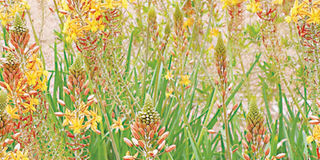
Bulbine’s leaves have a natural healing sap. Photo/Courtesy
The rainy season has come with the notorious ‘Nairobi Eye’, a rove beetle attacking people.
Also known as the Nairobi fly it does not bite or sting but its blood contains a potent toxin that causes blistering when crushed against the skin. It can take up to a week, or more, to heal.
When I was recently attacked, and woke up with an itchy-swollen red jaw, I opted to use Bulbine, a medicinal plant, and I could feel the improvement in three days.
Bulbine is indigenous to Southern Africa and has long been considered the pharmacopoeia, a drug making, plant of the herbal world.
Its fleshy leaves yield a jelly like sap that has multiple virtues and applications. Bushmen and Iron Age dwellers of Southern Africa knew and understood its virtues.
It has long been a part of the traditional healer’s arsenal.
Medicinal
Bulbine is one of nature’s finest medicinal plants, which for centuries has been cultivated for its properties.
The long thick ‘onion like’ leaves have a natural healing sap that contains glycoproteins similar to those of Aloe vera.
Externally, the freshly squeezed juice, frequently applied, is amazingly effective to take care of a wide range of skin conditions and wounds.
The sap of a Bulbine leaf is clear and can be rubbed onto parts of the human body to ease pain, irritation and itching as well as cure burns, cuts and wounds.
Relief is almost immediate as the sap is a soothing, repairing gel that immediately gets to work by anesthetizing, disinfecting and healing the affected area. The fresh leaf sap is usually applied directly to the skin or can be made into a warm poultice.
Simply cut off a piece whenever needed, as it is best used fresh and not dry. Used externally, Bulbine species are reasonably safe; however, it is recommended to check for any possible allergic reactions.
Bulbine was called the burn jelly plant by those who used the sap to heal burns; However, its properties can treat many other ailments including; acne, blisters, boils, bruises, burns, cold sores (even in your mouth and nose), cracked dry skin, cracked fingers, cracked lips, cracked nails and heels, cuts, eczema, fever blisters, herpes, insect bites, itchy places, minor skin cancer, mouth ulcers, painful and itchy insect stings and bites, pimples, rashes, ringworm, stops bleeding, sunburn.
First-aid remedy
The sap is also an antiseptic and a haemostatic (stops bleeding); and also has antibacterial properties.
The clear and soothing gel of Bulbine forms an invisible ‘seal’ over the wound, protecting against bacteria and providing ongoing relief and healing throughout the day.
This plant is ideal to grow and is a useful first-aid remedy for children’s’ daily knocks and scrapes. A warm poultice can also be made and apply it to the affected area to treat any of the above ailments including eczema and arthritis.
Herbalists also apply the sap to effectively treat animal wounds, sores and rashes.
Although Bulbine is mostly used traditionally as a medicine; an infusion can be used internally using a few fresh leaves in a cup of boiling water that is then strained and taken for coughs, colds and arthritis. For internal use, an infusion of the roots can also be used taken two or three times a day. Use with caution internally.
Just like the better known and much vaunted Aloe Vera, extracts of Bulbine sap can be used as a basis for skin creams.
Grow it at home
Bulbine is regarded as a valuable landscaping plant for its reliable growth pattern and bright all year round colour. It is also very drought tolerant and pollution resistant.
It an extremely easy species to cultivate; it is wind resistant, and a prodigious grower.
This succulent perennial multiplies rapidly, doing well in any soil, but preferring well drained soils; likes full sun and can thrive on very little water.
Although preferring full sun they will also grow in semi-shade for part of the day. The dead flower heads should be removed to encourage further flowering.
An initial planting with plants spaced 20-30cm apart will ensure quick and easy growth. Plants should be grown close to the house where they are easily accessible for use medicinally.
To multiply Bulbine plants simply split a clump of already growing Bulbine and plant out or break off thicker pieces of stems and plant these out; they will root very quickly. Bulbine can also be grown successfully in medium to large pots.
Article by Plants Galore Garden Centre. Telephone: 0773 612589. Website: www.plantsgalore.co.ke
Unlock a world of exclusive content today!Unlock a world of exclusive content today!