Time flies with great content! Renew in to keep enjoying all our premium content.
Is forex trading and crypto legit or just gambling with extra steps?
Outcomes are far less predictable and the probability of loss is significantly higher. Forex trading and crypto assets generally sit closer to the speculative end of the spectrum.
If you are part of any investment-related WhatsApp group today, chances are you have come across lively discussions about forex trading and crypto assets.
Many people often share screenshots of impressive gains alongside stories of luxurious lifestyles, while a few others quietly admit to having suffered significant losses.
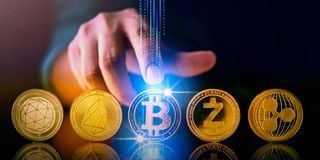
This contrast leaves many wondering whether these opportunities are legitimate investments or a more sophisticated form of gambling.
Such curiosity is understandable in an environment where the cost of living continues to rise, forcing individuals to look for ways to grow their money faster.
Both the foreign exchange (forex) market and the cryptocurrency market are real, and widely used around the world. Forex plays a critical role in facilitating global trade and currency conversion, while crypto markets allow for the trading of digital assets using emerging technologies.
However, their existence alone does not make them suitable for everyone. In finance, legitimacy does not always translate into appropriateness.
A key distinction often overlooked in these conversations is the difference between investing and speculation.
Traditional investing typically focuses on long-term wealth building and is supported by analysis, patience and an expectation of gradual growth over time. Speculation, on the other hand, involves taking higher risks in anticipation of short-term price movements.
Outcomes are far less predictable and the probability of loss is significantly higher. Forex trading and crypto assets generally sit closer to the speculative end of the spectrum.
Prices in these markets can be highly volatile and are often influenced by rapid shifts in demand and supply, global events, and market sentiment—factors that are difficult to consistently anticipate.
Although stories of rapid gains can be appealing, they rarely reflect the complete experience of participating in these markets.
Without a solid grasp of risk, discipline and emotional control, people may make decisions based on fear of missing out, overconfidence after minor victories, or peer pressure.
Using leverage in forex and some crypto transactions further amplifies these challenges. Leverage magnifies outcomes, so small market movements may result in large gains or losses. While this feature is often highlighted for its potential upside, it also significantly increases the risk of capital erosion when markets move unfavourably.
Another factor contributing to poor outcomes is the way information is consumed. Tips, signals and social media commentary can create the impression that success is easily repeatable. However, financial markets are complex and strategies that work under certain conditions may fail under others.
When participation is driven more by excitement than understanding, the line between informed speculation and gambling becomes increasingly blurred.
A more prudent approach to opportunities such as forex and crypto is to start with self-awareness rather than the opportunity itself. It is critical to understand your financial goals, risk tolerance, and ability to absorb potential losses.
Experienced market participants often emphasise the importance of preserving capital before seeking growth. In this context, learning, observing and asking the right questions can be just as valuable as active participation.
Remember that not every opportunity needs to be pursued. Financial markets will always present new and exciting prospects, but long-term financial well-being is often shaped by consistency, discipline, and patience rather than speed.
Understanding how different assets behave and how they align with your personal objectives can help you make long-term decisions you are comfortable with.
In a noisy world, the most valuable choice is sometimes simply to slow down and reflect. Neither forex trading nor crypto assets are inherently good or bad; they are tools, and their impact largely depends on how and why they are used.