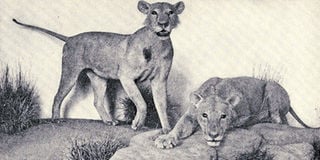
During a year-long reign of terror in 1898 near the Tsavo River, where the British colonial government was building a bridge over the river, two man-eating lions devoured at least 35 Indian workers and unknown number of local residents.
The man-eaters were finally killed by Lieutenant-Colonel John Henry Patterson the engineer in-charge of bridge building on the railway line in December 1898. Patterson kept the lions’ skins and skulls of these unique males, which did not have manes, a characteristic of lions in the Tsavo (“place of slaughter”, in the local language) region. In 1907, at the urging of wildlife and adventure-enthusiast, President Theodore Roosevelt, Patterson published a book “The Man-Eaters of Tsavo and Other East African Adventures” describing the story of the lions, which became an instant best-seller and is still widely available to date. The story created a legend and lions were talked about only in whispers out of a morbid fear of an animal that could kill and eat a human being in seconds. A quarter of a century later Patterson sold the trophies to the Chicago Field Museum for $5,000 a piece, which was a tidy sum at the time. The skins were then stuffed and are on display along with the original skulls.