Why Kenya’s wealthy are eyeing Italy

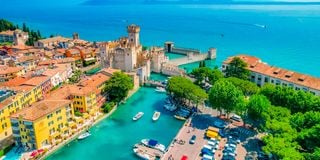
Rocca Scaligera Castle in Sirmione Lake Garda, Italy.

Photo credit: Pool

Mary Claudio Trevisan's journey to dual citizenship began with the 2010 constitutional shift.

After Kenya's 2010 Constitution lifted restrictions on dual nationality, she seized the opportunity to reclaim her Italian roots flowing through her paternal grandfather's Kenyan-Italian bloodline.
“I’m Kenyan, born and raised here, but my paternal grandfather was half Kenyan, half Italian. After the 2010 Constitution was passed, I applied for an Italian passport. It took three years to come through.

Whether it could have been faster, I'll never know,” she tells the BDLife.

The mother of three, aged 15, 13, and 11, is now stepping up and taking the next necessary steps to secure a second residency for herself and the children.

She is among Kenyans exploring second residencies and citizenships in other countries.

In 2017, Italy introduced the Italian Golden Visa, a residence-by-investment programme designed to attract foreign capital by offering residency in exchange for strategic investments.

By investing in Italy’s economy, one earns the right to live, work, and study in the Mediterranean nation. The programme grants a two-year visa, renewable for an additional three years, provided the investment is maintained.

Holders may later apply for permanent residency once they meet the long-term stay requirements of 10 years. The scheme has quickly blossomed into a lifeline for wealthy Africans seeking global mobility.

Orience, a global investment migration firm operating in Africa from its South African base, tells the BDLife the scheme has been gaining traction in recent years among Africa’s ultra-high (UHNWI) and high-net-worth individuals (HNWI), with South Africans and Kenyans emerging as the continent's most enthusiastic applicants over the past two years.

“Residency-by-investment programmes such as Portugal’s Golden Visa or the US's EB-5 programme, China, and India are always at the top, but among African countries, South Africa leads, followed by Kenya. Kenya’s numbers are still much lower than South Africa’s, but they’re growing quickly” notes Lisa Bathurst-Orience’s Southern Africa Manager.

She notes, “The Kenyan number wouldn’t be anywhere near 60 percent; it’s a very small fraction as these programmes require a high level of wealth, so you’re really looking at the top five percent or so.”

Luxury Property firm Knight Frank classifies UHNWIs as persons with a net worth of above $30 million (Sh4 billion), while those whose net worth is at least $1 million (Sh128 million) are classified as HNWIs.

Kenya has a substantial HNWIs base of approximately 6,800 individuals compared to South Africa’s 41,000 as of August this year, according to The Africa Wealth Report 2025 compiled by Henley and Partners.

Initially, when the Italian Golden Visa launched, applicants were required to invest at least €500,000 (Sh75 million) to qualify.

However, in recent years, the enquiries and applications have surged when Italy slashed the minimum investment threshold to €250,000 (Sh38 million). With this, one can invest in stocks or shares of an Italian innovative startup.

Other investment levels are €500,000 in an active Italian company, €1 million (Sh150 million) as a philanthropic donation to a project of public interest in culture, education, immigration management, scientific research, or heritage preservation. The highest investment threshold is €2 million (Sh300 million) in government bonds.

When the Italian government lowered the entry investment, that move triggered an avalanche of inquiries from South African and Kenyan elites, according to Orience.

"I've never pursued a second residency for my children before, but with this opportunity, the timing feels right. I see this opportunity as giving them a chance to integrate, learn the language and culture, and study in Italy. Personally, I don't speak Italian, it’s also an opportunity to invest there. The process now feels much more plug-and-play compared to when I applied in 2010 and had to wait until 2013 for approval.”

Since obtaining her Italian passport, Trevisan says one of the biggest perks has been the freedom to travel, and she believes an opportunity to secure a residency would benefit her even more.

“ I barely remember the last time I applied for a visa to the US or Europe. An Italian Visa allows you visa-free access to about 20 European countries, and having once studied in the UK, I know just how frustrating visa applications can be, especially to European countries.”

Orience, which also offers its financial consultancy services for high-net-worth clients in other attractive residency markets such as Greece, Spain, and Portugal, says that, whereas these markets also offer very mouthwatering deals, it has been impossible to ignore the rising interest demand for the Italian Golden Visa by South Africans, Kenyans, and Namibians.

“Italy’s Investor Visa or Golden Visa is fast becoming one of the most cost-effective and flexible residency routes for Africans seeking opportunities in Europe, and I see a few reasons for that. Initially requiring a minimum investment of €500,000, the threshold has since been lowered to €250,000 through an innovative real estate company accredited by the Italian government. Adding to its modern appeal, investors also now have the option to transact using cryptocurrency,” says Lisa Bathurst-Orience, Southern Africa Manager.

Ms Bathurst adds that the processing times of Italy’s Golden Visa are also considerably faster, often taking three to four months compared to for instance, Portugal, which can extend over 12 to 18 months or even longer.

But that’s not all.

Italy also imposes no strict minimum stay requirement, whereas Portugal's Golden Visa typically demands about seven days per year.

“This scheme unlocks mobility across the 26 countries of the Schengen zone, education in top-ranked EU schools and universities, and Italian healthcare access ranked as one of the world’s best, and family inclusion – spouse and children under 18 and citizenship in 10 years with minimal presence of one day per year required,” she goes on.

To further incentivise, the programme processing of Italian Golden Visa takes 60 days.

“You’re approved for the visa before transferring any funds, which makes it low-risk. Investing in this Visa also comes with very attractive and favourable tax incentives and an assured three percent return on investments in government bonds.” Ms Bathurst adds.

For citizenship paths, Italy requires 10 years of residency before naturalisation, matching Spain, while Portugal currently allows citizenship after five years, though proposed reforms may extend this period, Ms Bathurst adds.

Healthcare and education access

Once residency is established, it guarantees the investor access to essential public services, though a few distinctions remain between residents and full citizens.

Golden Visa holders are also eligible to register with Italy’s national healthcare system, the Servizio Sanitario Nazionale (SSN).

The SSN covers most essential medical services, with only modest co-payments required for certain treatments or prescriptions.

Compared to private healthcare, these costs are significantly lower, making public care an attractive option for most Italian residents.
Besides health care, without needing to relocate, the residency also offers access to European universities at local tuition rates.

Closure of Spain Golden Visa

The discontinuation of the Spanish Golden Visa in April this year has also contributed to the rise in enquiries and applications for the Italian Golden Visa.

Since its launch in 2013, before its suspension, the Spanish Golden Visa had been one of the most sought-after second residency programmes among African high-net-worth individuals.

The Spanish Golden Visas allowed individuals to make investments with an entry investment of Sh75 million in Spanish real estate businesses.

But visa holders were not obliged to live, work, or study in Spain, even though they had purchased the right to do so, meaning they could just as easily use properties as personal holiday homes or to rent out to tourists.

However, in 2024, the government announced it was stopping the programme this year to address the rising property prices and help ease Spain’s housing shortage, which could reach a deficit of 600,000 homes in 2025.

Venice, the new frontier

Such a geopolitical situation pushed investors to look for other options, and Ms Bathurst says the floating city of Venice is emerging as one of the most eye-catching Italian cities for wealthy Africans.

“Beyond its rich cultural history and romance, Venice has become one of the most compelling strategic investment opportunities in Europe, especially for African families seeking residency through real estate.

“The investments are in pre-existing hotels across Italy, such as the historic Garibaldi Hotel in Venice, now being refurbished under the luxury Soho Hotel Group. Because it isn’t a timeshare or faceless equity fund giving assurance of real ownership in hotels in one of the world’s most visited cities, it's easy to see why there is a huge demand from Africa. The bricks and mortar boutique hotel is also just good business as Venice is in huge demand as a tourist destination and hence demand for hotel rooms consistently outpaces supply,” she says.

Ms Bathurst also observes that the majority of these wealthy Africans are not looking to leave their home countries but have an investment tool that can earn them money in foreign currencies, which translates into good returns when reinvested in Africa.

“The appeal isn’t really about whether Africans personally like Venice. You don’t even have to live in Italy to qualify for residency. But Venice is one of the world’s most popular tourist destinations, so investing in hotels or property there is secure and potentially very profitable. You can make money without ever setting foot in the country and still gain European residency. Its for these reason that the wealthy are increasingly investing abroad because these programmes allow them to diversify into strong currencies. The Kenyan shilling has been depreciating, which means local wealth is losing value. Investing in euros, pounds, or dollars acts as a hedge.”

Ms Bathurst further adds: “Also, Kenyans love tangible investments, especially real estate, bricks and mortar. So, these programmes appeal culturally, too. You can buy into property or a company that invests in property, and in return, you get more than just an investment so you gain lifestyle and tax benefits. For example, as a resident, you no longer have to worry about visa restrictions. There are also tax efficiencies if you move part of your business structure abroad.”

For the super wealthy Africans seeking even greater mobility, Ms Bathurst says they strongly advocate for Caribbean citizenships such as St. Kitts and Nevis, where a $250,000–$300,000 (Sh32 million - Sh40 million) investment grants a passport within five months, providing visa-free access to 168 countries.

Another option for those seeking even greater mobility is the US EB-5 Green Card.

“We had a client, a Kenyan energy entrepreneur, who chose the US EB-5 Green Card route. By investing $800,000 (Sh103 million) in a US property project, he secured green cards for his family, saved significantly on his children’s university tuition, and gained permanent business access to the US market.”

PAYE Tax Calculator

Note: The results are not exact but very close to the actual.