Stamp duty hits low-value stock market transactions

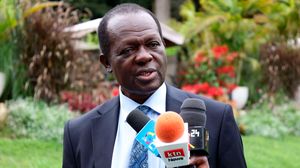
Theo Capital Holdings Co-founder and Chairman Eric Ruenji delivers a speech during a past event on October 6, 2025 at JW Marriott in Nairobi.

Photo credit: File | Nation Media Group

Low-value transactions on the Nairobi bourse including single share trading have been made expensive by the Sh2 stamp duty charge, hurting small investors.

The stamp duty –charged for every Sh10,000— has pushed fees as a share of total transactions to more than seven percent on small value transactions with those under Sh100 being the hardest hit.

A buyer of a single share of Absa Bank Kenya on Tuesday would have parted with up to 7.78 percent in fees, the highest of which is stamp duty at Sh2.

By bidding Sh30.20 for the single Absa share, an investor would have been required to pay Sh2.45 in charges including the Sh2 stamp duty and Sh0.34 in brokerage commissions with the balance being minor charges collected by the Capital Markets Authority (CMA) and the Nairobi Securities Exchange (NSE).

Fees on purchase or sale of 100 units of Absa shares would fall to as low as 1.52 percent or Sh46.70 of the Sh3,066.70 net consideration.
The stamp duty is charged at a flat rate of Sh2 for every Sh10,000 transacted in the market.

Players have pointed to the stamp duty for the costly fees on small value transactions, which risks frustrating the NSE’s quest for single share trading.

“It’s been very expensive for the person we are trying to bring to the stock market and one of the clear challenges is the stamp duty on small ticket sizes,” Theo Capital co-founder and chairman Eric Ruenji told the Business Daily.

“For a person buying two or three shares per day or week, it becomes quite expensive for them.”

In July last year, the NSE changed its rules to allow for trading shares in multiples of one (single share units), shutting down the odd lots board, which handled trades of less than 10 shares since the market’s automation in 2006.

The change ended a more than two-decade era of a two-tier trading board system, which improved market access for retail investors by lowering the entry barrier imposed by the 100 shares minimum purchase rule.

The 100-share rule had placed the stock market out of reach for some retail investors especially for counters with a high nominal price such as BAT Kenya and Standard Chartered Bank Kenya.

The Sh2 stamp duty which is set at a flat rate has meant that the transaction charge surpasses the cost of shares for counters such as Uchumi Supermarkets (Sh1.46) and Nairobi Business Ventures (Sh1.57) based on Tuesday prices.

Market players have proposed scrapping stamp duty charges on the first Sh10,000 dealt on the NSE to lower the overall transaction fees on small value trades, which are mostly carried out by retail/individual traders.

“We had a conversation with President William Ruto last week and we have proposed to have the stamp duty removed for transactions where the value is under 10,000. Market players will also need to bring down their levies including brokers as you cannot just ask one single party to lower their fees,” Mr Ruenji added.

“We have reached a point where we need to include retail traders in the market and part of this is making it cheaper for the individual trader.”

The NSE is betting on several reforms to grow the number of retail investors participating in the market including single share trading.

The move is expected to increase individual market participation and complement other innovations including the start of shares trading via the M-Pesa mobile-money platform.

The NSE expects to bring up to nine million individual investors to market by the end of 2029.

“The target of nine million active retail investors indicates a desire to democratise access to the market, promoting financial inclusion and enhancing capital market participation across Kenya and potentially the broader African region,” NSE said in its 2025-2029 strategy.

“This goal targets one-third of Kenya’s working population aged between 18 and 64, which currently stands at 32 million.” The start of single shares trading was deemed as one of the last barriers to easing market access.

Beyond allowing small volume trades, the removal of the 100-shares floor has allowed bigger ticket investors to buy more share units.

“The idea is if you were buying shares in batches of 100 units, you probably wouldn’t have exhausted your funds which can now take up an additional 20 or 30 shares,” said Eric Ruenji.

Follow our WhatsApp channel for the latest business and markets updates.

PAYE Tax Calculator

Note: The results are not exact but very close to the actual.