How KTDA bosses hurt market with floods of poor-quality tea supplies

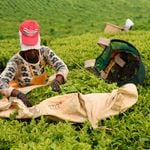
Farmers harvest tea in the Iriani area of Nyeri County on September 14, 2025. 

Photo credit: File | Nation Media Group

A section of Kenya Tea Development Agency (KTDA) directors deliberately influenced the supply of low-quality stocks to the regional auction, hoping to irregularly benefit from a guaranteed reserve price, an audit has revealed.

The audit by the Tea Board of Kenya (TBK) established that some rogue officials allowed factories located west of the Rift Valley to supply poor quality tea to the auction after the government introduced a $2.43 (Sh314.09) reserve price for every kilogramme of tea sold at the Mombasa auction in July 2021.
The reserve price was introduced as a guarantee that smallholder farmers would fetch a minimum return on the tea they supplied to KTDA. The reserve price was scrapped in October last year due to concerns of accumulating stocks at the sale.

“Some of the directors required factory managers to compromise green leaf standards from tea farmers on account of the guaranteed reserve price. This not only negatively affected the absorption of tea from the region, leading to accumulating stocks of unsold teas, but also, tea farmers got used to the production and supply of green leaf of lower quality,” TBK said in a presentation of its audit finding to a committee of Parliament.

The board said its surveillance to confirm green leaf quality standards in the regions showed they had fallen below 50 percent, against the minimum desired quality of 60 percent, mainly due to the low quality of leaf plucked by farmers.

KTDA on Tuesday blamed the unsold tea for borrowing Sh12.8 billion, noting that it procured bridging finance to pay farmers who had already delivered their produce.

Unsold tea stocks hit 104 million kilogrammes last year from a low of 37 million kilogrammes in 2021 before the State abandoned the reserve price policy.

The drop in tea quality affected farmers from Kericho, Bomet, Nyamira, Kisii, Nandi, Vihiga, and Trans Nzoia.

MPs in the Agriculture Committee also accused some KTDA directors of being the main beneficiaries of procurements by its factories in Rift Valley and western regions, calling on the tea sector regulator to conduct lifestyle audits on them and other influential persons in factories.

“In some factories, board members were the main beneficiaries of procurement processes,” the committee said in a report tabled before Parliament last week.

The revelations come amid concerns from farmers that the factories have been buying products at inflated prices, raising production costs, and causing farmers to pocket less from their sweat.

The parliamentary report established that the practices by KTDA directors, clerks, and other cartels at its factories have contributed to a situation where the majority of the 600,000 tea farmers supplying the agency with produce are earning less.

“Cases of falsification of the weighing scale at buying centres were reported in the west of the Rift Valley. Some farmers are given less kgs than what they have supplied, therefore reducing their earnings,” the committee observed.

The MPs now want TBK to audit all tea factories and prosecute all officials found to be committing malpractices.

“The Tea Board of Kenya should conduct a lifestyle audit of the directors, clerks, and other influential persons in the factories,” the committee recommended.

The farmers affected come from seven counties on the West side of the Rift Valley and supply 70 percent of the tea processed and marketed by KTDA.

In a petition to the parliamentary committee, the affected farmers accused KTDA directors and factory boards of misappropriation of funds, eroding trust, and reducing farmer income.

“Widespread corruption among clerks, managers, and directors requires lifestyle audits and recruitment investigations. High production costs driven by poor financial discipline rather than low market prices, failure to control rising production costs, including inflated firewood procurement and staff expenses,” the farmers from West of the Rift Valley regions told Parliament.

The farmers complained that the malpractices have contributed to a situation where their tea fetches lower prices at the auction as compared to their peers in the Mt Kenya region, calling for reforms.

KTDA factories serve an estimated 600,000 smallholder farmers across the country, the majority of whom are in the affected regions.
The pressure is mounting on KTDA even as a TBK audit on debts by its factories revealed that they had accumulated Sh26 billion by June, as it pointed out cases of financial indiscipline during the borrowing.

KTDA on Tuesday defended itself, saying that it borrowed to pay farmers after unsold teas at the Mombasa auction accumulated to 104 million kilos.

PAYE Tax Calculator

Note: The results are not exact but very close to the actual.