The decision by the government to lift safeguards on cheap sugar imports from sugarcane-growing members of the Common Market for Eastern and Southern Africa (Comesa) has rattled the traditionally troubled industry.
On Sunday, the Kenya Sugar Board (KSB) announced that Kenya had officially exited the import safeguard regime under the Comesa, ending 24 years of protection from cheap sugar imports from the bloc’s other 20 members. The country had sought extensions of the safeguards eight times.
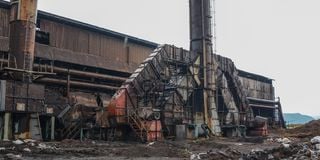
Kenya has been relying on the safeguards from Comesa against cheap imports since 2001 as a means to protect its struggling local sugar industry, where millers, especially state-owned factories, are struggling under the weight of debt and ageing machinery.
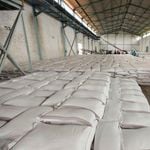
Kenya had been allowed to import up to 350,000 tonnes of sugar from the Comesa region to bridge the local deficit.
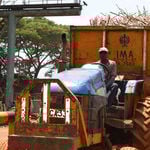
The safeguards were in place because the once vibrant and dominant state-owned sugar millers in western Kenya, including Chemelil, Sony, Muhoroni, Nzoia, and Mumias, had slumped into a sorry state amid piling debt and intermittent shortages of raw materials.
This situation left the country reliant on imports because private players, such as West Kenya Sugar Company, Sukari Industries, Kibos Sugar and Allied Industries, and Butali Sugar Company, also struggled to cope with rising national demand for the sweetener.
Comesa had issued a raft of measures to Kenya on the road to liberalisation. These include lowering the cost of production, sugar factories diversifying into other revenue streams such as production of ethanol and cogeneration, changing the payment formula, and increasing production capacity.
Analysts have questioned the timing of the removal of the safeguards, saying the Kenyan sugar industry remains in dire straits despite the recent takeover of public sugar millers by private investors.
“Kenya did not do much since 2001,” Scholastica Odhiambo, an Economics lecturer at Maseno University, said, noting that instead, the country continued to be a net importer. “Which means it is a capital flight issue,” she added.
The decision to lift the safeguards comes six months after leasing of four inefficient state millers to private investors as part of reforms aimed at invigorating the industry.
Nzoia Sugar Company was leased out to West Kenya Sugar Company, Chemelil to Kibos Sugar & Allied Industries Ltd, Muhoroni to West Valley Sugar Company, and Mumias to Sarrai Group, although the latter deal faced legal hurdles and was halted in court.
Critics have questioned how the millers could have developed a strong footing in such a short time, arguing that the policy shift will benefit sugar importers at the expense of local producers and farmers.
Saulo Busolo, a former chairperson of the KSB and a farmer, criticised the removal of the curbs, arguing that major economies, including the US and the European Union, heavily protect their domestic sugar industries, with the sweetener being treated as a “sensitive” commodity in nearly every trade pact that countries enter.
Mr Busolo noted that leasing of the state millers was supposed to be about reducing the cost of production, which he doubts has been achieved.
“Has this leasing translated into a reduction of cost?” wondered Busolo. Busolo also questioned the statistics that informed the decision to drop the safeguards. “These private millers are being destroyed by these policies,” said Busolo.
There are also concerns that, with the country nearing an election year, some cartels and political actors may exploit the opening to import cheap sugar and use the proceeds to bankroll campaigns ahead of the 2027 elections.
KSB chief executive officer Jude Chesire, however, defended the lifting, saying Kenya had exhausted the allowable extension limits in August last year. But with the leasing of the four state-owned millers, Kenya was forced to end protection as the firms were no longer “infants” that needed to be cushioned from competition.
“The safeguards were meant to protect the [sugar] industry and treat them as infants,” said Chesire.
Mr Chesire said that the Comesa Council of Ministers extended the safeguards on condition that Kenya meets certain conditions, the last of which was “offloading” the inefficient state millers to private investors.
“That (privatisation) was the only condition remaining for the local sugar industry to be competitive. With that condition exhausted, we are supposed to be adults,” explained Chesire on the local sugar companies.
Mr Chesire dispelled fears of abuse of the import window, insisting that despite the opening, the government would not allow a free flow of sugar from Comesa or outside the bloc.
He did not explain how this would be enforced, given that free trade is meant to allow the uninterrupted movement of goods across member states.
“If there is no market for sugar, we will not approve,” he said.
For more than two decades, Kenya, one of the pioneer members of Comesa, a free trade area, has sought to protect its sugar industry from competition from the other members, including sugar-producing ones such as Egypt, Uganda, Mauritius, Zambia, Zimbabwe, and Eswatini.
Outside of Comesa, Kenya imports most of its sugar from India, the United Arab Emirates, and Brazil, as the country struggles to be self-sufficient.
Every four years since 2001, Kenya has sought extensions of the safeguards, even as it pledged to implement reforms to make the industry competitive and capable of meeting domestic sugar demand.
The safety nets were governed by strict benchmarks set by the Comesa Council of Ministers, including tariff-rate quotas, productivity investments, sector restructuring, infrastructure development, and continuous performance monitoring.
Private operators, including West Kenya, Kibos, Busia Sugar, and West Valley Sugar, took over the mills, committing capital for upgrades, sugarcane development, and diversification into power generation or bioethanol.
There are fears that most of these millers are not yet ready to compete with efficiently produced sugar from countries such as Mauritius and Egypt, the other sugarcane-growing Comesa members.
Mr Chesire, however, notes that most of the leased factories have improved their production capacity with Sony, for example, increasing its output 1,000 times in four months. The Migori-based miller made a profit of around Sh200 million, revealed Chesire.
He added that private investors have been injecting capital into the fledgling millers to improve efficiency, with Muhoroni — operated by West Valley — receiving about Sh1 billion.
Sony, which is operated by Busia Sugar, is reported to have received Sh1 billion while getting Sh5.7 billion from West Kenya. Chemelil is reported to have received around Sh5 billion from Kibos.
“That is money the government did not have,” added Chesire.
Dr Odhiambo welcomes the ending of the safeguards; she reckons that by the time the leased factories start production, which could take like 18 months, there will be a shortage of sugar in the market.
“The last person who pays the price is the consumer,” said Dr Odhiambo.
Despite the reforms, the country has continued to increase its imports of sugar, pointing to inefficient production by the local factories.
In the third quarter of last year, sugar imports rose by 80.7 percent to 159,711 tonnes from 88,372 tonnes in a similar period in the previous year. The imports were valued at Sh14.86 billion and Sh7.89 billion, respectively.
However, Chesire explains that things have been improving, noting that the drop in local production is due to the decision by the government to shut mills for six months due to a lack of mature cane.
Mr Busolo counters by saying that the very fact that the sugar factories were forced to close for lack of mature cane is sufficient evidence that the country is not yet ready to compete.
Nonetheless, Chesire expects the country to be self-sufficient by the end of next year, from the current 80 percent, with the remaining 20 percent being plugged through imports. In 2028, he projects the country to produce a surplus.
“We have moved from being a baby to a young adult who can stand on their own,” said Chesire.