State targets non-traditional zones in coffee revival drive

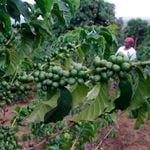
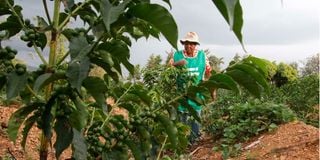
A farmer inspects her coffee bushes at Miteta village in Laikipia County on July 22, 2025. 

Photo credit: Joseph Kanyi | Nation Media Group

The government has set up two steering committees to spearhead a two-year drive to revive coffee farming, in the latest official effort to arrest declining production and reverse years of shrinking acreage in traditional highland zones.

According to a latest gazette notice by Cooperatives Cabinet Secretary Wycliffe Oparanya, the committees, a national and a county one, will design strategies to expand the crop beyond the core coffee belt, and specifically introduce the crop in emerging and non-traditional regions.
This, the notice indicates, will be effected through the cooperative movement as the State seeks to broaden production capacity and rebuild volumes lost to land conversions and crop shifts.

“The County Steering Committee shall have similar functions to the National Steering Committee at the county level and shall report on progress and outcomes to the National Steering Committee,” said Mr Oparanya in the gazette notice.

Most of Kenya’s long-established coffee areas have been shrinking as farmers in counties like Murang’a, Kiambu and Nyeri convert land to avocado, macadamia and real estate due to poor returns over the years, with Kiambu losing chunks of farmland to residential blocks and gated developments.

The push into new zones comes at a time when counties like Laikipia, Taita Taveta, Elgeyo Marakwet, Siaya and Baringo have recently recorded rapid expansion in acreage under coffee, pointing to visible early tests of diversification that the State now intends to formalise and scale more deliberately.

The committees will also coordinate various public agencies and key sector institutions to anchor the revival strategy within cooperatives, which remain the core mobilisation vehicle for smallholder farmers who produce the bulk of Kenya’s coffee output.

The State is banking on cooperatives to provide the aggregation scale required to make coffee viable in new regions where the crop has never been traditionally grown and where individual farmers would otherwise lack commercial leverage and market discipline.

The move adds to the ongoing reform track where the government has since February 2023 restructured regulation, including bringing the Nairobi Coffee Exchange under the Capital Markets Authority, and licensed brokers in place of marketing agents.

Recent official trade data showed an improvement in export performance and a lift in both volume and value of unroasted coffee shipped out of Kenya in the first half of this year, with exports nearly doubling to Sh35.4 billion, signalling renewed farmer attention and improved incentives.

PAYE Tax Calculator

Note: The results are not exact but very close to the actual.