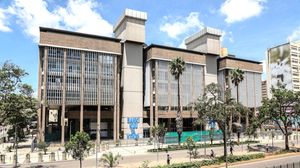
The Central Bank of Kenya (CBK) mopped up a cumulative Sh9.18 trillion in liquidity from the banking sector in 2025, underlining efforts to keep the shilling stable amid its dollar purchases in the market and slow growth in private sector lending.
Traders said that the liquidity mop-up through repurchase agreements (repos) came at a time of rising liquidity in commercial banks, whose liquidity ratio rose to 59 percent in October 2025 from 55.8 percent in January 2025, against a regulatory minimum requirement of 20 percent.
Repos refer to short-term arrangements where the CBK sells government securities to commercial banks with a commitment to buy them back later, effectively reducing the cash held by the institutions.
The liquidity ratio measures the amount of cash and near cash assets held by banks in comparison to their short-term deposits, showing how efficiently they are deploying customer savings toward making profits (through lending).
Banks’ annualised growth in lending to the private sector remained in the single digits at 6.3 percent in November, although this was a marked improvement from the contraction of 2.9 percent seen in January 2025.
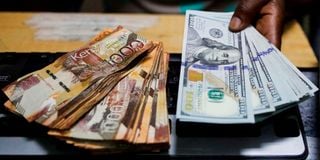
This shilling liquidity was also partially enhanced by the CBK buying dollars from the market –in exchange for shillings—during the year, which contributed to the buildup of its forex reserves to the current record high of $12.38 billion (Sh1.6 trillion) from $9.2 billion (Sh1.19 trillion) at the beginning of 2025.
“Having built up the dollar reserves by over $3 billion, the shilling liquidity needed to be mopped up to keep the shilling stable,” said a executive at a commercial bank.
The shilling has been trading within a narrow band around the129 level to the dollar since August 2024, having defied a series of global shocks including US trade tariffs and conflict in the Middle East.
In a market where there is excess liquidity, the shilling would be expected to weaken as too many shillings chase a few dollars, with the opposite being the case when there is lower liquidity. The CBK liquidity mop up thus kept the forex market stable by balancing the supply of the local and foreign currencies.
The CBK utilises several open market operation tools to regulate the liquidity in the market, including the repos and reverse repos, and term auction deposits (TADS).
Repos entail a sale of government securities held by the CBK to banks, which effectively reduces the level of deposits the lenders hold with the regulator, thus cutting their ability to lend new loans onto the economy. The CBK then repurchases the securities after three to seven days.
Reverse repos work the other way, injecting liquidity into the banking system by allowing banks to borrow from the CBK using their holdings of bonds as collateral. Reverse repos run for periods of between seven and 14 days.
Term auction deposits work in the same way as repos, but without the use of a collateral, and are typically available for longer durations of between 14 and 28 days.
While last year saw a sharp rise in liquidity mop-up activity, the opposite was the case in 2024, when the CBK injected a cumulative Sh5.6 trillion into the banking system through reverse repos.
These injections and mop ups are however on a cumulative basis, with the lenders usually rolling over their facilities when they come due at the end of respective terms.
The rising cash holdings in the hands of banks have pushed the CBK into a number of monetary policy measures to spur lending to the private sector and drive economic growth.
Key among these actions is the policy easing action by the CBK’s monetary policy committee, which has cut the base rate in each of the last nine meetings held since August 2024, lowering the policy rate from 13 percent to nine percent.