Kenya has raised $2.25 billion (Sh290.3 billion) in a new Eurobond issuance whose proceeds will go towards refinancing existing loans worth $500 million (Sh64.5 billion) and contributing to the government’s external borrowing target for the current fiscal year.

The new Eurobond has been split into two tranches, comprising a $900 million (Sh116 billion) seven-year paper that will pay investors annual interest at 7.875 percent, and a 12-year paper with a value of $1.35 billion (Sh174.5 billion) and a coupon of 8.7 percent.
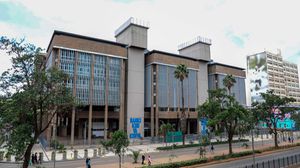
The National Treasury building in Nairobi on April 16, 2025.
Photo credit: Dennis Onsongo | Nation Media Group
Market data published by Bloomberg showed that both tranches in the sale that opened on Wednesday were oversubscribed, with the seven-year option raising offers of $1.8 billion (Sh232.2 billion), and the 12-year attracting bids worth $2.8 billion (Sh361.3 billion).
“The Eurobond issuance attracted strong, high‑quality demand, with the order book significantly exceeding the offered amount. The proceeds will be used to refinance existing public debt obligations…any remaining proceeds will support general budgetary needs,” said National Treasury Cabinet Secretary John Mbadi.
“This issuance aligns with the government’s strategy to smoothen the maturity profile of Kenya’s external debt and proactively manage public debt liabilities.”
This is Kenya’s largest Eurobond issuance since the debut sale in June 2014 which raised a combined $2.75 billion (Sh354.8 billion at today’s rate) via a pair of five and 10-year tranches, which have since matured and been repaid in full.
Longer maturity profile
The government has turned to the sovereign bonds market with increasing frequency in the last two years to raise funds to refinance existing loans, effectively lengthening the maturity profile of external debt.
Proceeds of the latest bond sale are expected to cover a $500 million partial buyback of two existing Eurobonds which opened on Wednesday and will close on February 26.
The government is repurchasing $350 million (Sh45.2 billion) on a 12-year bond maturing in 2032, and $150 million (Sh19.4 billion) on a 10-year bond that falls due in 2028.
The 2028 bond has an outstanding principal of $371.56 million (Sh47.94 billion), while the 2032 paper has a principal of $1.2 billion (Sh154.8 billion). The papers pay annual interest at 7.25 percent and eight percent respectively.
Bondholders will also be paid accrued interest on the bonds, which is the amount of interest that they have earned since their most recent semi-annual interest payments in August and November 2025.
Besides the price premium, a buyback hands bondholders their principal investment early, giving them an opportunity to reinvest the funds in other assets that may be offering higher returns.
Photo credit: Shutterstock
This month’s transaction marks the fourth Eurobond buyback in the last two years, the most recent in October 2025 targeting the 10-year 2028 bond.
This October buyback, which was funded using proceeds of a new $1.5 billion issuance, however fell short of its $1 billion target after bondholders agreed to sell $628.4 million (Sh81 billion) worth of notes in the tender, leaving the balance of $371.56 million in issue.
This left a balance of $871.6 million (Sh112 billion), which went into the government’s coffers to fund the budget deficit and repay other debt.
Similarly, the government will now hold a surplus of $1.75 billion (Sh225.8 billion) from the new Eurobond after settling the latest buyback, although it has not given concrete details of what it will do with the cash.
The 2026 Budget Policy Statement (BPS) however shows that the Treasury is planning to increase its external debt principal repayments for the current fiscal year by Sh342.5 billion to Sh682.7 billion.
At the same time, it will increase its commercial borrowing by Sh358.2 billion, from the Sh221.2 billion that was approved in the June 2025 budget to Sh579.4 billion, allowing it to cover the expanded debt repayments.
This means that the Eurobond surplus is likely to be utilised in further liability management operations, which could include refinancing of the country’s existing Sh300 billion syndicated loans that are charged interest of up to 12 percent.
The supplementary budget column on the BPS also indicates that the government is cutting its net external borrowing target from Sh287.4 billion to Sh254.8 billion, while increasing the domestic target to Sh885.9 billion from Sh613.5 billion.
To allow it cut the net external borrowing target and make room for enhanced liability management, the State has indicated it will reduce the projected borrowing from the World Bank’s Development Policy Operations programme to Sh101.4 billion, from the earlier print of Sh170.5 billion.
It is also cutting its expected inflows from programme loans from Sh195.3 billion to Sh130.9 billion.