Time flies with great content! Renew in to keep enjoying all our premium content.
Prime
Private pension funds cede more contributions to the NSSF
Private pension schemes are allowed by the law to handle a portion of the deductions in exchange for a management fee but the cash forms part of the NSSF’s cash stockpile.
The National Social Security Fund (NSSF) is expected to put more pressure on private pension schemes as deductions to the State-controlled fund are scaled further this month.
The third year of implementation of the NSSF Act 2013 will see employers with internal pension arrangements redirecting more contributions to the fund from private pension schemes to shield themselves from higher operating costs.
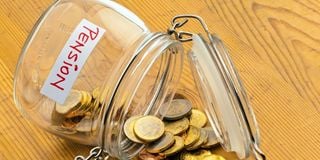
Mandatory employer and employee contributions to the NSSF are set to rise to Sh960 this month from Sh840 previously while secondary contributions known as tier II will jump to Sh7,680 from Sh3,480 currently.
Employers with private pension schemes have redirected contributions to independent schemes to meet the higher NSSF contributions, reducing the pool of funds available to commercial pension schemes.
Most employers, for instance, set the rate of contribution to private pension schemes at 7.5 percent implying a contribution of Sh15,000 for an employee earning a salary of Sh100,000, inclusive of the employer matchup.
An employer with a private pension scheme can now yank Sh7,680 from the arrangement to meet the higher deductions to the NSSF, leaving behind a balance of Sh7,320 from Sh11,520 previously.
The offset from private pension schemes has spared employers from making additional pension contributions even if no savings are made from the re-allocation of contributions.
“To the extent that the employer contribution rates to private pension schemes are higher than six percent (the NSSF requirement), then the increase in rates would already be covered,” PwC, partner, director- tax reporting and strategy, Obed Nyambego, told the Business Daily.
“There are no savings as they were already meeting or exceeding the rates set by NSSF in contributions to their private schemes—it’s just that they would be contributing more.”
Private pension schemes are already wary of the hit from increased deductions this month even as the NSSF Act allows them to manage a portion of the higher deduction referred to as Tier II.
“As discussions around NSSF contributions continue, policies must support a diverse and competitive pension landscape, rather than creating rigid structures that limit choice and increase financial burdens,” an official of one approved private scheme previously told this publication on condition of anonymity.
Higher contributions to the NSSF have pushed pension cash held in the fund past the Sh400 billion mark as of June last year off the back of increased deductions which began in February 2023.
Private pension schemes are allowed by the law to handle a portion of the deductions in exchange for a management fee but the cash forms part of the NSSF’s cash stockpile.
Non-pensionable employees including contractors are meanwhile set to feel the full brunt of the higher NSSF deductions starting with February pay slips with no offsets from private schemes.
The employees whose gross salary stands at or is higher than Sh72,000 will for instance part with Sh4,320 as contributions to the NSSF up from Sh2,160 in January.
The take home pay for employees grossing Sh50,000 and Sh500,000 will for instance come down by Sh588 and Sh1,512.
An employee with a gross salary of Sh50,000 will now take home Sh39,029.15 from Sh39,617.15 previously.
The higher deductions will put an additional squeeze on households' disposable incomes, taken together with other recent new deductions including the 1.5 percent housing levy, and the 2.75 percent deduction to the Social Health Insurance Fund (Shif).
Experts argue a wholesome review of deductions met on employees would be critical in addressing the thinning pay slip as some workers risk falling below the one third rule.
The National Treasury has previously attempted bringing some relief to salaried workers by including housing levy and social health insurance deductions as part of reliefs on taxable pay.
“The squeeze to the payroll is occasioned by multiplicity of deductions such as Paye, SHA, AHL, mortgage deductions, Sacco loans, Helb, union membership and chamas in a tough economic environment. The authorities should take a holistic look at the impact of these deductions on employees’ incomes,” added Mr Nyambego.