What it will take to restore the integrity of Nairobi’s buildings

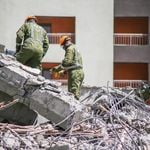
Rescue operations at the site where a multi-storey building under construction collapsed in South C on January 2, 2025.

Photo credit: Billy Ogada| Nation Media Group

Nairobi’s rapidly rising skyline has once again come under scrutiny following the collapse of two buildings in the early days of 2026, raising fresh concerns over construction standards, oversight and accountability.

The first incident occurred in South C, where a 16-storey building collapsed under unclear circumstances on January 2, 2026.
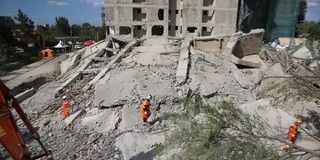
Just days later, another building came down in Karen, intensifying public anxiety and shaking confidence in the safety of urban developments across the capital.

The repeated collapses have reignited debate over culpability within the construction sector and prompted urgent calls for stronger enforcement of building regulations to restore public trust.

Speaking at the site where the building in South C collapsed, Nairobi Governor Johnson Sakaja blamed weak enforcement and loopholes, saying the developer had repeatedly tried to construct at the site unsuccessfully.

“Sometimes when there are infractions, like these people were charged a couple of times, that prosecution power needs to be returned to the county government, because there was a point when charges were dropped for a fine of Sh20,000,” he said.

In a statement dated January 4, 2026, the Director of Public Prosecutions (DPP) directed the Inspector-General of Police to record statements from all relevant persons, including the developer, the contractor, and those responsible for building and construction approvals, inspections and enforcement, and forward the resultant file for perusal and action within seven days from the date hereof.

The collapse sparked heated debate online and within affected communities over the enforcement of building regulations.

Material failures

According to structural engineer Nashon Tambo, several factors could be contributing to the failures.

“Building collapses can be due to a number of reasons. In the recent past in the country, most of them have been alluded to failures in the materials we use in construction because we have seen specifically cement that is of low standard or repackaged,” Mr Tambo told the Business Daily.

He added that the widespread use of substandard materials remains a major concern.

“There is also an influx of repurposed or reconstituted steel reinforcement bars. Additionally, collapses can result from design challenges,” he said.

The incidents have renewed calls for tighter regulation, rigorous inspections and accountability among developers, contractors and regulatory authorities as Nairobi continues its rapid urban expansion.

“Usually when we are constructing a building, there is an architectural design that is done by an architect; they should be done by a licensed and experienced architect, then it goes to a structural engineer to give the building muscle,” added Mr Tambo.

“Sometimes these designs are either not properly done, or some people just get unlicensed individuals or not very experienced people to do them and pay bribes for these designs to be approved.”

A report by the Institution of Engineers of Kenya (IEK), cited last week at the height of investigations into the collapse of a building in South C, showed that only 15 percent of buildings in Nairobi are considered safe, and that just 80 percent of construction projects countrywide involve professionals.

The report showed that inspections conducted by the National Building Inspectorate on about 15,000 buildings revealed that only 15 percent were safe, while about eight percent were rated as fair and capable of use.

George Ndege, the President of the Architectural Association of Kenya (AAK), the body that governs building professionals in the country, said many Kenyans are not using professionals, even though there are not many in the sector.

“We don’t follow the processes and use the right people, so many things go wrong, leading to collapses…what most developers are doing is either out of ignorance or to get things to go faster, they move through the process, like at the county levels, trying to avoid the hurdles through graft,” said Mr Ndege.

According to the National Construction Authority (NCA), the South C building, registered on November 8, 2023, was non-compliant at the time of the collapse, echoing the county government’s statement that the building had been flagged for multiple infractions in May, July and December 2025.

Profit pressures

Despite repeated incidents, enforcement gaps and cost-cutting by developers, the situation continues to expose residents to safety risks, raising concerns about the quality, affordability and regulation of urban housing.

“The reasons are to do with compromise with quality and mostly cost driven; it either comes from profit or what the developers are trying to achieve like in the case of South C; you clearly see the mention of addition of floors, that is more or less profit driven but what is the process of adding the floors and whether the professionals were involved,” said Diana Musyoka, a quantity surveyor and director of Epic Value Consultants.

Design alterations are not uncommon in the building and construction sector, but major changes are cautioned against.

“You shouldn’t even be having major changes in terms of design on site, ideally, you’re supposed to have better planning before you get to site... and as a quantity surveyor, I wouldn’t encourage changes on site,” added Ms Musyoka.

“However, since they still happen, the process is to have a better team, involve them in the changes you want done, assess whether it’s possible to do them, then get the approvals for the changes.”

Mr Tambo echoed Ms Musyoka’s sentiments on the need to use professionals when making changes to a blueprint and ensuring approvals are obtained.

“Cases where designs are changed on site outside of the approvals can have some challenges because sometimes these are done by individuals who are not very experienced and might also be quacks who are not licensed to do that,” added Mr Tambo.

Building collapses in Nairobi have repeatedly been linked to weak enforcement of construction regulations and the exclusion of qualified professionals from development projects.

In many cases, buildings are approved, altered or constructed without proper oversight by registered architects, engineers and quantity surveyors, undermining compliance with safety standards.

“We need to make information public; this includes all high-risk buildings, so that Kenyans are aware, there needs to be standardisation for examples of building materials,” added Mr Ndege.

The AAK called for vigilance and urged Kenyans to report or whistleblow to the relevant authorities when a building does not have the necessary permits.

Cracks in walls, columns or beams, sinking or uneven foundations, exposed or corroded reinforcement, persistent water seepage and visibly leaning structures are common warning signs of potential building failure.

Other red flags include unauthorised additional floors, poor-quality concrete, removal of structural elements and lack of professional supervision during construction. When these indicators are ignored, the risk of structural collapse increases significantly.

Construction without approved drawings, use of unqualified contractors and absence of professional supervision also significantly increase the risk of collapse.

Follow our WhatsApp channel for the latest business and markets updates.

PAYE Tax Calculator

Note: The results are not exact but very close to the actual.