How AI will boost travel, trade sectors

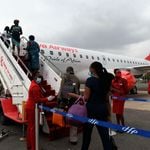
AI systems can cross-link passenger data and baggage/cargo manifests to detect inconsistencies.

Photo credit: Shutterstock

Travel and trade are crucial change agents in society, government and technology. The introduction of artificial intelligence (AI) is fundamentally altering how we travel and trade.

By utilising AI’s capabilities, the aviation sector is on the verge of massive disruptive changes that will present new opportunities and risks.
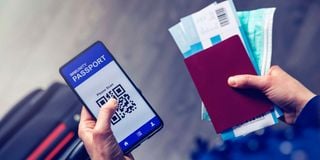
Using machine learning, predictive analytics and natural language processing, AI has the potential to revolutionise how institutions operate generally, but specifically by opening new avenues for customer service, risk management, business and travel advice.

For example, AI chatbots (computer programs designed to simulate conversations with human users, either through text or voice) and virtual helpers help with customer service around the clock, simplifying user interfaces and making it easier to answer questions quickly.

Consequently, they enhance consumer experience and reduce expenses. For instance, in risk management and credit scoring, AI algorithms can examine enormous amounts of data to identify patterns and assess risk levels. This makes trade data and travel information accessible to a broader audience.

Kenya Airways (KQ) recently signed a partnership with RoamBuddy to launch KQSafari Data, a solution developed at the Fahari Innovation Hub through the airline’s Open Innovation Challenge.

The service, offering more than 2,250 affordable roaming plans in 180 countries, aims to provide travellers with seamless, reliable, and cost-effective global data connectivity, addressing one of the key challenges for international passengers.

The African Continental Free Trade Area (AfCFTA), a deal aimed at significantly increasing trade within Africa, presents unique opportunities for AI. This also applies to the Single African Air Transport Market (SAATM), which potentially links 1.3 billion people in 54 countries with a combined gross domestic product of circa $3.4 trillion.

Ethiopia has started trading under the AfCTA. AI can hence make the bloc’s work better and reach its goals in both trade and travel.

For example, AI can help improve trade logistics by making delivery systems, customs processes, and tracking and tracing more effective and efficient. It can create and find the best travel routes and multi-modal options to move goods, predict delays and give both travellers and traders real-time information.

AI can analyse trade data to identify patterns, trends and connections. This is strategic for policymakers in making better choices, predicting and responding better to future trends.

AI-powered systems can make cross-border e-commerce more efficient, a sector that is highly anticipated to grow exponentially under the AfCFTA. This is because AI can create personalised product recommendations and automate customer service.

However, for AI to achieve the goals for AfCFTA and SAATM, it is essential to have good AI governance and regulation.

More investments must be made in digital infrastructure and education. With education and training, AI can help people acquire the skills they need for an African economy that works better together.

AI systems can cross-link passenger data and baggage/cargo manifests to detect inconsistencies.

Using AI plus blockchain, border management agencies could track every cargo item and passenger bag through secure, time-stamped digital records -> making it almost impossible to insert illicit material unnoticed. The outcome is improved accountability and transparency from check-in to aircraft loading.

Jack Bwana is Trade, Logistics & Supply Chain Consultant, Leverage Consulting. [email protected]

PAYE Tax Calculator

Note: The results are not exact but very close to the actual.