The name Lee Kuan Yew may not be instantly recognisable to many, yet for more than half a century he was one of the most influential figures on the global stage.
He served as the founding father and first Prime Minister of Singapore, steering the tiny island nation from fragile independence in 1965 through three transformative decades until 1990.
He has won the admiration of political and business leaders worldwide for his Midas touch in politics, socio-economic development and geopolitics.
Largely through his vision and leadership, Singapore was transformed from a fledgling State into a manufacturing powerhouse, earning its place among the Asian Tigers and the world stage.
In recent months, Kenyan President William Ruto has spoken about transforming Kenya into the “Singapore of Africa.” Given our current realities, is this ambition truly within reach? And if so, what lessons can we draw from how Lee Kuan Yew and Singapore?
Singapore’s metamorphosis from a developing country post-colonialism into a thriving first-world nation stands as one of the clearest examples of how visionary leadership and disciplined policymaking can shape a country’s destiny.
Its rise to a global economic powerhouse was the result of deliberate, well-sequenced decisions that prioritised strong governance, long-term economic planning, and world-class infrastructure.
By laying firm foundations in these areas, Singapore set itself on the path to stability, competitiveness, and sustained growth.
Central to this success was Lee Kuan Yew’s focus on tangible economic and social outcomes. His administration strengthened the rule of law, enforced strict anti-corruption measures, expanded access to education, and invested heavily in critical infrastructure. These policies did more than stimulate growth. They created political stability and enabled coherent, long-term economic planning.
As Kenya aspires to become the Singapore of Africa, we must reflect on where we stand and the strategic direction we must take to actualise our dream.
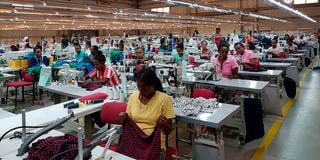
Notably, industrialisation has long been central to our development journey, yet today the sector’s numbers tell a sobering tale.
In 2024, manufacturing’s contribution to GDP declined to 7.3 percent, underscoring the distance between our aspirations and our current trajectory.
Replicating Singapore’s success in Kenya requires us to confront the structural challenges facing the manufacturing sector. This entails lowering the cost of power, reducing regulatory requirements, strengthening local content policies, improving access to affordable credit, investing in capacity building and skills development.
Strong governance, targeted foreign direct investment, sustained investment in human capital, world-class infrastructure, and adaptive policymaking will accelerate the realisation of Kenya’s Singapore dream. Such strategic planning will expand formal employment, enhance the export readiness of Kenyan products and improve trade facilitation.
The Singapore dream is attainable but only through deliberate, coordinated, and forward-looking initiatives.
This was not always the case. In the years following independence in 1963, Kenya embraced import substitution industrialization, shielding local textile and food-processing sectors through protective tariffs.
The results were remarkable. Manufacturing grew at an average of 8 percent during the first decade after independence. The establishment of the Industrial Development Corporation further drove this momentum by financing and managing state-owned enterprises, with industrial hubs established in Nairobi, Kisumu, Eldoret, and Mombasa.
Momentum returned in the early 2000s. Following the 2002 elections, the Economic Recovery Strategy revitalized the sector, raising manufacturing’s contribution to nearly 12 percent of GDP by 2011.
The launch of Kenya Vision 2030 in 2008 provided a renewed sense of purpose, repositioning industrialization as a cornerstone of economic transformation.
More recently, the establishment of Special Economic Zones and County Aggregated Industrial Parks (CAIPS) demonstrates renewed commitment to expand the industrial base and attract foreign direct investment.
Corresponding investments in infrastructure such as the Standard Gauge Railway (SGR), Port of Lamu and recent pronouncements on the Kenya Sovereign Wealth Fund on infrastructure aimed at strengthening logistics and regional connectivity, have addressed some of the long-standing constraints to competitiveness.
Ambition alone will not produce Kenya’s Singapore moment and increase the manufacturing sector’s contribution to the GDP from the current 7.3% to 20% by 2030. Industrial transformation is driven by deliberate policies, long-term investment, and strong governance. Where are we falling short?
The uneven distribution of Special Economic Zones has hampered industrial momentum. At the same time, Kenya’s rising debt burden which currently stands at 67.8 percent of the GDP sends negative signals to foreign investors, dampening inflows of long-term capital.
Unclear and frequently changing fiscal and tax policies further undermine investor confidence, making sustained industrial investment risky.
Because of the volatile business environment, small and medium enterprises are pushed into informality, left under-financed, and unable to scale. With limited access to affordable credit and reliable markets, few are able to grow into medium or large firms.
The writer is the Chief Executive of Kenya Association of Manufacturers and can be reached at [email protected]
Follow ourWhatsApp channel for the latest business and markets updates.