Regional power market will unlock electricity stability and affordability

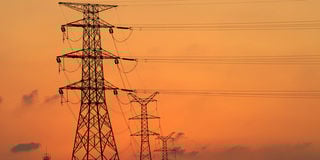
High-voltage power lines crucial to electricity transmission.

Photo credit: Pool

An interesting development is happening in the Eastern Africa region.

For a long time, countries in the region have developed intra-trade relationships that have extended to the trade in agricultural products, livestock and animal products, manufactured goods, mining and natural resources, as well as energy and petroleum products, among others.
Looking at the energy and petroleum sector, we have seen cross-border trade in refined petroleum products, the transit of goods through the Mombasa and Dar es Salaam ports, regional collaboration on energy security and standards, and shared infrastructure for transmission and distribution.

This year, we expect trade relations in the energy sector to go a notch further with the launch of an electricity market by the Eastern Africa Power Pool (EAPP).

This is commendable for the region because it will finally allow countries to trade power seamlessly through an interconnected grid. For countries within the market, it means improved electricity reliability for citizens, lower costs, and strengthened regional energy security.

The power pool will link national electricity systems and enable EAPP countries with surplus generation to export to neighbours facing shortfalls or higher electricity production costs, enhancing energy security, improving grid stability and encouraging efficient use of the region’s diverse energy resources.

The EAPP, established in 2005, has so far put in place measures to support the operationalisation of the power market. These include the development of cross-border transmission infrastructure, which has enabled member countries to exchange electricity.

For instance, Kenya imports 200 MW of electricity from Ethiopia and has energy exchange contracts with Uganda and Tanzania.

In 2025, Tanzania also began importing power from Ethiopia through the Ethiopia–Kenya–Tanzania interconnector, marking a significant milestone in Eastern Africa power trade.

Another milestone is the establishment of the Independent Regulatory Board (IRB), which has spearheaded the harmonisation of the regional regulatory framework.

This framework is essential to the success of the electricity market, as it creates a predictable, efficient and fair operating environment, reducing administrative barriers through uniform standards on grid codes, market operations, tariffs, safety and dispute resolution.

A regional power market is therefore a logical next step for Eastern Africa’s energy transition.

By pooling national strengths in hydropower, geothermal, wind and solar, countries can lower costs, improve reliability and reduce system-wide risks. In this context, regional electricity integration becomes a powerful development tool.

The writer is the Director General of the Energy and Petroleum Regulatory Authority and the Chairman of the Independent Regulatory Board of the Eastern Africa Power Pool (EAPP)

PAYE Tax Calculator

Note: The results are not exact but very close to the actual.