Supply chain disruptions due to the Covid-19 pandemic and the Russia-Ukraine war, geopolitical tensions, a high taxation regime, increased energy costs, ballooning public debt, the weak shilling, and a volatile exchange rate, among other socio-political factors, remain significant impetus for the economic woes Kenya is experiencing today.
Since the beginning of 2020, the Kenya shilling has lost about 25 percent of its value against the US dollar, falling from Sh99 to Sh136.
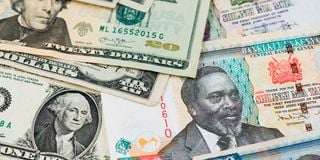
This means that businesses spend 36 percent more of the shilling to buy the same amount of dollars.
Volatility in exchange rates stifles international trade through excessive import and export price variability.
Fluctuations in exchange rates have pervasive effects, with consequences for prices, wages, interest rates, production levels, and employment opportunities.
Extreme volatility in exchange rates can alter international capital flows, including foreign direct investments, prompting firms to add a risk premium to the prices of internationally traded goods, reducing demand for such goods and resulting in strained economic growth.
Kenya’s economy achieved broad-based growth averaging 4.8 percent per year between 2015 and 2019.
In the fiscal year 2021–2022, the current account deficit worsened by 30.1 percent to Sh663.8 billion from Sh510.1 billion in 2020.
The rising import bill has pushed the trade up to Sh433.4 billion, from Sh365.7 billion in 2021.
The Central Bank of Kenya (CBK) data show the gap between imports and exports widened to Sh1.49 trillion from Sh1.23 trillion in 2021.
Having a favourable balance of payments ranks among the highest priorities of any government wishing to stimulate industrialization.
An unfavourable balance of trade slows down job creation for the growing skilled human resource as most revenue earned is spent on exports, raising production and job openings in source markets.
A widening trade deficit automatically piles pressure on demand for the dollar and subsequently weakens the shilling.
To ensure a stable exchange rate, Kenya must enhance an enabling environment for potential exporters (in terms of infrastructure, regulation, access to finance, insurance, and fiscal policies), and foster strategic cooperation between private and public actors and domestic producers, exporters, and policymakers.
Also, improve the productivity and technological content of domestic goods and provide incentives to nurture innovation.
The state must also facilitate access to credit, serve to build the country’s image in foreign markets (through marketing, information provision, and advocacy), offer targeted and tailored aid, and rely on evaluation supported by monetary and fiscal policies to improve the enabling environment and stimulate institutional development aimed at creating a favourable business environment that will see both foreign and local investors open shops locally and be part of the journey of industrialisation.
Kenya should explore opportunities in the regional blocs, such as the African Continental Free Trade Area and the East African Community, to increase its export potential, particularly for processed goods.
The government should also diversify its exports and penetrate emerging markets.
The writer is a lecturer and researcher at the Jomo Kenyatta University (JKUAT).
Unlock a world of exclusive content today!Unlock a world of exclusive content today!