Lately, there has been a lot of talk about the privatisation of big national companies—a subject so consequential for our nation’s economic trajectory, especially its role in strengthening Kenya’s competitiveness and unlocking value in our State-owned enterprises (SOEs).
At the heart of this discussion is the Kenya Pipeline Company (KPC), in some quarters considered the ‘family silver’ given its strategic positioning in Kenya’s economic landscape. Currently, KPC is undergoing a legally mandated process toward partial public ownership and listing on the Nairobi Securities Exchange (NSE).

Global experience over the past three decades indicates that privatisation has increasingly shifted from full divestments toward more structured mixed-ownership approaches.
The Organisation for Economic Cooperation and Development (OECD) notes that such approaches often involve partial listings, phased divestments, and the retention by the state of significant minority or majority stakes where there is a continued public-interest rationale.
While concerns have been raised about potential loss of national control or distributional outcomes, others view privatisation as a mechanism to address operational inefficiencies. In this context, there is a need for clear public information on the nature of privatisation, its implementation, and its implications for Kenya’s economy and consumers.
Privatisation should not be understood as a wholesale divestment of public assets, nor as a remedy for all structural challenges.
It generally involves the selective transfer of ownership or management rights in commercial public enterprises to private or public markets, conducted within defined legal and regulatory frameworks.
In Kenya, this process is governed by the Privatisation Act 2025, which establishes requirements relating to transparency, valuation, oversight, and investor protection. The framework is intended to ensure that privatisation processes are structured, accountable, and guided by economic considerations and public-interest objectives.
Evidence from OECD and emerging economies suggests that, when supported by strong institutions, effective regulation, transparency, and sound corporate governance, such approaches can be associated with improvements in efficiency, competition, and consumer outcomes.
State-owned enterprises (SOEs) play an important role in Kenya’s economy. However, as is the case with many large public institutions globally, they may face structural constraints related to bureaucratic processes and limited access to capital.
Policy initiatives such as partial public listings are intended to introduce market-based discipline, support operational efficiency, and expand access to managerial and technical expertise.
Kenya has prior experience with this approach, with companies including Safaricom, KCB Group, and KenGen having undergone public listings and subsequently operated as publicly traded entities.
Listing public enterprises on the NSE also provides a mechanism for wider participation in the ownership of national assets. Public offerings allow individual investors, pension funds, and domestic institutional investors to acquire shareholdings in strategic enterprises.
This broadening of ownership can contribute to financial inclusion and the development of domestic capital markets, which are relevant to long-term economic growth and financial stability.
From a fiscal standpoint, structured privatisation may reduce pressure on public finances by enabling the reallocation of resources toward priority areas such as education, healthcare, and infrastructure. When appropriately designed, such approaches aim to balance efficiency in the use of public resources with continued oversight of strategically important national assets.
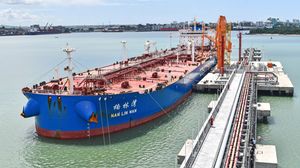
The Kenya Pipeline Company (KPC) is a central component of the petroleum logistics network, operating storage and pipeline infrastructure linking Mombasa to inland markets and generating substantial revenues.
While KPC remains profitable under State ownership, various assessments and stakeholder inputs have identified areas of potential improvement, including the need for system upgrades, capacity expansion and diversification.
The proposed KPC initial public offering and retention of a government shareholding seek to provide access to additional capital and expertise to support these objectives, rather than transfer control over strategic national infrastructure. The stated aim is to strengthen operational performance, service reliability, and its overall contribution to the economy.
Privatisation should be considered a tool of public economic management rather than a partisan issue.
When implemented within a clear legal and regulatory framework, it can support competitiveness, unlock value, and expand opportunities for broader economic participation.
Privatisation provides a mechanism for citizens to acquire stakes in State-owned enterprises, strengthening these companies, deepening domestic capital markets, and contributing to the effective management of public resources.
Over time, KenGen has operated under a mixed-ownership structure, with the government retaining a majority stake alongside minority participation by private investors.
As a result, the firm has expanded renewable energy capacity and accessed a range of development financing options. This experience is often cited as an example of how mixed-ownership models, when combined with established governance and accountability frameworks, can support operational expansion and investment in ways that may be more challenging under fully public ownership structures.
Addressing concerns and ensuring accountability
Critics of privatisation often raise important questions regarding beneficiaries, asset valuation, and protections for workers and consumers. Such concerns are central to effective policymaking.
Kenya’s privatisation framework addresses these issues through established valuation standards, public disclosure requirements, multi-layered oversight, and mechanisms for stakeholder participation.
In the case of KPC, certain aspects of the process have been legally challenged and are subject to judicial review, reflecting the country’s constitutional commitment to due process and transparency.
The writer is the Acting Chief Executive Officer of the Privatization Authority