Why Africa’s education future begins with strong foundations

Grade 9 Learners in one of the Classes at Concordia Primary School in Mombasa in this photo taken on January 21, 2026.

Photo credit: File | Nation Media Group

Last week’s heavy rains in Nairobi revealed more than flooded streets: Images of garbage clogging the Nairobi River and blocking drainage systems circulated widely, raising questions about how cities manage waste and urban infrastructure. Beneath that environmental crisis lies another story about education and the importance of early life lessons.

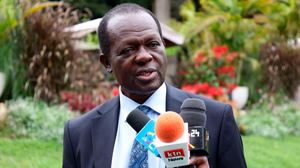
At the launch of Vision 2040 by Mizizi Elimu Afrika in Nairobi, Florence Wanja, the chief guest, shared a simple childhood memory that still shapes her behaviour today: As a young girl, she was taught not to litter. Even now, if she unwraps a sweet, she keeps the paper in her bag until she finds a dustbin. Early lessons, she observed, rarely fade.
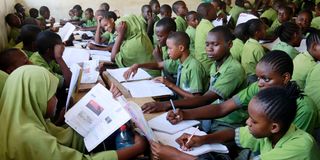
If a child learns not to throw rubbish on the road, that child will carry the lesson home, challenge adults, and influence behaviour in the community. Foundational learning, therefore, goes far beyond reading and arithmetic.

It shapes habits, values and citizenship. This philosophy sits at the centre of Mizizi Elimu Afrika, the new identity of an African-led organisation formerly known as Zizi Afrique Foundation. Last week, they launched Vision 2040, a long-term strategy designed to strengthen foundational learning systems across the continent.

The name “mizizi” means roots, a reminder that strong education systems begin with strong foundations. These include literacy, numeracy, life skills and values, the core capabilities that allow children to succeed both in school and in life.

The timing of the initiative is significant for Kenya. Data from the Kenya National Examinations Council shows that more than half of learners scored D+ or below in mathematics in the 2024 Kenya Certificate of Secondary Education examinations.

Yet under the Competency-Based Curriculum, the country hopes that about 60 percent of learners will pursue science, technology, engineering and mathematics pathways.

That gap between ambition and reality often begins in the earliest years of schooling.

Through Vision 2040, Mizizi Elimu Afrika aims to catalyse improved foundational learning outcomes for at least 10 million children in Africa while strengthening an African-led ecosystem for education reform.

During the launch, the organisation’s Chief Executive, Dr John Mugo, offered a striking analogy. Focusing on universities and technical training without fixing early learning, he said, is like mopping the floor while the tap is still running.

Investments frequently concentrate on higher education, innovation hubs and workforce programmes while the earliest stages of learning remain fragile. It is in those early classrooms where the real work of nation-building begins.

When children learn to read with understanding, reason with numbers and develop strong values early in life, those capabilities shape not only their futures but the trajectory of entire societies.

In the end, the roots of Africa’s development will not be found in policy papers or university lecture halls. They will be found in the foundational years when children first learn how to think, learn and live together.


PAYE Tax Calculator

Note: The results are not exact but very close to the actual.