If countries were people, Kenya would be a gifted, charismatic young adult full of promise, confidence and raw ability but wrestles with the discipline and consistency required to become who they know they could be.
Shaped by a difficult upbringing that taught her survival before structure, she exudes unmatched resilience, beauty and creativity-qualities that have acquainted her to the allure of success.
Therefore, she makes occasional plans and dreams big but often stumbles on follow up, distracted by the endless pursuit of cheap dopamine and traumatised by repeated betrayals of trust.
Nonetheless, she’s a natural and upbeat storyteller who laughs easily, gathers people effortlessly, and always seems to have music playing somewhere in the background.
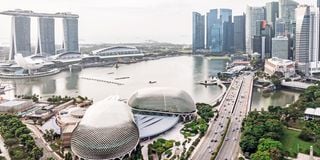
Lately, she has been obsessed with Singapore, whom she considers a befitting agemate. And she’s right.
At independence in 1965, Singapore was a small, resource-poor port city with bulging unemployment, housing shortages, and volatile ethnic tensions. The sword of Damocles precariously hung over her.
In the same period of time, Kenya’s gross domestic product (GDP) was slightly higher than that of Singapore and was comparatively well-endowed. Six decades later, Singapore’s economy is more sustainable, several times larger than Kenya’s and its per-capita income tens of times higher.
My country, when did the rain start beating us? Perhaps Kenya should stop the obsession with Singapore and embrace the fact that she needs some time alone. Kenya’s me time, for honest soul-searching.
If you study the history of national development keenly enough, you notice a pattern: institutions matter, policy is paramount, infrastructure is vital and leadership is key, however, beneath all of it sits something quieter, central and more stubborn; human behaviour. And Singapore is perhaps the clearest modern case study of this truth in practice.
Development is not an event. It is a culture. And culture is nothing more than behaviour repeated until it becomes identity.
Nations do not become ‘first world’ solely through GDP charts. They become first-world when millions of small daily choices change among the population: how people treat public property, the law, how they judge leaders, how they think about time, work, merit, corruption, learning and collective responsibility. Sustainable national development comes from micro-behaviours.
In the words of an American psychologist and philosopher William James speaking in a lecture to the Harvard Natural History Society in October 1880, “great men play decisive roles in shaping society and historical change”.
For Singapore, it was Prime Minister Lee Kuan Yew—one of the leaders often used to illustrate the Great Man Theory of history. But the real story of Singapore is not just about one man. If anything, it reminds us that as important as they are, leaders don’t create success alone, they succeed when citizens meet them halfway.
The provocative truth is that Kenya will not become first world simply because we do not elect better leaders.
And she will not fail simply because we have imperfect ones. Nations are behavioural ecosystems. And there’s no policy that can fully succeed against everyday behaviour that quietly undermines it.
Countries change when both citizens and leaders change what they tolerate, what they celebrate, and what they practice when no one is watching.
Lee Kuan Yew did not simply build infrastructure or eliminate human weaknesses. He helped reshape the expectations and mindsets of his people. He became, in the words of Mahatma Gandhi, the change he so wished to see in his country.
He led Singapore in navigating the hardest transition any society makes-the shift from individual survival thinking to collective success thinking. He made efficiency patriotic. He made corruption shameful. He made competence respectable. Over time, these values stopped being government policy and became normal social instincts.
Back at home, the question is no longer whether Kenya can transform but whether we are ready, all of us, to become the kind of citizens transformation requires. Kenya does not need to become Singapore at all.
She only needs to become the best version of herself—pragmatic, disciplined where it matters, innovative where it counts, united for the common good and willing to pay the price.
If enough individual behavioural changes occur, national transformation stops being a dream and becomes a timeline-one with candid milestones, compounding returns, predictable gains, and a future everyone can reasonably invest in as envisioned in the last stanza of our national anthem;
Let all with one accord In common bond united Build this our nation together And the glory of Kenya The fruits of our labour Fill every heart with thanksgiving.
The writer is a psychologist
Unlock a world of exclusive content today!Unlock a world of exclusive content today!