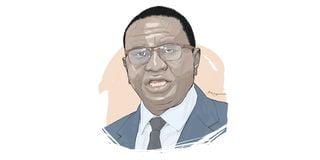
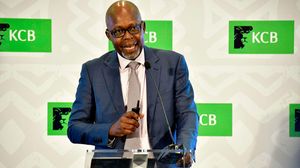
The director general of the National Treasury Public Debt Management Office (PDMO) Raphael Owino spoke to the Business Daily on initiatives being taken by the directorate to lessen Kenya’s debt pain and opportunities presented by improved sentiment on Kenya including the recent credit ratings upgrade by Moody’s.
The rating upgrade presents an opportunity to return to the international capital markets to either refinance or issue new debt at cheaper rates, which hand will you play?
The targeted transactions in liability management are that we are working on a debt for food security swap that we expect to conclude before the end of this financial year. This is a US-DFC backed transaction where we will be getting a guarantee enabling us to issue an instrument in the financial market at a fairly good rate.
We will then use the instrument to take out one of the Eurobonds or we can even use the proceeds to take out some of the commercial borrowing that we have in our loan book.
Syndicated loans are part of Kenya’s expensive obligations, what’s the stock of this debt?
Our syndicated loans round off to around Sh300 billion. Out of the total external debt stock Sh3 trillion in multilaterals is about 55 percent, Sh1.1 trillion is bilateral and then commercial debt is about Sh1.3 trillion out of which Sh1 trillion are Eurobonds. That leaves behind Sh300 billion as other commercial borrowings including syndicated loans.
What factors will help you decide whether to return to market?
What we have always done is to look at how the market is and whether it is good to go for a Eurobond related liability management. If the market becomes very attractive, the Cabinet secretary can still give us approval for the issuance of a Eurobond.
The good news is that our redemption profile for the Eurobonds is very good, but a little pressure may start building from 2031.
Does this make the 2031 Eurobond maturity an obvious choice for liability management?
We would only identify the instrument closer to the transaction date because if you do it early, as the instrument trades in the market, yields will likely be volatile as some investors take advantage.
We may target a range of Eurobonds rather than focusing on just one. We could even pay the remaining parts of the 2027 and 2028 Eurobonds or only stick to the outer years; it will depend on market conditions.
We’ve seen the National Treasury meeting the leadership of Standard Group and JP Morgan. Noting that Standard is an arranger for Kenya in the market, what type of discussions have you held in relation to debt management?
The teams have been seeking to have an outlook and what the Treasury thinks including its external borrowing plans, whether we return to the Eurobond and whether the IMF comes on board. We have had very healthy and frank discussions with them including that the IMF is likely to be back in the country before the end of the next month to continue discussions.
What has been the impact of the currency swap on the Standard Gauge Railway debt to China?
This has been one of the good things to happen to Kenya. The fine print is something we have not been sharing because it is a transaction done at government-to-government level and there are confidentialities to it. What to know and that we can share is that we will be saving $215 million in debt service costs annually.
What are the risks associated with serving the SGR debt in yuan?
This has been a concern, but the Central Bank of Kenya (CBK) asset portfolio includes the yuan as an investment instrument and hence the currency to service the debt will be available without any headache.
There was a plan for a $500 million (Sh64.5 billion) sustainability linked bond in the current financial year, what are the timelines for that?
We had a roadshow in December on the same and it was very well received. We met not only investors but also insurers. We believe this has changed the insurers perceptions about Kenya.
The framework we developed is currently undergoing second party opinion from S&P. After that is completed, we will seek a final Cabinet approval before going to market. The plan is to issue the SLB by the end of June as it is part of our external borrowing plan for the current financial year.
Do you have the same timelines for the debt-for-food security swap?
We also want to do the debt-for-food swap before the end of the financial year in June. We will be contracting afresh for lead arrangers for both the swap and the sustainability linked bond.
Would you consider a new issuance in the international capital markets outside of the liability management operations?
If we go to market, the CS will make a public statement on the same. The decision is not yet made but when it is, then there will be a public statement.