Seventy-five water utilities in the country are in financial distress due to governance gaps, fiscal indiscipline and operational inefficiencies that threaten their long-term sustainability and the reliability of water access for Kenyans.
An analysis of audit reports covering the 87 water companies owned by county governments reveals that many are heavily indebted and grappling with liquidity challenges after failing to collect billions of shillings from their customers.
The Parliamentary Budget Office (PBO), in a report to the Senate, says many of the utilities are loss-making, with their financial woes largely stemming from mismanagement and operational inefficiencies.
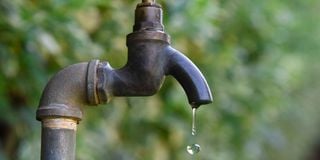
These challenges are compounded by high levels of non-revenue water losses – treated water produced by utilities but lost before reaching paying customers – primarily due to theft and leakage.
In the year to June, of the 440 million cubic metres of water produced by the 75 companies that met reporting thresholds, 236 million, or 46 percent, was not paid for.
The losses were largely attributed to “illegal connections, aged infrastructure, faulty meters and reliance on flat-rate billing.”
The PBO warns that the utilities now face an existential threat that could expose many Kenyans to shortages of clean water and undermine a constitutional right, as well as stifling economic development.
“The financial sustainability of most county water service providers remains precarious, with audit reviews pointing to governance lapses, fiscal indiscipline and operational inefficiencies,” the PBO said.
“The inability to recover operational costs poses a threat to the continuity of service and undermines the constitutional right to water.”
Most of the struggling utilities have negative working capital, meaning their short-term liabilities exceed their short-term assets, leaving them unable to meet obligations as they fall due.
Large deficits
These firms include the Nairobi City Water and Sewerage Company, which has negative working capital of Sh1.7 billion and owes its suppliers Sh5.3 billion, and Mombasa Water, which has a deficit of Sh2 billion and supplier debt of Sh2.2 billion.
Other utilities with significant deficits include Malindi Water (Sh541 million), Taita Taveta’s Tavevo Water (Sh331 million), Kajiado’s Ololaiser Water Company (Sh263 million), Kwale Water (Sh238 million), Nolturesh-Loitoktok (Sh226 million), Nakuru Water (Sh225 million) and Homa Bay Water (Sh213 million).
In total, 47 county water utilities have a combined negative working capital of Sh7.3 billion, according to the latest Auditor-General’s report, while all 87 utilities collectively owe suppliers Sh20.4 billion.
The companies are also owed up to Sh15.3 billion by customers, highlighting “inefficiencies in revenue collection,” the PBO said.
Only 12 utilities currently have positive working capital, including those in Kisumu, Naivasha, Garissa, Murang’a, Kakamega, Eldama Ravine, Kathiani, Naromoru, Tetu Aberdare, Nanyuki and Cherangany.
Beyond debt pressures, audits show that the utilities are also weighed down by rising wage bills, misuse of customer deposits and outdated tariff structures.