A group of 132 staff of the Kenya Medical Research Institute (Kemri), including research scientists, has escalated their fight for equal pay to the Court of Appeal, challenging an Employment and Labour Relations Court decision that dismissed their discrimination claims regarding special allowances paid to medical doctors.
Their claim relates to entitlement to five allowances totalling Sh201,000 monthly. Central to the legal dispute is a claim that only 268 of Kemri's 931 employees were receiving these benefits.
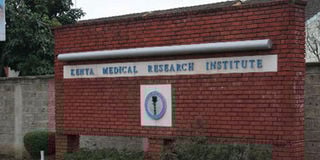
They moved to the Court of Appeal after the Labour Court rejected the case in October 2023, citing prior resolution in a related case.
At the heart of the petition are allegations that Kemri pays medical doctors substantial monthly allowances unavailable to research scientists performing comparable hazardous work.
These include emergency allowance (Sh80,000), health risk allowance (Sh20,000), extraneous allowance (Sh30,000), non-practicing allowance (Sh51,000 until retirement), and health services allowance (Sh20,000).
The claimants' petition for a declaration that it was discriminatory to deny them the allowances and an order directing Kemri and its director to pay the same was struck out by the Labour Relations court in October 2023. This followed a finding by Justice Ocharo Kebira that the issue had been addressed in a separate dispute.
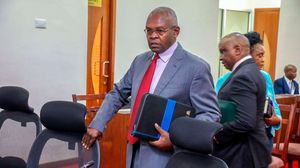
Aggrieved by that decision, they moved to the Court of Appeal and were allowed to file a late appeal against the Labour Court's ruling. Court of Appeal judge Pauline Nyamweya has allowed the late appeal, finding the delay resulted from the Labour Court's tardiness in providing certified proceedings.
"I am therefore persuaded that there was no inordinate delay and the respondents did not suffer any prejudice in the circumstances. Consequently, the application for extension of time to file a record of appeal -dated November 28, 2024, is found to be merited," she ruled.
Kemri opposed the admission of the appeal, arguing it violated litigation finality principles and showed lack of diligence by applicants.
"Allowing the appeal at this late stage defeats the principle of finality in litigation," said Kemri advocates, adding that there was no evidence of the applicants' diligent follow-ups with the trial court's registry.
The claimants said the intended appeal raises arguable grounds with a chance of success. They are dissatisfied with the trial court's finding that the issue of allowances was conclusively addressed in a consent judgement dated February 6, 2019, and another group of employees.
"Undeniably, the letter, Kemri's Board meeting’s minutes of August 3, 2018, and the consent agreement, the subject matter was conclusively handled in the earlier suit," said trial judge Kebira in the contested judgement.
However, the claimants argued that they were not parties in the earlier suit and that their case was about discrimination.
The court heard that all workers at the Centre for Clinical Research -Nairobi were being paid extraneous and risk allowances, while the workers at the other 11 Centres across the Country were not paid the same benefits.
It was argued that the claimants and the others who were not earning the allowances were doing the same work as those who were enjoying the benefit.
A witness described collecting infectious samples (blood, urine, mucus) from communities and schools, exposing scientists to bacterial infections, viral pathogens, parasitic protozoa, and fungal exposures.
"Researchers face greater exposure risks yet receive no hazard pay," he testified, adding that his job entailed dealing with parasites.
The witness said his medical colleagues deal with parasites in patients, while he dealt with the same from animals. Comparatively, they both are exposed to a risk. However, he said, as a researcher, he is more vulnerable than his medical counterparts.
"There aren’t any justifiable reasons why the first respondent (Kemri) is not paying the researchers the allowances that it pays to our counterparts in the medical space," said the witness.
He further testified that some of the claimants were medical engineers, tasked with calibrating the machines that research scientists use. They are in the process of getting exposed to risks, he stated.
"Owing to the exposure to risks, they should earn the allowances like those of other employees of the first respondent who earn," he argued.
The dispute stems from a November 2018 Kemri circular that authorized allowances inconsistently across its 12 research centers. While Nairobi clinical staff received benefits, 663 employees at other locations did not.
The claimants furnished the trial court with payslips to buttress their case on the alleged discrimination.
The Appeal Court is expected to examine the claims, and its decision may establish precedent for pay equity in public research institutions, standardisation of hazard compensation, and interpretation of "equal work for equal pay".
The outcome could set a precedent for equitable compensation in public-sector research institutions.