Microsoft-backed Kenyan internet service provider, Mawingu Networks is selling a 35 percent stake to a South African for an undisclosed amount, months after raising Sh1.9 billion in debt financing from a pool of investors.
The transaction is currently under review by the Comesa Competition Commission (CCC), which reckons that the South African fund will get “controlling interest” in the Nairobi-based internet seller.
The sale comes just months after Mawingu raised Sh1.9 billion ($15 million) in debt financing from the pool of investors led by the Africa Go Green Fund, which gave $11 million (Sh1.4 billion) as a long-term loan last November.
Mawingu used the cash for expansion in Kenya, where it started offering fibre and fixed wireless services in a highly competitive market dominated by Safaricom and Jamii Telecoms.
The funds also helped the firm enter Tanzania through the acquisition of Arusha-based internet provider Habari.
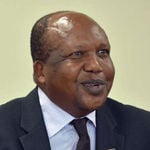
Mawingu CEO Farouk Ramji declined to comment on why the company was selling the controlling stake to the South African fund.
“I cannot comment at this point. The deal is still at a very early stage and I cannot say anything about it,” Mr Ramji told the Business Daily.
The deal will happen through Pembani Remgro Infrastructure Fund II (PRIF II), a private equity fund managed by South Africa’s Pembani Remgro Infrastructure Managers.
PRIF II investors include the African Development Bank, the European Investment Bank and the British International Investments.
The fund, through Pembani Remgro Infrastructure Fund I (PRIF I), invested in 11 companies across Botswana, Cote d’Ivoire, Ethiopia, Ghana, Kenya, Malawi, Mozambique, Namibia, Nigeria, South Africa, Tanzania, Uganda, Zambia and Zimbabwe, three of which it has exited.
In Kenya, Pembani Remgro bought a stake in iColo, a data centre operator and cloud service provider, in December 2019, through PRIF I.
Mawingu, which means cloud in Kiswahili, is Kenya’s sixth-largest internet service provider (ISP) with a 3.2 percent stake and started operation in 2013 using underutilised television frequencies.
The Kenyan government at the time had forced broadcasters to migrate to digital from analogue in 2014 to free up spectrum frequencies as part of a drive to boost internet connections.
Mawingu has since shifted to fibre and fixed wireless, allowing it to move beyond central Kenya to traditionally overlooked regions in northern and western parts of the country.
“The parties submitted that the proposed transaction will not raise any horizontal concerns as there are no overlaps between the activities of the acquiring group and the target group within the [Comesa] Common Market,” said the CCC in an inquiry notice for the proposed transaction.
“The commission will, in accordance with the provisions of the regulations, determine, among other things, whether the proposed transaction is likely to substantially prevent or lessen competition in the Common Market and whether the proposed transaction is or would be contrary to the public interest.”
In the Kenyan internet market, Safaricom remains a dominant force in the fixed data sector, with a market share of 37.4 percent.
The giant telco is followed by Jamii with a market share of 22.5 percent, Zuku (14.4 percent), Poa Internet Kenya (14.1 percent) and Vilcom (3.9 percent).
The demand for the internet in Kenya has surged as its use goes beyond entertainment to work-related activities.
However, Starlink, Elon Musk’s satellite internet provider, has rapidly gained traction, becoming the eighth-largest internet provider in Kenya with a 0.9 percent stake as of March.
It launched in Kenya in July 2023.
Mawingu’s market share has also grown over the years, thanks to support from key benefactors like Microsoft and the United States Development Finance Corporation (DFC), which gave it one of its first loans.
It has grown from 16,255 subscribers two years ago, or about 1.5 percent of the fixed internet market share, to 59,002 users by the end of March, equivalent to 3.2 percent of the industry.
Editor’s Note: The story has been revised to remove reference to the Coalition for Human Rights in Development as an investor in Pembani Remgro Infrastructure Fund II, and to clarify that investments in African countries were made through PRIF I.
Unlock a world of exclusive content today!Unlock a world of exclusive content today!