Time flies with great content! Renew in to keep enjoying all our premium content.
Prime
Kenya faces fresh health funding shock as US widens global gag rule
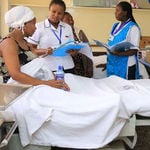
Kenya has made remarkable strides in managing maternal deaths, reducing the maternal mortality ratio from 488 deaths per 100,000 live births in 2008 to approximately 342 by 2023.
The US has expanded the Mexico City Policy, commonly known as the “global gag rule”, in yet another sweeping executive action that marks President Donald Trump’s aggressive reshaping of American foreign policy, with implications for healthcare in Kenya.
Announced on January 23, one year after reinstating the policy, the expansion extends abortion-related restrictions from global health programmes to all non-military foreign assistance worldwide.
This means organisations receiving US funding for education, agriculture, economic development, disaster relief and other sectors must now comply with restrictions prohibiting them from providing, advocating for, or referring patients for abortion services.
This threatens to cut off more than $30 billion (Sh3.87 trillion) in US aid to developing countries. Organisations that refuse will lose all US funding, regardless of the sector in which they work.
“We believe that every country in the world has the duty to protect life. We're expanding this policy to protect life, to combat diversity, equity, and inclusion, and the radical gender ideologies that prey on our children," announced Vice President JD Vance on January 23, 2025, at a ‘March for Life Rally’ in Washington, DC.
Human rights
Amnesty International’s senior director for Research, Advocacy Policy & Campaigns, Erika Guevara-Rosas, termed the expansion an assault on human rights that will deliberately deepen inequality and put the lives of millions around the world at risk.
“The Global Gag Rule is a disastrous and deadly US policy. It forces many struggling organisations that depend on US funding into an impossible choice: limit essential healthcare for the most vulnerable populations or shut their doors,” said Ms Guevara-Rosas.
In Kenya, the rule could disrupt the ‘Continuum of Care’ (CoC), putting the lives of millions of people at risk, particularly those who are vulnerable, such as women, girls, people living with HIV and marginalised communities, by potentially cutting access to essential health services.
The CoC refers to a comprehensive, integrated approach to healthcare delivery, where various services — from preventive care and family planning to HIV screening, maternal health and cancer screening — work together to ensure patients receive seamless and coordinated treatment throughout their lives.
Legal dilemma
Nelly Munyasia, executive director of the Reproductive Health Network Kenya (RHNK), warns that the gag rule wrongly assumes abortion services can be isolated from other essential women’s health services when, in reality, comprehensive reproductive health is deeply interconnected with all aspects of women’s healthcare.
Kenya’s Constitution allows abortion in specific circumstances, such as when the life or health of the mother is in danger and in certain cases of sexual violence. However, the expanded global gag rule creates an impossible dilemma for organisations that depend on US funding.
"What this expanded rule means is that organisations will no longer be able to support access to even these legally permitted services if they wish to retain US funding. The policy comes with a strict compliance checklist, and countries are being assessed based on their abortion laws and policies, as well as how those policies are implemented," Ms Munyasia explained.
For Kenya, which received an estimated 95 percent of its foreign aid for sexual and reproductive health services from the US government in 2018, the effects will be devastating.
Health impact
“We anticipate this will lead to increased maternal mortality and morbidity. Over the years, the government and partners have made progress in reducing unsafe abortions through preventive efforts, including providing accurate information and improving access to contraception for women and girls. Those gains are now at risk,” said Ms Munyasia.
Kenya has made remarkable strides in managing maternal deaths, reducing the maternal mortality ratio from 488 deaths per 100,000 live births in 2008 to approximately 342 by 2023.
"Over the years, the government and partners have made progress in reducing unsafe abortions through preventive efforts, including providing accurate information and improving access to contraception for women and girls. Those gains are now at risk," she warned.
“If organisations are restricted from offering information, referrals, and advocacy, we are likely to see a rise in unsafe abortions. We already know the pattern: women attempting to terminate pregnancies in unsafe conditions, arriving at hospitals with severe complications such as sepsis, ruptured uteruses, or life-threatening infections. These are preventable tragedies, but they could become more common under the expanded rule.
Youth risk
The timing is particularly concerning given Kenya’s ongoing challenges with adolescent pregnancy, which affects approximately 15 percent of girls aged 15–19.
"The wider effect on reproductive health services could be severe. Kenya is already grappling with high rates of teenage pregnancy and unintended pregnancies. With reduced access to contraception, counselling, and comprehensive reproductive health services, we may see increases in teen pregnancies, child marriages, unsafe abortions, and post-abortion complications," Ms Munyasia warned.
There are also broader concerns around gender. The policy is expected to narrow how gender issues are addressed, yet Kenya has made significant commitments towards gender equality, women’s representation and efforts to reduce gender-based violence.
“Progress made in these areas could be undermined if organisations working on gender and reproductive health lose funding or are forced to scale back their work,” said Ms Munyasia.
Funding fallout
First instituted by President Ronald Reagan in 1984, the Global Gag Rule has been reinstated by several presidents since. Among them, President Trump reinstated and dramatically expanded it during his first term in office and again on January 24, 2025. The January 2026 announcement extends the policy to all non-military foreign assistance.
Among the organisations affected by the rule were Marie Stopes International (MSI) and RHNK, which lost all US support in 2017. This led to the redundancy of some staff members, the suspension of training for medical workers and a reduction in the number of people receiving healthcare.
Others include the Family Planning Association of Kenya, which was forced to increase the cost of previously free services. Family Health Options Kenya lost $1.5 million (Sh193.5 million) in 2017, which led to the closure of some clinics and the termination of a mobile outreach programme serving around 76,000 people each year.