Thousands of cancer patients, including those with blood and breast cancer, could be spending up to Sh300,000 a month on some drugs that are available for free at select public and private hospitals.
Kenya has been part of the Max Access Solutions Programme—an international humanitarian drug access partnership for two decades, which supplies high-cost targeted cancer therapies to eligible patients free of charge.
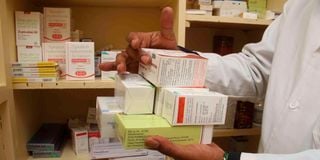
Targeted cancer therapies are drugs designed to interfere with specific molecules or genetic mutations that drive cancer growth, as opposed to traditional chemotherapy, which attacks all rapidly growing cells indiscriminately, including healthy ones.
Under the Max Foundation, the programme partners with global pharmaceutical manufacturers, including Novartis, BeiGene, Pfizer, Bristol Myers Squibb, and Eli Lilly, who donate the medicines as part of their global health commitments.
However, Othieno Abinya, one of the programme’s lead physicians in Kenya, says that awareness remains so low that many patients either pay out of pocket or go without treatment.
“Some of these drugs cost between Sh200,000 and Sh300,000 per patient per month, and we are giving them out completely free of charge,” said Prof Abinya, who is also a consultant medical oncologist at the Nairobi Hospital Cancer Centre.
“Access largely depends on whether a patient’s doctor knows about the programme and tells them.”
A 2025 scoping review on cancer health literacy in Kenya found that public awareness of available treatment options was critically low.
This means thousands of eligible patients may never know help is available.
“With no national awareness campaign in place, referrals are inconsistent across Kenya's 47 counties,” said Prof Abinya.
For a patient to qualify, their cancer must first be confirmed through molecular testing—a laboratory process that analyses the tumour's genetic profile to establish which mutation is driving it.
If the mutation is one that the programme covers, the patient qualifies for the corresponding drug.
“Once you qualify, you are assigned an identification number and can attend the designated clinic days to receive free drugs,” said Prof Abinya.
The programme covers several types of cancer, including chronic myeloid leukaemia, which is a cancer of the white blood cells. It is treated with imatinib (Glivec) as the first-line drug, and nilotinib (Tasigna), dasatinib, bosutinib, and ponatinib are available for patients who develop resistance or cannot tolerate the initial therapy.
The programme also covers gastrointestinal stromal tumours, dermatofibrosarcoma protuberans, certain kidney cancers, and HR-positive, HER2-negative advanced breast cancer, which is the most common breast cancer subtype in Kenya and is treated with abemaciclib (Verzenio).
At Nairobi Hospital, the programme's main hub, 180–190 patients attend a free clinic every Saturday.
Nationally, close to 3,000 patients from the Nairobi Hospital Cancer Centre are currently enrolled, some of whom have been receiving uninterrupted treatment since 2006.
“We have patients who started treatment in 2006 and 2007 and are still doing well today,” said Prof Abinya.
Other treatment sites include Moi Teaching and Referral Hospital in Eldoret, Jaramogi Oginga Odinga Teaching and Referral Hospital in Kisumu, Coast General Hospital in Mombasa, Nakuru Level 5 Hospital, and Kenyatta University Teaching, Research and Referral Hospital.
According to Kenya Medical Supplies Authority (Kemsa) distribution records, since December 2021 alone, medical supplies valued Sh22.4 billion have been supplied through the programme.
Kenya joined the programme in 2005 through a partnership between the Ministry of Health and the Seattle-based non-profit organisation, the Max Foundation.
Nairobi Hospital received 62,127 units of medication, valued at Sh15.8 billion. Moi Teaching and Referral Hospital received 8,977 units, valued at Sh2.4 billion. Nakuru Provincial General Hospital received 5,967 units, valued at Sh1.6 billion.
Jaramogi Oginga Odinga University of Science and Technology received 3,560 units valued at ShSh914.5 million, and Coast Provincial General Hospital received 1,560 units worth Sh430.2 million.
This partnership was formalised in 2021 with the signing of a Memorandum of Understanding, enabling the Foundation to provide essential oncology medicines to patients diagnosed with chronic myeloid leukaemia and breast cancer across the country.
“We are grateful for this work that has gone on for 24 years,” said Ouma Oluga, Principal Secretary for Medical Services, speaking at a forum last year that reviewed the partnership's progress.
The Foundation has served over 100,000 patients worldwide, collaborating with 570 physicians in 383 hospitals and clinics. It aims to reach 100,000 patients annually by 2030.