Patients’ boost as sickle cell fully covered in SHA package

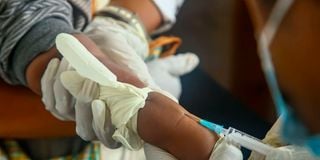
 A doctor collects blood sample of an infant during the free sickle cell screening medical camp championed by the Rotary Club of Karen, Nairobi on 27, 2024.

Photo credit: File | Nation Media Group

The Ministry of Health is set to fully integrate Sickle Cell Disease (SCD) into the Social Health Authority’s (SHA) benefits package, a move that will reshape how care for patients with the condition is financed and ease the financial pain on the affected.

This policy change marks a significant step forward in addressing a disease that affects around 14,000 newborns in Kenya every year and has long been neglected in national health planning.
Despite being one of the most common inherited blood disorders in the country, SCD care has largely depended on out-of-pocket spending, donor support or fragmented pilot programmes.

The Ministry of Health says the goal is to transition SCD care from emergency response to consistent, planned management.

Currently, SHA covers essential diagnostic laboratory investigations for SCD at Sh6,800 annually and provides limited treatment support of about Sh8,000 per year.

Under the new coverage, SCD patients will receive support for diagnostics, medicines and blood transfusion services—interventions that are critical for preventing severe complications such as stroke, organ damage and life-threatening infections.

“Sickle cell disease remains one of the country’s most serious yet under-recognised public health challenges, with an estimated 14,000 children born with the condition each year. The government is elevating SCD as a national health priority requiring urgent and adequately resourced interventions,” Health Cabinet Secretary Aden Duale said.

Integrating SCD into SHA is also expected to address persistent shortages of essential medicines such as hydroxyurea and penicillin, which have frequently disrupted care due to inconsistent procurement and limited funding.

Hydroxyurea, the primary medication prescribed to alleviate painful crises associated with the disease, costs approximately Sh6,000 per patient each month when administered at the standard dosage.

Managing SCD requires lifelong treatment, which can lead to significant financial burdens over time.

Additionally, paludrine, which plays a vital role in reducing the incidence of malaria—a common concern for patients with SCD, has a monthly expense estimated at around Sh1,000.

Meanwhile, bone marrow transplantation, recognised as the sole permanent cure for sickle cell disease, is currently unavailable in many local healthcare facilities. For families seeking this treatment abroad, particularly in India, the costs can be approximately Sh7 million.

Haemoglobin electrophoresis tests, which are crucial for diagnosing and managing the condition, previously incurred costs ranging from Sh11,000 to Sh16,000 in private healthcare settings.

Beyond financing, the ministry is implementing broader reforms to enhance SCD care across the healthcare system. More than 107,000 community health promoters are being trained to recognise, educate, and support SCD patients, with a focus on high-burden regions including Nyanza, Western Kenya, and the Coast—areas with higher prevalence linked to malaria-endemic zones.

Over 800 healthcare workers have already received specialised SCD training at the facility level. The government is now seeking technical support from the Global Alliance of Sickle Cell Disease Organisations to deepen this capacity through mentorship programmes, clinical exchanges, and access to global best practices.

The Ministry is also revising national SCD treatment guidelines to reflect current scientific evidence, expanding newborn screening so that all babies are tested at birth, and establishing a National Sickle Cell Disease Registry. Once operational, the registry is expected to provide accurate national data on patient numbers, disease severity, and regional needs.

Follow our WhatsApp channel for the latest business and markets updates.

PAYE Tax Calculator

Note: The results are not exact but very close to the actual.