How NTSA’s smart cameras will catch errant motorists

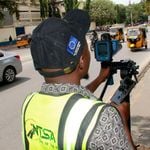
A traffic police officer is shown how to use a speed and night camera at NTSA headquarters in Nairobi on August 15, 2018.

Photo credit: File | Nation Media Group

Motorists from Monday face unprecedented automated enforcement of traffic rules in a new plan to install 1,000 speed cameras on major highways under a newly signed long-term public-private partnership (PPP) project designed to curb speeding and rising fatalities.

BD breaks down key aspects of the transport modernisation programme.

What is the smart driving licence PPP project?

The project is a long-term PPP through which the National Transport and Safety Authority (NTSA) plans to modernise driver licensing and traffic enforcement systems in Kenya.

It combines the rollout of second-generation smart driving licences with a mobile digital licence wallet, an automated instant fines platform and a nationwide network of speed cameras to strengthen compliance with traffic rules and improve safety.

Why is the project under a PPP model?

The government opted to transition the project to a PPP after years of underperformance in the rollout of smart driving licences since 2017.

The NTSA issued fewer than two million licences, falling short of the originally planned five million and prompting the State Department for Transport to seek private sector participation to inject capital, technology and operational capacity into the project.

The PPP structure is expected to accelerate implementation while reducing the financial burden on the government.

Who are the private partners in the project?

The project is being implemented by a consortium comprising KCB Bank Kenya Ltd and Pesa Print Ltd.

The consortium is financing, supplying, installing and maintaining the infrastructure required for the smart driving licence system and the associated traffic enforcement technologies.

How much will the project cost?

The public notice estimates the project’s initial investment at about Sh42 billion, which will be financed entirely through private debt and equity by the consortium. This financing model allows the government to implement the project without relying on direct budget allocations from the Treasury.

How long will the PPP agreement run?

The strategic partnership will run for 21 years, during which the KCB-led consortium will operate and maintain the system, while recovering its investment through service revenues.

How will the 1,000 speed cameras work?

The project is deploying a network of 1,000 speed cameras across the country.

Of these, 700 will be fixed cameras installed at strategic locations along major highways and high-risk corridors, while 300 will be mobile cameras that can be moved to target speeding hotspots and accident-prone zones.

These cameras will capture traffic offences and transmit the information to a central command and control system for processing.

How will cameras connect with smart driving licences?

The speed cameras will operate together with second-generation smart driving licences, a Mobile Driving Licence Wallet and an automated instant fines platform to create a fully integrated digital enforcement system.

When the cameras detect a violation, the system will automatically link the offence to the motorist’s driving licence profile, record it under the driver merit/demerit points framework and generate a fine payable electronically. Under that system, drivers start with 20 points, which are deducted depending on the severity of the traffic offences, leading to suspension of the licence when the points are finished.

How will motorists receive and pay fines?

Motorists will receive instant fines electronically through the integrated system once an offence is detected. They will be able to settle the penalties through digital payment platforms such as mobile money services, USSD channels and banking systems. The system ensures that fines and offences are recorded in real-time against the driver’s profile.

Where does NTSA get the mandate to impose instant fines?

The NTSA is relying on the Traffic (Minor Offences) Rules 2016, which allow it to issue instant administrative fines for specified minor traffic violations. The rules were enforced to decongest courts by enabling quicker enforcement of minor offences.

However, the NTSA penalties are administrative, while the courts retain the authority to impose judicial fines. Aggrieved motorists can challenge them in court, in line with Article of the Constitution, which guarantees the right to a fair hearing.

What fines do motorists face?

Drivers who violate traffic regulations will face instant fines ranging from Sh500 to Sh10,000 prescribed under the Traffic (Minor Offences) Rules.

These penalties apply to common violations such as speeding, failure to wear seat belts, using a mobile phone while driving, operating vehicles without valid inspection certificates and other minor traffic offences recognised under Kenyan law.

What is the new smart driving licence?

The second-generation smart driving licence is a secure polycarbonate card embedded with a microchip similar to those used in ATM cards.

The chip stores a motorist’s details, photograph and driving history, including traffic offences. The licence will support the Demerit Points System administered by the NTSA, enabling authorities to track driver behaviour and identify repeat offenders.

How many smart licences will be produced?

The project targets to produce five million smart driving licences every three years to meet the demand from Kenya’s growing population of motorists and replace legacy licences.

What is the cost of a smart driving licence?

Motorists applying for the issuance, renewal or replacement of the smart driving licence will pay a prescribed fee of about Sh3,000.

What is the mobile digital licence wallet?

The Mobile Driving Licence Wallet is a digital platform that allows motorists to carry an electronic version of their driving licence on their phones.

Through the wallet, drivers can access their licence details, review offence records, pay fines and interact with other transport-related services provided by the NTSA.

What happens to the infrastructure after the PPP ends?

At the end of the 21-year concession period, key assets created under the project will be transferred to NTSA.

They include speed cameras, enrolment kits, command centre systems and enforcement infrastructure. Some passive infrastructure and technology components, such as mobile cars, smart poles, and software, which were not part of the capital, will remain with the KCB-led consortium as specified in the PPP agreement.

Why does this project matter to the government?

The NTSA says the project is designed to address persistent challenges in the transport sector, including rising road fatalities, weak enforcement of traffic rules, corruption in manual policing systems and inefficiencies in driver licensing.

NTSA expects the introduction of digital enforcement tools and modern licensing technology to improve road safety, strengthen compliance and reduce the economic losses associated with road crashes.

The government estimates annual economic loss at Sh450 billion based on medical care, lost productivity, property damage and social costs.

Follow our WhatsApp channel for the latest business and markets updates.

PAYE Tax Calculator

Note: The results are not exact but very close to the actual.