Kenya’s Internet market is entering a new phase as telecom operators, State agencies and global technology firms escalate investments in fibre infrastructure, to secure bandwidth, resilience and control over data traffic.
At the centre of this shift is a growing race to own cables rather than lease capacity, a move that is redrawing competition lines and reshaping how Internet services are delivered to consumers.
In January, Safaricom sought regulatory approval to land its first undersea fibre optic cable, signalling a strategic pivot away from reliance on third-party systems that currently handle most of its international data traffic.
The move followed mounting pressure on network capacity as data demand grows faster than voice services, pushing operators to prioritise speed, redundancy and long-term control over connectivity infrastructure.
Safaricom currently relies on privately owned SEACOM and Telkom Kenya, which manages five of the six submarine cables landing in Kenya, including TEAMS, EASSy, Lion2, DARE1 and PEACE.
Its agreement with SEACOM is set to expire in June 2028, sharpening the urgency to secure independent access to international bandwidth amid intensifying competition in the broadband market.
Airtel Kenya has also prepared to activate its own submarine cable, signalling that competition is no longer limited to retail pricing but is shifting decisively into ownership of backbone infrastructure.
For consumers, additional undersea cables increase overall Internet capacity, reducing congestion and improving reliability during peak usage periods that strain existing systems during outages or heavy traffic.
However, ownership of cables also concentrates power upstream, influencing wholesale pricing structures that determine how much smaller Internet providers pay before services reach households and businesses.
Beyond the sea, the contest has moved inland, with State agencies stepping into the fibre market through extensive terrestrial networks designed to extend connectivity and introduce alternative data routes.
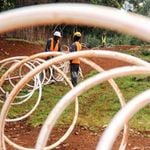
The Kenya Pipeline Company (KPC) has mapped out a plan to expand its fibre optic network across key towns, offering bulk bandwidth to telecom operators and smaller Internet providers through infrastructure running alongside pipeline corridors.
Its plans include extending fibre to at least 18 towns, establishing a network operations centre and onboarding tier-two and tier-three providers previously locked out by high wholesale access costs.
This is poised to allow smaller Internet service providers to bypass dominant players, potentially increasing competition at the retail level, especially in towns outside Nairobi and major urban centres.
For consumers, such networks offer the prospect of more provider choice, improved service quality and localised competition that can gradually pressure prices downward.
The government has simultaneously laid out a Sh10 billion project to roll out at least 100,000 kilometres of fibre optic across the country in a bid to improve network connectivity, amid network challenges in high security-risk areas.
Implemented through ICT Authority and Kenya Power, the project leverages existing electricity infrastructure to speed up deployment and extend fibre into security-risk and historically underserved regions.
Officials say Kenya’s fibre coverage stands at about 62 percent, with plans to push this toward 90 percent, reducing dependence on costly satellite services in areas where terrestrial networks become viable.
In northern Kenya, the planned Isiolo–Mandera fibre corridor represents a strategic expansion of the national backbone into regions long excluded from reliable broadband connectivity.
The 740-kilometre link is designed to strengthen national resilience by creating an inland alternative to coastal routes that have previously suffered outages affecting banks, telecoms and digital services.
For consumers and public institutions, this inland route promises more stable access to e-government platforms, online education, digital payments and cross-border connectivity within the Horn of Africa.
As domestic fibre networks multiply, global technology firms have entered Kenya’s cable landscape, financing high-capacity undersea systems to support rising data consumption and cloud-based services.
In August this year, Meta affiliate Edge Network Services Ltd took a stake in Safaricom’s planned Oman–Mombasa undersea cable, which is designed to deliver higher capacity using 24 fibre pairs.
The project aligns Kenya with global cable investment trends driven by demand for artificial intelligence (AI), streaming, cloud computing and cross-border data exchange. The escalating cable wars mark a transition in Kenya’s Internet market from service-level competition to infrastructure-driven rivalry, with long-term implications for pricing, resilience and digital access.
The intensifying cable build-out is unfolding alongside the rise of satellite Internet, which has altered competitive dynamics by offering connectivity where fibre deployment remains limited or slow.
Satellite services gained traction after Elon Musk-owned Starlink entered Kenya in 2023, prompting concerns from traditional operators over network interference, pricing pressure and regulatory oversight.
Over time, the market has shifted toward coexistence, with satellite links increasingly positioned as complements to fibre rather than outright substitutes.
This comes as Starlink has signed commercial arrangements with Kenya’s leading telecom operators, Safaricom and Airtel, integrating satellite capacity into existing networks instead of competing directly for retail dominance.