The 100,000-kilometre fibre goal: Kenya and Ruto race against time

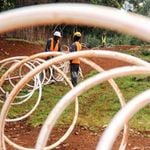
Workers lay fibre-optic cable in Nyeri town on August 18, 2020.

Photo credit: File | Nation Media Group

President William Ruto’s Kenya Kwanza administration has laid slightly under 8,000 kilometres of the national fibre optic cable, underscoring the herculean task it faces in its ambitious plan to complete 100,000 kilometres before the General Election in 2027.

According to the Treasury, the country has 30,454 kilometres of public sector fibre, up from 22,486 kilometres in 2022 when Dr Ruto took power, with his administration laying 7,968 kilometres.
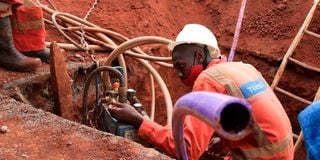
In those three years, the private sector has added 16,032 kilometres to the country’s cable network.

“From 2022 to 2025, digital transformation accelerated with 24,000 kilometres of fibre optic cable added, expanding total infrastructure to 80,633 kilometres,” the National Treasury says in the draft 2026 Budget Policy Statement.

“These comprise of 30,454 kilometres of public sector fibre, up from 22,486 kilometres in 2022, and 50,179 kilometres of private sector fibre, reflecting substantial investment in broadband capacity.”

A month after taking office in 2022, President Ruto spelt out a state-backed plan to lay additional kilometres of the national fibre optic cable within five years.

“The government is committed to investing in the digital superhighway and the creative economy, which will be enablers of transformation, productivity and overall competitiveness,” he said.

“Over the next five years, the government will ensure universal broadband availability by hastening the roll-out of connectivity throughout the country. The laying of an additional 100,000 kilometres of the national fibre-optic network is expected to deliver this target.”

The project falls under the infrastructure pillar of the Kenya Kwanza administration’s digital transformation agenda, aimed at boosting internet connectivity and making access stable and reliable.

The delay, observers say, is due to tight budgetary allocations for infrastructure as well as competing fiscal priorities, limiting the speed at which execution is realised.

The slowed pace also comes when private sector players are accelerating investments in fibre infrastructure in a race to secure bandwidth and control of data traffic.

Safaricom, Kenya’s leading telco, is among the private companies that have sought regulatory approval to land its first undersea fibre optic cable, signalling a strategic pivot away from reliance on third-party systems that handle most of its international data traffic.

In 2023, then-ICT Cabinet Secretary Eliud Owalo said the government would lay 52 per cent of the proposed 100,000 kilometres, with the remaining being left to the private sector.

“When it comes to the 100,000 kilometres of the fibre optic cable, our proposition as the government is that we will do 52,000 kilometres and leave the rest to private companies,” Mr Owalo said.

“We have had meetings to discuss and agree on who rolls out what component of that fibre. We came from those meetings with resolutions on the responsibility centres for rolling out the fibre, including the timelines, the targets and all that appertains to it.”

In the 2024/25 financial year, listed utility Kenya Power disclosed that it had earned Sh940.6 million from the government for work on the national fibre-optic rollout under the project, reflecting partial payment for design, supply and installation of last-mile fibre infrastructure to public institutions.

Kenya Power is deploying the cable infrastructure while riding on its electricity network to connect 53,000 public offices, schools, hospitals and government agencies countrywide.

The project is estimated to cost Sh10 billion in its first phase, making it one of the largest public ICT infrastructure rollouts in recent years.
“The government, through the ICTA, contracted the company to implement the last-mile fibre optic connectivity to government institutions under the Digital Super Highway Project,” Kenya Power says in its latest annual report.

“The company’s mandate includes the design, supply and installation of fibre infrastructure nationwide. In line with the agreed project milestones and deliverables, the company received a reimbursement of Sh940.6 million from the ICTA as at June 30, 2025.”

PAYE Tax Calculator

Note: The results are not exact but very close to the actual.