Current account deficit widens to 2.2 percent of GDP on higher imports

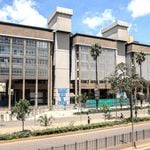
Central Bank of Kenya Governor Kamau Thugge.

Photo credit: File I Nation Media Group

Higher imports of intermediate and capital goods widened Kenya’s current account deficit to 2.2 percent of gross domestic product (GDP) in the year to October 2025 up from 1.5 percent in the preceding similar period last year.

The deficit widened despite the country recording higher export earnings from horticulture, coffee, manufactured goods, and apparel during the year under review.

During the period, imports grew 9.6 percent on rising intermediate and capital goods orders, while exports increased 6.7 percent, creating an imbalance that expanded the deficit during the twelve-month cycle.

“The current account deficit stood at 2.2 percent of GDP in the 12 months to October 2025 compared to 1.5 percent of GDP in a similar period in 2024, mainly reflecting higher imports of intermediate and capital goods,” said CBK Governor Kamau Thugge on Tuesday.

“Goods exported increased by 6.7 percent, driven by horticulture, coffee, manufactured goods, and apparel. Goods imports rose by 9.6 percent, reflecting increases in intermediate and capital goods imports.”

The current account captures transactions on goods, services, remittances, and income flows, making it a critical measure of Kenya’s external position and the sustainability of its trade dynamics.

A deficit arises when outflows exceed inflows, meaning the economy requires external funding to maintain stability, especially when import growth consistently outpaces performance across export-oriented sectors.

Kenya’s goods trade deficit remains the largest contributor to the current account gap, driven largely by reliance on imported industrial inputs, capital equipment and consumer goods.

The CBK noted that during the review period, services receipts increased 4.8 percent supported by stronger travel inflows, while diaspora remittances rose 5.8 percent, slightly helping cushion the widening goods trade gap.

The apex bank projects the current account deficit will remain stable at 2.3 percent of GDP in the 2025 calendar year, as well as in 2026, supported by financial inflows that will fully finance the gap.

These inflows are expected to generate an overall balance of payments (BOP) surplus of $1.9 billion (Sh245.6 billion) in 2025, providing additional support for external buffers and macroeconomic stability ahead.

The surplus is, however, projected to ease to $681 million (Sh88 billion) in 2026 as financing patterns shift, though external flows should continue fully covering the current account deficit levels.

CBK foreign exchange reserves currently stand at $12.1 billion (Sh1.6 trillion), equivalent to 5.25 months of import cover, providing a substantial buffer against short-term domestic and external shocks facing markets.

The CBK expects external conditions to remain broadly supportive despite uncertainties, noting that stable commodity prices and resilient service exports should help moderate pressures on the current account ahead.

Financial account inflows, including portfolio investments and concessional financing, are expected to remain sufficient to fully offset the current account deficit, underpinning the positive outlook for balance payments.

The CBK said favourable inflows will also help rebuild foreign exchange buffers, strengthening resilience against shocks linked to global financial tightening, commodity price swings, and unpredictable geopolitical developments. 
 

PAYE Tax Calculator

Note: The results are not exact but very close to the actual.