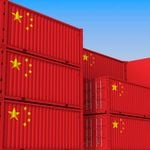
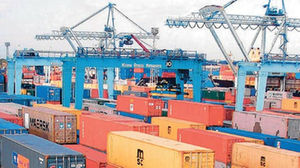
Kenya’s trade deficit with China widened to Sh475.6 billion in the first nine months of last year, highlighting a deepening imbalance in bilateral trade even as Nairobi pursues policy shifts to boost exports.
New data from the Kenya National Bureau of Statistics (KNBS) shows the deficit expanded 16.7 percent from Sh407.7 billion recorded over a comparable period in 2024, driven by rising imports and shrinking exports.
According to the data, Kenya’s imports from China grew 14.5 percent to Sh489 billion between January and September 2025, up from Sh427.04 billion in the same period a year earlier, underscoring Nairobi’s sustained appetite for Chinese products.
Exports, on the other hand, declined 30.8 percent to Sh13.4 billion, down from Sh19.3 billion previously, reinforcing a pattern of weak export performance that continues to define the trade relationship between the duo.
China continues to account for a substantial share of Kenya’s import bill, reflecting sustained demand for products used across construction, transport, energy, and manufacturing.
The scale of imports contrasts sharply with Kenya’s narrow export base to China, which remains concentrated in a limited number of commodities and semi-processed products.
Persistence of the imbalance highlights structural challenges in Kenya’s export competitiveness, particularly in accessing large Asian markets.
While imports have benefited from established supply chains and financing arrangements, exports have been more vulnerable to production disruptions and market access bottlenecks.
Kenya’s export performance to China has also been affected by reduced volumes in key mineral shipments over the past two years, limiting foreign exchange earnings.
Closure of the Kwale titanium mines significantly cut shipments of titanium ores, previously one of Kenya’s top exports to China, contributing to the sharp contraction in export earnings.
China’s role as a major supplier has been reinforced over the years by infrastructure development and industrial inputs that support domestic economic activity.
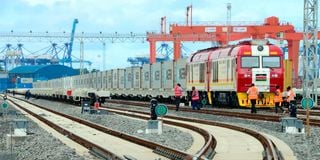
The relationship was strengthened after Chinese firms won a landmark contract to build the standard gauge railway from Mombasa to Suswa near Naivasha.
The widening trade gap has kept China at the centre of Kenya’s broader trade policy discussions, especially as authorities seek to narrow persistent current account pressures.
Kenya has been pursuing measures aimed at improving access for local products in non-traditional markets, including Asia, as part of a broader export diversification strategy.
The growing disparity in trade flows featured prominently in high-level engagements between Nairobi and Beijing in April last year.
President William Ruto placed the imbalance on the agenda during his four-day state visit to China, signalling Kenya’s intent to secure more favourable market access.
“We have concluded the high-level conversations with China. They have agreed to a reciprocal arrangement between Kenya and China…to remove all the tariffs on our tea, coffee, avocado, and all other agricultural exports,” Dr Ruto told business leaders in August last year.
Kenya’s push for a bilateral trade arrangement aligns with its Integrated National Export Development and Promotion Strategy, launched in 2018 to diversify markets beyond traditional Western destinations.
That strategy has also informed the posting of envoys to key Asian capitals, including Beijing, to identify new opportunities and reduce over-reliance on a narrow range of export markets.
Before the Covid-19 pandemic, agencies such as the Kenya Export Promotion and Branding Agency had stepped up marketing efforts in China, targeting agricultural hubs and tea-growing regions.