Time flies with great content! Renew in to keep enjoying all our premium content.
Prime
Kenya to tap 90pc of railway levy for SGR bonds
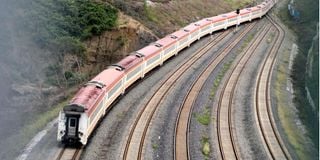
An SGR passenger train departs from the Miritini station in Mombasa, bound for Nairobi on July 7, 2025. To fund the SGR extension to the Ugandan border, the State could issue two bonds to raise about $3 billion (Sh387 billion) for the railway line.
Kenya plans to tap up to 90 percent of annual collections from the Railway Development Levy (RDL) to secure additional financing for railway projects, under proposed legal changes before Parliament.
The Miscellaneous Fees and Levies (Amendment) Bill, 2025 seeks to amend the Miscellaneous Fees and Levies Act to expand how proceeds from the Railway Development Levy Fund (RDLF) can be used. The levy is charged at two percent of the customs value of all imported goods.
“The purpose of the levy shall be to provide funds for the construction and operation of a standard gauge railway network in order to facilitate the transportation of goods,” the memorandum to the Bill states.
If approved, the amendments would allow the State to leverage future levy revenues to mobilise fresh capital for railway infrastructure. This marks a shift from the current pay-as-you-go model.
A clause in the Bill provides that a proportion of the RDLF “not exceeding ninety percent of the Fund may be used to secure additional funds” for developing railway infrastructure, including the standard gauge railway (SGR).
The structure mirrors the securitisation of the Road Maintenance Fuel Levy, where the government committed part of future fuel levy collections to repay investors in road bonds.
The Treasury securitised Sh7 of the Sh25 collected per litre of petrol and diesel after increasing the levy from Sh18 to Sh25 in July 2024.
While that approach has been framed as a way to clear sector arrears, the National Treasury has differed with the International Monetary Fund over whether such financing should be classified as sovereign debt.
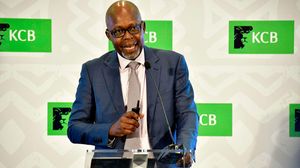
“The concern is an accounting matter on whether we should capture it as a sovereign debt or not. Our position as government is that once you sell a right to a special purpose vehicle (SPV), then there is no risk to the government at all,” Treasury Cabinet Secretary John Mbadi said earlier.
The proposed amendments would effectively turn the RDLF into a financial anchor, enabling the government to use future levy proceeds to back loans, bonds or other structured instruments to accelerate railway expansion and upgrades.
Chinese lenders negotiations
Kenya has increasingly turned to alternative financing models to fund infrastructure amid rising debt-servicing costs and constrained fiscal space. Rail projects, seen as critical to lowering freight costs and improving regional trade competitiveness, have faced funding gaps.
The Bill also broadens the use of the levy to include financing the safety and economic regulation of railway infrastructure, as well as rehabilitation works, subject to approval by the Cabinet Secretary.
The changes come as Kenya negotiates with Chinese lenders to make the levy more flexible. China Exim Bank financed the SGR from Mombasa to Suswa near Naivasha.
Mr Mbadi said Kenya has opened talks with China Exim Bank to drop a clause requiring RDL proceeds to be used to repay the loan for the Mombasa–Naivasha line.
He said a waiver would allow the levy, which forms part of the security for existing loans, to back a bond to finance the extension of the SGR from Naivasha to Malaba.
“What we intend to do is use the railway development levy to raise funds and have an engagement with Exim Bank on this because there is a provision in the agreement that ties the railway development levy to this loan,” he said on February 11.
He added: “We have not engaged with China to fund the railway from Naivasha.”
Ring-fencing RDLF
The Bill, sponsored by Majority Leader Kimani Ichung’wah, proposes the creation of a ring-fenced Railway Development Levy Fund into which all levy proceeds would be paid.
The Fund would be managed by a Railway Development Levy Fund Board structured as a corporate body. It would comprise a chairperson appointed by the President, the Principal Secretaries responsible for railway transport and the Treasury, a representative from the Office of the Attorney-General, five non-public members with expertise in infrastructure finance, law, investment or public-private partnerships, and a secretary serving ex officio.
The governance framework is intended to strengthen oversight of levy revenues, which have historically flowed through broader government systems.
Under the Bill, the Cabinet Secretary would have powers to make regulations on staffing, administration and use of the Fund, subject to the Public Finance Management Act. Transactions would be subject to audit under the Public Audit Act.
Administrative costs would be capped at 0.5 percent of the Fund, a provision aimed at limiting overheads and directing most resources to infrastructure development.