The Treasury has increased its borrowing target for the financial year starting in July by Sh104.1 billion to Sh1.170 trillion, signalling mounting spending pressures amid political calls to ease taxation ahead of the 2027 General Election.
Kenya’s borrowing gap, as outlined in the final Budget Policy Statement (BPS) 2026 tabled in the National Assembly on Thursday, has widened from Sh1.066 trillion, which the Treasury had projected in a separate Budget Review and Outlook Paper (BROP) published earlier in October 2025.
The BPS is the document that anchors the government’s fiscal policy for the year and the medium term.
Compared to projections in the 2025 BROP, another critical document in the budget-making process, Treasury increased its borrowing target while lowering its tax-raising goal by Sh97 billion. In the fiscal year ending June next year, the government expects to collect taxes amounting to Sh2.998 trillion, up from Sh2.902 trillion projected in BROP 2025.
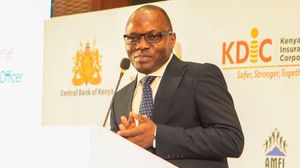
“Looking ahead, the government’s fiscal policy for the financial year 2026/27 and the medium term remains anchored on a growth-supportive fiscal consolidation strategy,” Treasury Principal Secretary Chris Kiptoo said.
Treasury says the budget deficit for the financial year ending June next year will be financed through net external borrowing of Sh225.5 billion and net domestic financing of Sh890.4 billion.
In the supplementary budget for the current financial year ending June this year, the government had a fiscal deficit of Sh1.18 trillion, up from Sh948 billion, which had been projected at the start of the fiscal year.
The need for increased borrowing is due to spending pressure, with President William Ruto’s government keen on achieving most of its campaign promises as the country nears the general elections.
The government’s total spending for the upcoming financial year is projected at Sh4.7 trillion compared to Sh4.5 trillion projected for the current year ending June 2026.
Recurrent expenditure, which includes non-capital generating expenses such as payment of salary and operation and maintenance, has been projected at Sh3.456 trillion, while development expenditure is projected at Sh749.5 billion.
The 47 counties will receive a total of Sh495.5 billion as shareable revenue from the National Treasury, while the Contingency Fund will get Sh2.0 billion.
The government expects to mobilise revenue amounting to Sh3.533 trillion in the review period, with a big chunk of it- Sh2.9 trillion, being ordinary revenue, or largely taxes. This leaves the government’s spending budget with a deficit of Sh1.115 trillion.
With one year to the election, President Ruto will be keen to complete some of his flagship projects under the Bottom-Up Transformation Agenda, which targets ordinary Kenyans, popularly known as the hustlers.
The Cabinet Secretary for National Treasury, John Mbadi, has also indicated that Kenya is uncertain about returning to the Eurobond market despite signs of improved conditions, including falling interest rates that have lured African peers such as Benin back into the international bond market.
“As far as the plan and timing for Kenya to return to the market is concerned, that will be determined by the prevailing market conditions and the status of other expected financing options,” said Mr Mbadi.
“Whereas the redemption profile currently looks smooth, there is still room for additional liability management operations, particularly to address other expensive commercial debt instruments in the public debt portfolio.”
Kenya is keen to reduce its fiscal deficit to 5.3 percent of GDP by the financial year ending June 2027. It has thus been undertaking fiscal consolidation, which includes austerity measures such as trimming non-critical expensesand implementing tax measures focused on improving compliance and expanding the tax base.
In the first half of the current financial year, the country borrowed a total of Sh518.1 billion against a target of Sh442.4 billion, with a big chunk of the money, Sh509.2 billion, coming from domestic investors. Foreign loans amounted to Sh7.8 billion.
Through the fiscal consolidation plan, the Treasury expects the overall fiscal deficit to gradually decline from 5.3 percent of GDP in the financial year 2026-27 to 3.6 percent of GDP in the following period to 3.3 percent of GDP in the period ending June 2029.
“This will boost the country’s debt position and ensure the country’s development agenda is sustainably funded,” said the Treasury.