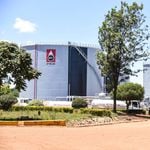
Kenyan investors have been allocated up to 60 percent of the 11.81 billion Kenya Pipeline Company (KPC) shares the government is offloading in an initial public offering (IPO), which opened on Monday.
The IPO, whose sale period runs until February 19, 2026, has been priced at Sh9 per share. It is expected to yield gross proceeds of Sh106.3 billion, if fully subscribed.
The Treasury is selling a 65 percent stake in the pipeline company, and will retain a holding of 6.36 billion shares that are equivalent to 35 percent of its 18.17 billion issued shares.
The offer thus values KPC at Sh163.56 billion, which at Monday’s prices at the Nairobi Securities Exchange (NSE) would make it the fifth largest listed firm behind Safaricom, Equity Group, KCB Group, and East African Breweries Plc (EABL).
The Treasury said it has set aside 20 percent or 2.36 billion shares in the IPO for each of the local retail and local institutional investor pools, 15 percent or 1.77 billion shares for oil marketing companies operating in Kenya, and five percent or 590.63 million shares for KPC employees.
Foreign investors have been allocated 20 percent, the same as the allotment to investors from East African Community (EAC) member states, comprising the Democratic Republic of Congo, Burundi, South Sudan, Somalia, Rwanda, Uganda, and Tanzania.
This allocation formula, according to the government, will allow for a fair distribution of the stock between institutions, companies, and individual members of the public, in addition to ensuring that employees of KPC participate in the offer.
“In cases of undersubscription, valid applications in the affected category be allocated in full, with remaining shares reallocated in the following priority order: local retail, then local institutional, EAC investors, international investors, and oil marketing companies,” said the Treasury, KPC, and the Privatisation Authority in an information memorandum on the IPO.
“In cases of oversubscription, Kenyan investors will be given priority,” it added.
The bulk of the IPO proceeds is expected to go into the proposed infrastructure fund. The KPC offer is the first divestiture of a government company through the stock market for nearly 18 years, with the last such sale having been the Safaricom IPO, which was on sale in April 2008.
At Sh106.3 billion, the sale is also expected to become the largest IPO ever issued in Kenya and the East Africa region, if fully subscribed, eclipsing the Safaricom issuance, which netted Sh51 billion from the sale of 10 billion shares or 25 percent of the telecoms operator at Sh5 each.
The KPC offer also marks an end to a decade-long IPO drought at the Nairobi bourse. The most recent public share sales were the October 2015 listing of the Stanlib Fahari Income Real Estate Investment Trust, the NSE’s self-listing in September 2014, and Britam’s IPO in September 2011.
In the previous decade, the market had seen a succession of high-value IPOs that helped introduce more than two million new investors to the bourse.
Besides Safaricom, other major market entries in the period came from KenGen in April 2006, ScanGroup in June 2006, Eveready East Africa in October 2006, and Mumias Sugar’s additional offer or secondary IPO in December 2006.
In 2007, the market welcomed Access Kenya in March and Kenya Re in July, with Co-operative Bank of Kenya rounding off the decade’s IPOs with its October 2008 entry.
For the Safaricom and KenGen IPOs, the investor categories differed significantly compared to that of the KPC offer, with a higher allocation of shares earmarked for local investors.
Safaricom had two main pools known as domestic and international, which had an initial allocation of 65 percent (6.5 billion shares) and 35 percent (3.5 billion shares), respectively.
The domestic pool had four mini-classifications within it, including the retail sub-pool that comprised Kenyan and East African individual and corporate investors, the qualified institutional investor category that housed investment banks, collective investment schemes, and pension funds, an employee pool, and an authorised Safaricom dealers pool.
The Safaricom IPO’s rules, however, stated that the issuer had the right to claw back up to 15 percent of the shares allocated to the international pool in case local investors oversubscribed the offer by more than 200 percent. If the two main pools ended up with similar subscription numbers, the State would claw back 15 percent from the local pool to satisfy the international investors.
Ultimately, the Safaricom IPO was oversubscribed by 432 percent, as investors placed bids worth Sh231 billion, resulting in a higher allocation for the domestic investor pool.
In the KenGen IPO, the government floated 659.5 million shares, at a price of Sh11.90 for a gross target of Sh7.84 billion.
There were two applicant categories in the offer, the first being the employee pool, which had an allocation of five percent, and a main pool, which was allocated 95 percent of the shares.
The main pool contained local and international retail and institutional investors.
In case the employee pool failed to take up its full allocation, the balance was to be reallocated to the main pool.
The IPO was oversubscribed by 233 percent, which under the rules resulted in a pro rata allocation formula in which only those with the minimum application of 500 shares were given their full lot of shares.