New search begins for Nairobi underground water reserves

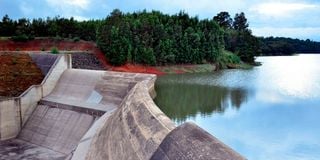
The spillover section of the Sasumua Dam and Water Treatment Works in Nyandarua County

The spillover section of the Sasumua Dam and Water Treatment Works in Nyandarua County and managed by the Nairobi City Water and Sewage Company (NCWSC). 

Photo credit: File | Nation Media Group

Kenya is set to map new underground water reserves in Nairobi amid pressure on existing supplies for millions of city residents and businesses.

The Water Resources Authority (WRA) and the Water, Sanitation, and Irrigation Ministry revealed upcoming comprehensive assessments and development of the Nairobi aquifer systems to supplement existing supplies.
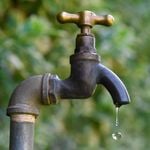
“The Water Resources Authority intends to engage the services of a qualified consulting firm/ consortium to carry out the aquifer assessments and preparation of attendant Development and Management Plans (AAD&MP) for Nairobi aquifer suite systems,” WRA said in a disclosure.

“The objective of the consultancy that these Terms of Reference refer to is to identify with a high percentage of certainty the existence of both shallow and deep (deeper than 500m) groundwater resources underlying the Nairobi aquifer systems,” it added.

Water consumed in Nairobi comes from both dams and boreholes sunk into aquifers, which are underground reservoirs. The bulk of water supply for Nairobi comes from the Ngethu-Thika dam system, which supplies 84 percent, Sasumua dam (11 percent), and Ruiru dam (four percent), as well as the Kikuyu Springs (one percent).

Over time, the water supply for the city has failed to meet demand. Latest records show that Nairobi has a daily demand of 935,000 cubic metres of water against a supply capacity of 658,600 cubic metres, leaving a deficit that forces rationing across various consumer zones.

The Nairobi City Water and Sewerage Company (NCWSC) two weeks ago revealed that it targets to raise its revenue collection to Sh19.9 billion, partially through a proposed review of tariffs, to help finance the expansion of services amid a growing consumer base.

NCWSC currently generates about Sh11.5 billion revenue annually, even though its management estimates that it requires Sh19.2 billion to service the needs of the city’s fast-rising population, currently estimated at above five million.

Acting Managing Director Martin Nang’ole noted that Nairobi’s population, now above five million, continues to strain a system that is already operating beyond its intended capacity.

He said that the city is also undergoing rapid urban densification, noting that several estates that were originally single-dwelling residential areas, such as South B, South C, Kilimani, Kileleshwa, Ngumba, among others, have transformed into high-rise, high-density developments.

This shift, the official said, has significantly increased water demand and sewer load in areas where the underlying infrastructure was never designed to support such densities.

“The cost of water treatment, electricity, pipe materials, and routine maintenance has increased significantly since the last tariff review in 2023. Without an updated tariff structure, the pace of essential upgrades, loss reduction efforts, and service reliability improvements will be severely affected,” Mr Nang’ole said.

Follow our WhatsApp channel for the latest business and markets updates. 


PAYE Tax Calculator

Note: The results are not exact but very close to the actual.