Kenyan surgeon takes local flavours to ‘MasterChef South Africa’ show

Kenyan-born surgeon Philip Munda, 33, performs life-saving operations by day and competes on MasterChef South Africa by night, pursuing his culinary dream.

Photo credit: Pool

In 2010, he was already making headlines as a brilliant student. The Kenyan-born teenager had just finished his final high school exams in South Africa with eight distinctions, equivalent to straight A grades. His performance earned him a feature in the media where he spoke with quiet confidence about his dream of becoming a doctor.

More than a decade later, that dream has come true.
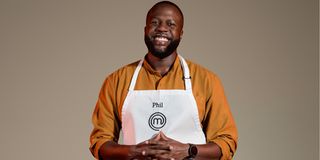
Today, Philip Munda, 33, is a general surgeon working in South Africa. He spends his days inside hospital theatres performing complex procedures and responding to life-threatening emergencies.

But outside the hospital, he is stepping into a very different kind of pressure. Philip is among the contestants on MasterChef South Africa Season Six, competing on national television against some of the country’s most talented home cooks.

Before the bright lights of the television studio, however, there was the long and demanding journey into surgery.

Philip was born in Nairobi before his family relocated to South Africa in 1997. Growing up with Kenyan roots and South African life shaped his early years. At school, he focused on academics and was certain he wanted to pursue medicine.

Kenyan-born surgeon Philip Munda, 33, performs life-saving operations by day and competes on MasterChef South Africa by night, pursuing his culinary dream.

Photo credit: Pool

After finishing high school, he enrolled at the University of Cape Town to study medicine. The degree took six years, from 2010 to 2016. “Medical school was intense, filled with lectures, long nights of studying and early mornings in hospital wards,” Philip recalls.

But along the way, he discovered where his real passion lay.

“Surgery always seemed like the best field for me,” he says. “I like working with my hands and I like solving problems quickly.”

Like many young doctors in South Africa, his journey into the profession started immediately after graduation. First came a two-year internship, followed by one year of community service. After that he worked as a medical officer for about a year and a half before beginning specialist training in surgery.

Now, he is a qualified general surgeon with his own private practice. He works mainly at hospitals in Johannesburg where he performs different kinds of operations and treats patients who need urgent surgical care.

His days begin early

“I usually begin my rounds around seven in the morning,” he explains. “I see my patients first and check how they are recovering, then I prepare for the day’s operations.”

When he is not in the theatre, he meets patients in consulting rooms. But surgery is never a predictable job. Emergencies can happen at any time. About seven to eight times every month, Philip is on call. When a patient arrives at the hospital needing urgent surgery, he must respond immediately, whether it is day or night.

“Surgery demands calm under pressure,” he says. “You have to stay focused because someone’s life is in your hands.”

The job market itself also brings challenges. In recent years South Africa has trained more doctors than before, which has made the field more competitive. “There are actually a lot more surgeons now,” Philip explains. “Medical schools have increased the number of students they train. So the field is becoming more competitive, especially in big cities.”

Many young doctors look for positions in urban hospitals, and fewer are willing to work in smaller towns. As a result, building a private practice in a major city takes time and patience.

But even for a dedicated surgeon, the journey has not been without setbacks.

A few years ago, Philip suffered a serious knee injury while playing soccer. The injury was so severe that he could not walk for three months. For someone whose work requires standing for long hours in the operating theatre, the situation was frightening.

“The hardest part was coming back,” he recalls. “As surgeons, we stand for many hours during operations. After my injury, I had to relearn how to work even though my knee was still painful.”

Kenyan-born surgeon Philip Munda, 33, performs life-saving operations by day and competes on MasterChef South Africa by night, pursuing his culinary dream.

Photo credit: Pool

The experience tested both his patience and resilience. “When I returned, I felt a renewed sense of purpose,” he says. “It reminded me that surgery is really what I want to do.”

Long working hours, high pressure cases and the emotional weight of hospital life can affect even the most dedicated doctors. For Philip, the key to balance has always been finding ways to relax after work. He found that escape in the kitchen. Ironically, cooking was not always part of his life.

“When I finished school, I could not even fry an egg,” he says with a smile.

Everything changed while he was in university when he lived with six of his friends. To survive, they simply had to learn how to cook.

Soon, the kitchen turned into a battleground. “It quickly became a competition. Everyone wanted to cook better than the others.”

Around the same time, he started watching a television show that would quietly shape his future. He became a fan of MasterChef Australia and admired how ordinary people could turn simple ingredients into beautiful meals.

Slowly, cooking became a passion. After long days at the hospital, the kitchen became a peaceful place where he could clear his mind.

“After a 36-hour shift, the best thing I can think of is going home and cooking for my wife,” he says. “It relaxes me.”

The couple often watched different MasterChef shows together, imagining what it would be like to cook in that famous kitchen. For years, it remained just a dream. Then last year, Philip was finishing his specialist training in surgery when applications opened for MasterChef South Africa. “It was an opportunity I could not miss,” he says.

He applied without knowing what to expect. The competition was huge. Around 20,000 people applied and the selection process was intense. Applicants first submitted online entries. Some were then invited to interviews with the judges through video calls. The next stage was a live audition in Cape Town.

After several rounds only 20 home cooks were chosen for the final competition, and Philip was one of them. Now he finds himself in a completely different kind of theatre.

“Instead of surgical lights and medical instruments, I stand under bright studio lights with a knife and a cooking pan,” he says with a chuckle.

The competition runs for 26 episodes as contestants face different cooking challenges to determine who will become the next MasterChef South Africa. The pressure is real. “They give you 60 minutes,” Philip says. “But it feels like 15.”

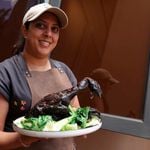
His first dish on the show came from a memory close to his heart. Inspired by his Kenyan roots as a Luo from Asembo, he prepared a fine dining version of Ngege and ugali (tilapia fish and ugali.) “When I go home to Kenya, the one thing I always want is tilapia,” he says.

He carefully filleted the fish and transformed the ugali into a soft mousse served with a coconut and tomato broth. The judges praised the creativity and flavour of the dish, although a few fish bones left him slightly nervous.

Still, he made it through the first round. For Philip the competition is about more than winning a prize. It is also a chance to represent both his Kenyan heritage and his African identity. “I really cherish being Kenyan,” he says. “Being on the show gives me a chance to show African food to more people.”

Kenyan-born surgeon Philip Munda, 33, performs life-saving operations by day and competes on MasterChef South Africa by night, pursuing his culinary dream.

Photo credit: Pool

If he moves further in the competition, he hopes to cook more dishes from home, including chapatti and dengu, a simple meal he remembers sharing with his sister while growing up.

Despite the excitement of television, Philip remains focused on his main calling. His biggest priority is continuing to grow his surgical career and build his private practice. But food will always remain part of his story.

If he wins the competition’s one-million-rand prize, he hopes to work with chefs and entrepreneurs to promote African cuisine and show how it can blend with flavours from around the world.

For now, his life moves between two very different worlds. One day he may be standing in a silent operating theatre performing delicate surgery to save a life. Another day he may be racing against the clock in a television kitchen while judges watch every move.

“Cooking,” he says softly, “is magic. You take a few ingredients, mix them together, and suddenly they become something beautiful.”

Follow ourWhatsApp channel for the latest business and markets updates.

PAYE Tax Calculator

Note: The results are not exact but very close to the actual.