How we make money from cooking online

People often overlook the emotional labour, the creative blocks, and the guilt of taking a break or going a week without posting.

Photo credit: Shutterstock

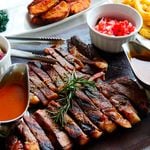
At first glance, when scrolling through a food video online, it looks effortless: a clean kitchen, a mixture of sauces, and a dish that makes you want to cook immediately. But for the creators behind the camera, that simplicity is the result of hours of planning, production, and careful brand-building.

Brands in Kenya are investing heavily in creators, and many have learnt what they prioritise online.
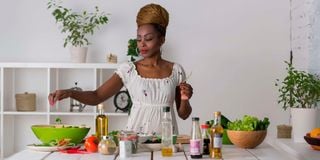

“They look for unique storytelling, good engagement and an audience that matches what they want to sell,” Seby Onyango opens up.
A full-time food and lifestyle creator who built her brand by focusing on something she felt was missing in the digital space. She recalls that her journey began during Covid, a time when she had already quit her job and was experimenting with beauty content.

“I really wanted to do content at that time,” she says. “So I began taking videos of myself doing makeup. But in my head, I felt like this is not it.”

Cooking, however, felt different.

As she explored YouTube for inspiration, she realised most recipes felt inaccessible, too complex or reliant on ingredients she couldn’t easily find.

“I had to Google some of their names,” she laughs. That idea became the seed for Jikoni Yangu, a name that captured exactly what she wanted to offer: an authentic Kenyan kitchen. What surprised her most was how natural the shift felt.

While many assume content creation is simply ‘posting videos,’ Seby clarifies that her income is built on multiple streams.

“Most of the income I get come mainly from paid brand partnerships,” she explains, adding that she has worked with reputable brands. “I also earn from YouTube ads and affiliate marketing. Sometimes I also offer catering services, which came from the content I do.”

To keep her business sustainable, she treats each platform separately.

Seby Onyango, known online as Jikoni Yangu, is a full-time food and lifestyle content creator who began creating food content in 2020 after quitting her job.

Photo credit: Pool

“Instagram is my main,” she says. “But I treat Instagram, TikTok, and YouTube differently because I earn in different ways.”

When brands pay for Instagram, she often cross-posts to TikTok as part of the package. YouTube remains purely an AdSense channel.

“I have a rate card with different rates for small businesses and big brands,” says Seby. Before agreeing to a collaboration, she studies what a brand needs, her analytics, audience demographics, engagement, shares and reach. She also factors in her production cost. Her growth is evident in her earnings.

“When I was starting, the first time I was paid Sh10,000 for one reel,” she shares. “The highest I’ve gotten is Sh200,000 from a collaboration.”

However, Seby is deliberate about profitability.

“Before I take up a brand collaboration, I always make sure that I cover my bases,” she says.

But not everything goes according to plan.

“Sometimes you do a recipe, you have your camera on, and you think today is that day and then the recipe flops!” she says. The wasted food, time and ingredients mean starting another day again.

Delayed brand payments are another hidden challenge.

Her audience, she says, shapes her creative direction. “Kenyans love authentic Kenyan recipes,” she says.

A partnership that shifted her perspective involved a collaboration with a local TV station and a commercial bank mentorship programme for youth that happened this year.

“It opened my eyes that my content is not just about recipes. There’s more I can do with it, and I need to position myself even better.”
Despite the challenges, Seby sees a long future in food content.

That’s how Gertrude Ayieko, known to her 200,000-plus followers as Mama’s Plate, describes the heart of her brand.

Her niche, she says, is simple, accessible home-style cooking with fun twists. What keeps people following her isn’t perfection, it’s a sense of warmth and relatability.

“I focus on flavour, practicality and storytelling,” she says. “People stay because it feels like home.”

“My main income streams are brand partnerships and my corporate job,” she explains. As a financial engineer with a 9–5 role, she treats brand collaborations as a serious secondary business, one that has quickly become a major revenue for her.

The structure behind her pricing reflects that discipline. She works with different rates for start-ups, established companies and restaurants, and she adjusts these rates depending on the quarter.

Gertrude Ayieko, also known as Mama's Plate online, is also a financial engineer who treats brand collaborations as a major revenue source for her.

Photo credit: Pool

“Just like hospitality, content creation has high and low seasons,” she notes. She also studies her engagement, reach, retention and past performance, and evaluates the terms of each contract.

She is active on Instagram and TikTok, and she treats the two as separate income channels. “TikTok makes a lot of content go viral, while Instagram delivers stronger community engagement and conversions,” says Gertrude. The audiences differ, too, so the value proposition for each platform does as well.

“Food content creation is expensive,” she says. She handles her own shooting, but for more polished campaigns, she outsources production techniques, which adds to the cost.

“You can make very beautiful content without wasting food or overspending.”

Balancing creativity with the demands of algorithms and brand deliverables is a constant act of discipline. “I plan my content to ensure consistency,” she says, adding that she also protects space for spontaneous ideas.

Gertrude sees her brand as long-term: “I turned my passion into business, and that’s why I enjoy it,” she says. “I don’t just post food; I teach.”

That is the organising principle behind Lynn Boke, better known as Lynn’s Gallery Kitchen, whose audience has come to rely on her for more than recipes.

A trained chef with experience in a five-star hotel and now a private chef, she blends professional technique with home-friendly simplicity. Her brand, she says, is built on purpose. “My audience knows they will always learn something from me.”

Besides food content creation, her other income streams come from catering, meal preparation orders and cooking classes. “These are the backbone of my brand,” she explains.

Content creation amplifies that work by offering clients a window into her skill and culinary style.

Determining her rates is a structured process. She studies her engagement, audience demographics, completion rates and her conversion strength.

“I also weigh my production costs, ingredients, time and any exclusivity or usage rights the brand may want.”

Just like Seby and Gertrude, she also treats Instagram and TikTok as separate income channels, each with its own logic.

“Instagram is my strongest commercial platform,” she says, noting that Kenyan brands tend to prefer it. TikTok, on the other hand, drives reach and virality, and she has recently gained many clients from there, too.

Each video she posts serves a different intention, and that intention shapes how she evaluates cost.

“Some recipe videos act as my way of giving back, free teaching moments that build value rather than revenue.” Others, she adds, document life and growth, allowing her to connect with her audience on a personal level.”

Lynn Boke, also known as Lynn's Kitchen Gallery on her socials, is a trained chef whose main income stream comes from food content creation.

Photo credit: Pool

Then there are the catering-related videos, which market her work directly; the ingredients and services are client-funded, so the cost is already built into her business.

Balancing creativity with the pressure to produce consistently is, she admits, the most difficult part of her work. “I’ve experienced burnout more than once. I naturally push myself very hard,” she says.

To protect her mind and her craft, she now schedules rest with intention. Mondays are her self-care days, long walks, time at the spa, and quiet hobbies. “I set aside one full day for content creation, planned immediately after rest so the process feels inspired, not forced.”

“It’s still a learning process,” she says, but she now delegates more and focuses on the tasks that need her touch.

According to Lynn, brands look for reliability, clean aesthetics, quality production and alignment with their identity.

“My background as a trained chef also elevates my credibility. I’m not just creating content; I’m offering expertise, consistency, and a trusted relationship with my audience,” she says.

One of the most interesting collaborations for her was working with a household cleaning product brand, far outside her usual content category. At first, she had no idea how to blend the product with her cooking videos. “But that challenge stretched me creatively in the best way. It pushed me to think differently about storytelling, transitions, and how to connect kitchen hygiene with food preparation in a seamless, engaging way.”

She prioritises engagement rate, saves, completion rate and comments; metrics that show how deeply the audience is connecting.
“These numbers guide my pricing, content strategy, and the brands I choose to partner with,” she says.

Her audience is largely Kenyan and mostly women who love cooking but want easy, elevated and reliable meals. This shapes her tone, her choice of ingredients, and the brands she works with, from grocery stores to kitchen tools.

People often overlook the emotional labour, the creative blocks, and the guilt of taking a break or going a week without posting.

“It is rewarding,” she says, “but never ‘just a video.’”

To stay fresh while controlling costs, she plans, recycles ingredients across recipes, batch-creates content, and aligns recipes with her private cheffing menus. Her culinary training helps her innovate without waste, even on a long-term path.

“Food is an extension of my life’s work,” she adds.

PAYE Tax Calculator

Note: The results are not exact but very close to the actual.