Ossobuco: The non-premium cut that has won over Kenyans’ palates

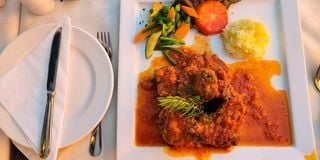
Ossobuco dish served at Trattoria Restaurant in Nairobi on February 4, 2026.

Photo credit: Bonface Bogita | Nation Media Group

Ossobuco, once a specialty dish found only in Italian restaurants, is quickly becoming a staple on Kenyan tables. What people used to order for a night out is now being made at home, shared at family dinners, and sold in home-cooking businesses.

Chef Paul Ngone Gitao (60), has been cooking at Trattoria since 1983. When he first joined the Italian restaurant, he was still learning the ropes of the kitchen. At that time, Italian cuisine was unfamiliar to many Kenyans, who didn't fully grasp its depth and tradition.
“I came here in 1983,” he recalls. “That is when I started cooking at Trattoria, alongside the mother of the owner. She was about 87 years old and full of knowledge. She cooked every day and patiently taught the team the secrets of Italian cuisine."

Chef Paul learned the foundations of dishes that would later define ossobuco from her.

He explains that ossobuco is a special cut of beef that is sliced carefully. The outer skin is removed, leaving behind fresh, soft meat.

"It's not tough," he says. "Ossobuco is very soft beef. When cooked slowly, the meat becomes tender and rich, soaking up its sauce. What makes ossobuco unique is the marrow inside the bone.

"Without marrow, it's not ossobuco," Chef Paul explains. The marrow gives the dish its deep flavor and richness."

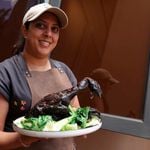
Trattoria chef Paul Ngone presents an ossobuco dish at the restaurant in Nairobi on February 4, 2026.

Photo credit: Bonface Bogita | Nation Media Group

From the beginning, many diners came to Trattoria knowing exactly what they wanted. "They had heard about us and came for that piece of meat." Even as prices changed over time, their love for the dish never faded.

Today, a plate of ossobuco at Trattoria costs about Sh2,000.

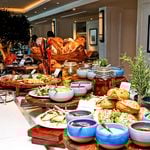
Joseph Omari, a chef de partie in the hot kitchen at the Pullman Hotel, says he has seen high demand for ossobuco especially during events and large functions, when the dish is served as part of the buffet. Guests often request it with gravy, and it remains one of the most popular entrées.

"We cook it the same way they do in Italy," says Joseph. The meat is slow-cooked until it becomes very soft and falls off the bone.

Ossobuco is served as a main course. It can be served with various sides, such as rice, ugali, and vegetables. This flexibility has helped the dish grow in popularity among different diners.

Joseph says guests respond well to the dish because it combines meat, marrow, and gravy on one plate. "You have the meat, the bone marrow, and the sauce made from the bones," he explains. "It builds its own flavour."

He notes that the way the dish is cooked matters most. The dish takes time and cannot be rushed.

"Ossobuco needs about two hours to cook properly," he says. In hotels, the dish is prepared in advance so that guests do not have to wait.

Marrow makes ossobuco stand out compared to other slow-cooked dishes, such as lamb shank or beef short ribs.

For Chef Julius Odhiambo, the head chef at the Panari Hotel, ossobuco is more than just a dish; it's a culinary experience.

He describes it as his signature dish. " Braised cooked with herbs and vegetables. The dish takes two to three hours to cook, gently simmering until the meat is tender. Over time, the flavours from the herbs and vegetables settle into the meat."

He believes the dish fits well with today's focus on healthy eating. He says that, when prepared correctly, it does not carry heavy or unhealthy elements.

Local delicacy

Ossobuco has become one of the dishes that draws steady attention from customers at Four Ways Restaurant off Kiambu Road.

Christine Ndinda, the 48-year-old owner of the restaurant, says the dish attracts diners of all ages, especially middle-aged guests.

Ossobuco dish served at Trattoria Restaurant in Nairobi on February 4, 2026.

Photo credit: Bonface Bogita | Nation Media Group

She prepares the dish herself. A serving of ossobuco costs Sh450. When she first introduced it at another restaurant in town, she sold about 10 portions a day. A few weeks later, the number had doubled.

Christine cooks the dish using basic ingredients, such as onions, garlic, ginger and water, which allows the natural taste of the meat to stand out. "I didn't know the dish was originally from Italy. I just know it is very popular among the locals."

Away from the restaurants and Italian eateries, Kenyans are also preparing ossobuco at home, sourcing it from butcheries and meat suppliers such as Farmer’s Choice.

“Ossobuco comes from the leg and includes both meat and bone marrow. It is a flavourful, nutrient-rich cut. We introduced it to give consumers and chefs access to a versatile, value-driven option that delivers both taste and nutrition,” said Paul Odeyo, the head of commercial operations at Farmer’s Choice.

Since its launch, Odeyo notes that sales performance has been very strong, with demand consistently outpacing supply.

He points out that, because ossobuco is a specific cut recovered in limited quantities from each animal, its availability is naturally constrained.

"Home consumers are drawn to ossobuco for its affordability and nutritional value, while hospitality professionals value its rich flavour and versatility in various dishes."

Although sales performance varies by outlet, he says that overall demand for ossobuco has remained strong across large accounts and standard retail outlets. "For a non-premium cut, it continues to perform very well."

Follow ourWhatsApp channel for the latest business and markets updates.

PAYE Tax Calculator

Note: The results are not exact but very close to the actual.